Top 10 Pneumatic Solenoid Valve Manufacturers Worldwide

Pneumatic solenoid valves may look small on a production line, yet a sticky spool or leaking seal can stop an entire machine. Buyers comparing the Top 10 Pneumatic Solenoid Valve Manufacturers Worldwide need more than a polished catalogue. They need evidence of cycle-life testing, pressure ratings, coil protection, replacement-part availability, and support after installation. The details matter: a valve switching cleanly on a bench may behave differently beside vibration, heat, or contaminated compressed air.

Market figures offer context, not a manufacturer ranking. Grand View Research estimated the global solenoid valve market at USD 4.91 billion in 2023 and projected a 5.6% compound annual growth rate from 2024 to 2030. That figure covers solenoid valves broadly; it should not be mistaken for pneumatic-valve sales alone. W. Edwards Deming, a leading authority on manufacturing quality, is often quoted: “Quality is everyone’s responsibility.” The idea fits this market, though it does not replace product-specific test data.

This guide compares manufacturers through product range, technical documentation, global service reach, and application fit. A compact valve for packaging equipment is not automatically right for a dusty workshop or a high-cycle assembly cell. Even a strong brand can be a poor match. Treat the comparison as a starting point, then verify operating conditions and specifications with the supplier. One uncomfortable truth remains: public data rarely makes every brand-to-brand comparison perfectly equal.

Top 10 Pneumatic Solenoid Valve Manufacturers Worldwide

What Pneumatic Solenoid Valves Are and How They Work

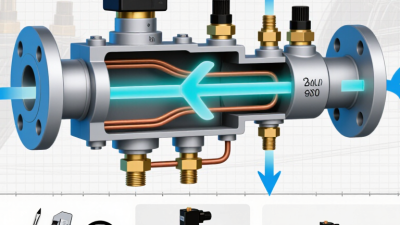
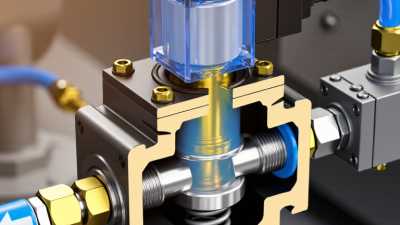
A pneumatic solenoid valve uses an electrical signal to control compressed air. Inside, an energized coil creates a magnetic field that moves a plunger, opening or closing an air passage. When power stops, a spring often returns the plunger. The sound is small. Yet the change can start a cylinder, release a clamp, or redirect airflow on a production line. Direct-acting valves move the main seal themselves; pilot-operated designs use air pressure to help shift the valve. Port labels such as 2/2 and 3/2 describe the number of ports and switching positions, not the valve’s size.

The U.S. Department of Energy’s Improving Compressed Air System Performance sourcebook identifies compressed air as a significant industrial energy load, commonly estimated at about 10% of U.S. industrial electricity use. That is a system-level estimate, not a valve-specific figure. A sticking valve or a small leak can still waste air, though the real impact depends on duty cycle and pressure. I would not choose a valve by port size alone. Check operating pressure, flow demand, voltage, response time, air cleanliness, and seal compatibility. ISO 5598 provides standardized terminology for fluid power systems, but terminology cannot replace checking the actual circuit. One detail is easy to overlook: a valve may switch correctly on a bench and behave differently with long tubing or dirty air.

Criteria for Comparing Manufacturers Worldwide

Comparing pneumatic solenoid valve manufacturers worldwide requires more than checking operating pressure and price. Start with application fit: verify the rated pressure, flow capacity, response time, coil voltage, duty cycle, and seal compatibility against your actual system. Ask for test conditions, not just headline specifications. A valve tested with clean, dry air may behave differently beside a compressor line carrying moisture or fine particles. ISO 8573-1 provides a recognized framework for classifying compressed-air purity, which helps buyers define comparable test conditions. Small differences matter.

Reliability deserves equal weight. Review endurance-test cycles, temperature limits, ingress protection, and documented failure rates; request the test method behind each claim. The U.S. Department of Energy’s Improving Compressed Air System Performance guide reports that leaks can waste 20–30% of compressed-air output in typical systems. That figure concerns system losses, not valve performance, but it highlights why leakage testing and serviceability belong in supplier evaluations. Compare spare-part availability, repair instructions, and technical response times across regions. Ask for traceable inspection records and clear warranty terms. No scorecard is perfect. Weighting service too lightly is an easy mistake; the cheapest valve may cost more after repeated downtime.

Top 10 Pneumatic Solenoid Valve Manufacturers Worldwide - Criteria for Comparing Manufacturers Worldwide

Use these ten criteria to compare shortlisted manufacturers. The table provides verifiable specifications and evaluation methods rather than invented company rankings or company-specific performance claims.

No. Comparison Criterion What to Compare Evidence to Request or Check
1 Valve configurations and product range Available directional configurations, such as 2/2-way, 3/2-way, and 5/2-way valves; normally open or normally closed options; single or double solenoid actuation. Product catalogs and model-specific datasheets. Confirm that the selected configuration matches the required circuit and operating mode.
2 Mounting interface and interchangeability Ported, manifold-mounted, or sub-base designs; port sizes; mounting dimensions; and compatibility with the intended valve island or manifold. Interface drawings and stated compliance with applicable standards. ISO 5599-1 and ISO 15407 specify interfaces for certain pneumatic directional control valves; verify that the relevant part and size apply to the product.
3 Operating pressure and temperature Minimum and maximum working pressure, pilot-pressure requirements, and permitted ambient and fluid-temperature ranges. Model-specific datasheets. Compare the complete operating range with the application conditions; do not assume limits are the same across a product family.
4 Flow capacity Published flow characteristics and pressure drop under stated test conditions. Compare equivalent valve sizes and measurement units. Test data or datasheets stating the measurement method and conditions. ISO 6358 describes methods for determining flow-rate characteristics of pneumatic fluid-power components.
5 Electrical coil specifications Rated voltage, AC or DC supply, power consumption, allowable voltage tolerance, connector type, and coil options. Coil datasheets and wiring diagrams. Check compatibility with the control system, power supply, and required electrical connection.
6 Switching and response characteristics Published response or switching times, where available, and the conditions under which they were measured. Manufacturer test data for the specific valve and coil combination. Compare figures only when test conditions and definitions are comparable.
7 Service life and maintenance Stated mechanical or electrical endurance, recommended maintenance, replacement-part availability, and service requirements. Endurance-test conditions, maintenance instructions, and spare-parts documentation. Ask whether the stated cycle life applies to the intended pressure, voltage, and duty conditions.
8 Enclosure and environmental suitability Ingress-protection rating, ambient-temperature limits, resistance to vibration, and suitability for dust, moisture, or other site conditions. Product-specific environmental ratings and test reports. IEC 60529 defines IP enclosure classifications; confirm the exact rating and installation conditions.
9 Materials and air compatibility Body, seal, and internal-component materials; permitted lubricated or non-lubricated air; and compatibility with the specified air quality and process environment. Bill-of-material or material declarations and operating instructions. Check seal compatibility and air-preparation requirements for the application.
10 Compliance, delivery, and support Applicable market approvals, technical documentation, quoted lead time, warranty terms, local technical support, and product lifecycle information. Current certificates and declarations for the destination market, written quotations, warranty terms, and support contacts. Confirm regulatory applicability for the specific product and installation.

Comparison note: Treat published specifications as model-specific. Request comparable datasheets and written quotations from each supplier, and evaluate products against the same operating conditions and acceptance requirements.

Profiles of Ten Leading Pneumatic Solenoid Valve Manufacturers

These ten manufacturer profiles reflect different strengths in the pneumatic solenoid valve market. They are capability-based, not a verified ranking; product lines and service coverage can change.

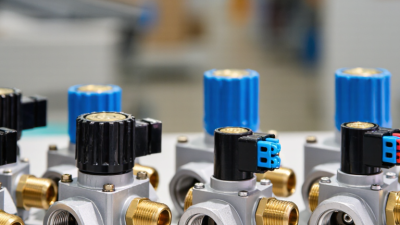
One manufacturer offers broad valve ranges for general factory automation, including common port sizes and coil voltages. A second focuses on fast switching, where response consistency matters on repetitive packaging lines. A third builds compact manifolds that reduce tubing around crowded machine frames. A fourth emphasizes materials and seals suited to washdown environments. Details matter.

A fifth profile centers on sealed coils and robust housings for dusty or vibrating equipment. A sixth supports custom connectors and voltage options, useful when retrofitting older control panels. A seventh develops low-power coils for systems with many continuously energized valves. An eighth is geared toward high-volume OEM supply, where batch consistency and delivery planning matter. A ninth stands out through regional technical support and accessible test documentation. A tenth combines valves with pneumatic controls and sensors for integrated assemblies.

These distinctions need checking against the actual application. A catalog specification may not show how a valve behaves with a long air line, cold starts, or frequent cycling. Ask for pressure, flow, duty-cycle, and service-life data, then compare the test conditions. One weakness in many comparisons is treating nominal flow as the whole story. It isn’t.

Key Products and Technologies Across the Industry

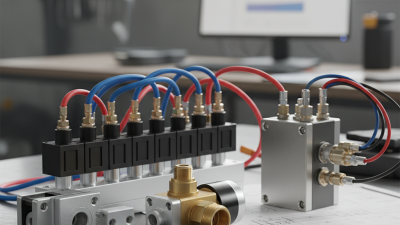
Pneumatic solenoid valves turn electrical signals into directed airflow, making them essential in packaging lines, machine tools, and assembly equipment. Common product families include 3/2-way valves for single-acting cylinders and 5/2- or 5/3-way valves for double-acting motion. Direct-acting designs suit smaller flows and fast switching; pilot-operated models handle higher flow rates but depend on adequate pressure. Small details matter. Seal material, port size, response time, and coil voltage can decide whether a valve performs reliably beside a warm, dusty production cell.

The market is also moving toward compact manifolds, lower-power coils, and diagnostic connectivity. Grand View Research estimated the global solenoid valve market at USD 4.6 billion in 2023, with a projected 5.7% compound annual growth rate from 2024 to 2030. That figure covers solenoid valves broadly, not pneumatic products alone. Still, it signals investment in automated fluid control. IO-Link and other communication options can report switching status or faults, while modular valve islands reduce tubing and installation space. Yet connectivity is not automatically an upgrade; added configuration can complicate maintenance for smaller teams.

Selection should follow the machine’s real duty cycle, not a catalogue headline. Compare flow capacity, pressure range, allowable leakage, switching frequency, and service access. A fast valve may still disappoint if its exhaust path is undersized. International Federation of Robotics’ World Robotics 2024 reported 4,281,585 industrial robots operating worldwide in 2023, up 10% from 2022. This wider automation trend increases demand for dependable pneumatic control, but compressed-air efficiency deserves equal attention. A modest leak repeated across many stations becomes expensive. That part is easy to overlook.

Pneumatic Solenoid Valves Worldwide: Key Products & Technologies

Common directional valve configurations are defined by their number of ports and switching positions.

2/2 and 3/2 valves are used for basic on/off and pilot-control functions; 5/2 and 5/3 valves commonly control double-acting cylinders. Pneumatic solenoid valves may use direct-acting or pilot-operated actuation and spool or poppet designs. Counts shown describe standard configurations, not manufacturer rankings or market share.

How to Choose a Manufacturer for Different Applications

Choosing a pneumatic solenoid valve manufacturer starts with the application, not a catalogue price. For a fast packaging line, compare response time, duty cycle, port size, and expected switching life. A dusty workshop needs suitable enclosure protection; a clean assembly cell may need quieter exhaust. Ask for test conditions behind performance figures. A number without context is not very useful.

Compressed-air quality matters, too. Specify pressure, temperature, and contamination levels, then check whether the manufacturer provides materials compatible with the air and surrounding environment. ISO 8573-1 classifies compressed-air contaminants, while ISO 4414 covers safety requirements for pneumatic systems. These standards help define requirements; they do not guarantee that a valve suits every installation. Fit matters. Request dimensional drawings, coil voltage options, and documented cycle testing before approving a sample.

Energy and maintenance deserve attention. The U.S. Department of Energy’s Improving Compressed Air System Performance sourcebook reports that leaks can waste 20–30% of compressor output in poorly maintained systems. That figure describes system leakage, not valve consumption, but it shows why leak testing and service access matter. Compare repair support, spare-part availability, and response times—not just purchase cost. A detail buyers sometimes miss: verify the connector and replacement-coil procedure on the actual machine. I would still confirm these points with a real operating trial; paper specifications can look cleaner than shop-floor conditions.

Scroll to Top