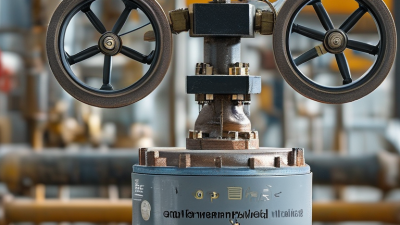
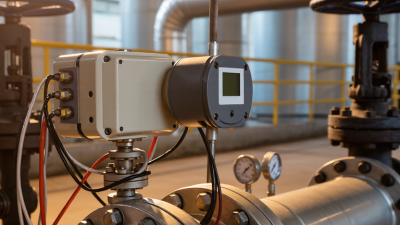
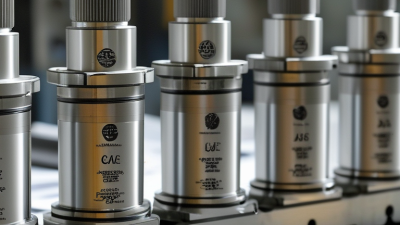
Choosing a reliable valve positioner manufacturer in China requires more than comparing prices or counting product models. A positioner sits between the control signal and the valve actuator. It adjusts air pressure, corrects stem movement, and helps the valve reach its intended position. Small errors can matter. A drifting feedback arm may create unstable flow, wasted energy, or repeated maintenance.
Greg McMillan, a recognized process-control authority, puts the function simply: “A valve positioner is a feedback controller.” This principle guides our review of China’s leading valve positioner manufacturers. We examine practical evidence, including product design, calibration methods, communication protocols, pressure ranges, response speed, and field support. We also consider experience in chemical plants, water treatment facilities, power stations, and automated process lines.
The list is not a perfect ranking. No single supplier fits every application. Some manufacturers offer strong customization but limited international service. Others provide advanced diagnostics while costing more. That difference deserves attention. Buyers should check test records, material traceability, enclosure protection, spare-part availability, and technical documentation before making a final decision.
This guide highlights ten Chinese manufacturers with notable capabilities in valve positioner production. Their strengths vary across pneumatic, electro-pneumatic, digital, and smart positioning technologies. Real performance depends on sizing, installation, air quality, tuning, and maintenance. A dependable product can still fail when these details are ignored. Our aim is practical clarity, not promotional certainty, for engineers, distributors, and industrial buyers comparing long-term options.
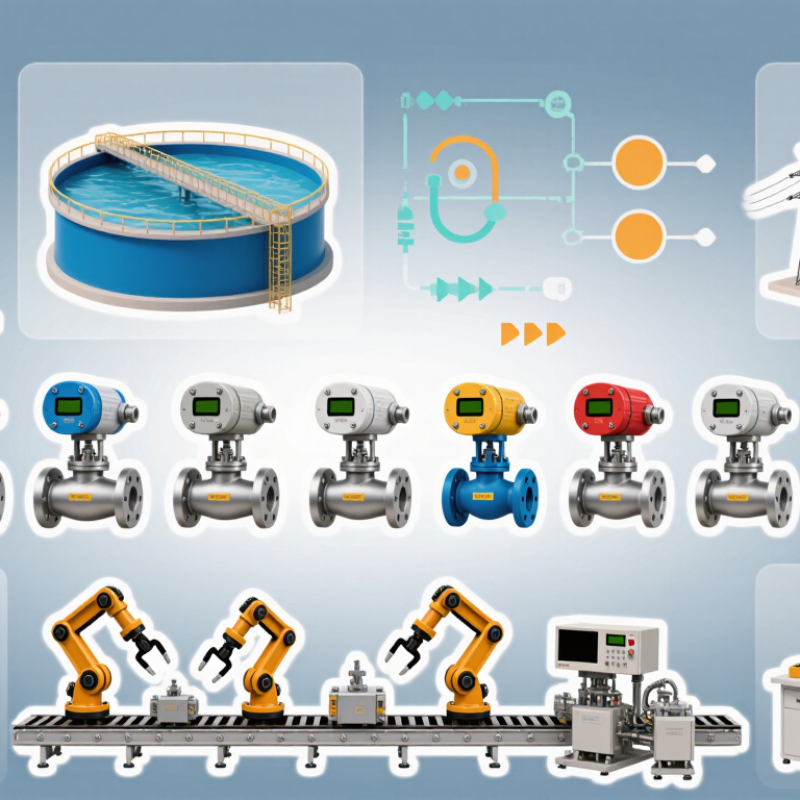
Top 10 Valve Positioner Manufacturers in China
Valve Positioners: Functions, Types, and Industrial Applications
A valve positioner converts a control signal into accurate stem or shaft movement. It compares commanded travel with feedback, then corrects air pressure continuously. In a refinery, that loop helps a steam valve hold temperature despite changing load. Pneumatic units remain simple and fast. Electro-pneumatic models suit conventional control systems. Digital positioners add microprocessors, diagnostics, and remote configuration. The selection is not cosmetic. It affects response time, air consumption, and maintenance access.
MarketsandMarkets’ 2024 Valve Positioners Market report estimates growth from about USD 2.1 billion in 2024 to USD 2.9 billion by 2029, near a 6.4% CAGR. This projection supports demand for Chinese production in chemical, power, water, and oil-processing projects. Yet market growth does not guarantee field reliability. A low-cost unit can fail when vibration, moisture, or poor instrument air is ignored. That assumption is too neat.
For the top ten Chinese manufacturers, buyers should examine IEC 60534-6-1 compatibility, enclosure protection, hazardous-area approvals, and documented calibration procedures. In wastewater plants, feedback stability may matter more than advanced analytics. In steam service, temperature limits and fail-action settings deserve closer review. Digital protocols can expose valve friction and travel deviation before shutdown, but only when technicians use the data. Site trials remain essential. Datasheets rarely show every installation weakness.
Valve positioners convert a controller signal into precise valve movement. The chart compares three established nominal input ranges used in pneumatic and electro-pneumatic control systems: 4–20 mA current loops, 3–15 psi pneumatic signals, and 0–10 V voltage signals. These technologies are commonly applied in process control, water treatment, power generation, chemical processing, and oil and gas systems.
Evaluating a Chinese valve positioner manufacturer requires more than comparing catalog prices. Start with application fit: pneumatic supply, valve size, control signal, hazardous-area requirements, and operating temperature. Ask for test records showing positioning accuracy, hysteresis, response time, and air consumption. A credible factory explains its limits clearly. That honesty matters.
Examine engineering depth through drawings, firmware revision control, calibration procedures, and incoming-material checks. Request evidence of quality systems, relevant conformity documents, and traceable serial-number records. Standards such as IEC 60534-6-1 may support assessment, but certificates alone are not proof of field performance. Audit a production line when possible. Watch how technicians calibrate units, store sensors, and handle rejected parts. Small details reveal discipline.
After-sales capability often separates a dependable supplier from a temporary source. Confirm spare-part availability, remote troubleshooting, training, warranty terms, and regional response times. Compare total ownership cost, not only the purchase invoice. A cheaper positioner can demand more air, adjustments, or downtime. I have seen evaluation teams overlook software support and documentation quality. That mistake becomes expensive during commissioning. Still, no checklist is perfect. Pilot testing under real process conditions may expose vibration, moisture, or calibration drift before a large purchase. Leave room for uncomfortable findings; a supplier willing to correct weaknesses is more credible than one promising flawless results.
Use these ten criteria to compare suppliers without relying on brand names or unverified rankings. Request product-specific documents and test evidence; capabilities and approvals vary by model.
| No. | Evaluation Criterion | What to Check | Evidence to Request |
|---|---|---|---|
| 1 | Product Range and Positioner Type | Confirm whether the supplier offers pneumatic, electropneumatic, and digital positioners suitable for linear or rotary actuators. Check that the proposed model matches the control signal and actuator arrangement. | Current model catalogue, installation drawings, signal specifications, and a model-selection guide. |
| 2 | Control Performance | Review model-specific positioning accuracy, repeatability, hysteresis, response, and dead band. Compare figures only when the test conditions and measurement methods are stated. | Technical datasheet and test report identifying the model, operating conditions, and measurement method. |
| 3 | Valve and Actuator Compatibility | Check mounting interfaces, travel range, actuator torque or thrust requirements, and feedback linkage. IEC 60534-6-1 and IEC 60534-6-2 cover mounting details for positioners on linear and rotary control valves, respectively. | Compatibility matrix, mounting dimensions, linkage drawings, and confirmation for the specific valve-actuator assembly. |
| 4 | Input, Supply, and Output Specifications | Verify input signal type and range, allowable supply pressure, air consumption, pneumatic output arrangement, and electrical connections. Do not assume a signal or pressure range applies to every model. | Model-specific datasheet, wiring or pneumatic diagram, and stated operating limits. |
| 5 | Environmental Protection | Confirm the specified ingress-protection rating, ambient temperature limits, vibration resistance, and corrosion suitability for the installation. IP ratings should be supported by the relevant test documentation. | Model-specific rating and test evidence; enclosure protection classifications are defined by IEC 60529. |
| 6 | Hazardous-Area and Functional-Safety Suitability | Where required, verify that the exact model and configuration meet the site’s hazardous-area or functional-safety requirements. A general company certificate does not establish approval for every product. | Valid certificates and schedules listing the exact model, protection concept, application limits, and certificate status. |
| 7 | Quality Management and Production Control | Assess documented manufacturing controls, calibration practices, supplier management, traceability, and nonconformance handling. An ISO 9001 certificate indicates a quality-management system scope, not product performance by itself. | Current quality-management certificate, scope, sample inspection records, and calibration or traceability procedures. |
| 8 | Testing and Inspection | Determine whether each unit receives functional checks and whether inspection plans cover relevant electrical, pneumatic, and mechanical characteristics. Clarify how test results are linked to serial numbers. | Sample factory test report, inspection plan, acceptance criteria, and serial-number traceability example. |
| 9 | Documentation and Configuration Support | Check the availability and clarity of manuals, datasheets, wiring diagrams, commissioning instructions, and configuration software or communication details for digital models. | English-language document samples, revision control information, and a clear process for software and firmware updates. |
| 10 | After-Sales Service and Supply Reliability | Evaluate technical response arrangements, spare-parts availability, repair capability, warranty terms, lead-time communication, and support for commissioning or troubleshooting. | Written warranty and service terms, spare-parts list, support-contact process, and documented delivery or service commitments. |
China’s valve positioner market includes manufacturers serving power, chemical, water-treatment, and general industrial plants. A useful top-ten comparison should look beyond catalog claims. Check whether each supplier offers pneumatic, electro-pneumatic, or digital models suited to the actuator and control system. Details matter.
For a fair assessment, compare positioning accuracy, response time, air consumption, enclosure protection, and supported input signals. Ask how units perform during repeated valve strokes, not only during a clean bench test. A positioner may work well in a workshop but drift when exposed to vibration, moisture, or temperature changes. Request calibration records and clear test conditions. These reveal more than a headline specification.
Manufacturers also differ in customization, documentation, spare-part availability, and technical support. Confirm the mounting interface and feedback options before ordering; small mismatches can slow commissioning. Digital diagnostics can help technicians spot friction or travel problems, but only when staff know how to interpret the alerts. Not always. Rankings can change with application needs, and public product data may be incomplete. Treat any top-ten list as a starting point, then compare the actual model, service terms, and test evidence for your operating conditions.
China’s leading valve positioner manufacturers serve demanding process industries with varied product capabilities. Their portfolios commonly include pneumatic, electro-pneumatic, and digital positioners. Digital models support microprocessor control, automatic calibration, and valve travel feedback. Some units communicate through HART, fieldbus, or industrial Ethernet networks.
In practical installations, engineers inspect hysteresis, air consumption, vibration resistance, and enclosure protection. Reliable manufacturers provide factory calibration records, serial-number traceability, and repeatable test procedures. Many also offer stainless steel housings for humid plants and compact designs for crowded actuator assemblies. Hazardous-area versions require appropriate international certifications and careful installation.
Oil and gas projects often need fast diagnostics and remote parameter access. Chemical plants prioritize corrosion resistance and stable control during temperature changes. Water treatment facilities usually value simple maintenance and low air consumption. Power stations demand accurate performance across large steam and feedwater systems. Food, pharmaceutical, pulp, and paper plants may require cleanable surfaces and application-specific materials.
Customization is useful, but it can complicate spare-parts management. Some manufacturers adapt software too aggressively, making field troubleshooting less intuitive. Buyers should compare lifecycle support, not only purchase price. Factory testing is reassuring, yet actual plant conditions can expose weaknesses. A positioner that performs well on a bench may still struggle with dirty air, pressure fluctuations, or poor valve sizing.
Choose a Chinese valve positioner supplier by verifying performance at your operating conditions, not by relying on catalogue claims. Ask for test records covering positioning accuracy, hysteresis, response time, and air consumption. Confirm compatibility with your control signal, actuator size, mounting arrangement, and required communication protocol. The IEA’s Energy Efficiency 2023 report says industry accounted for about 37% of global energy consumption in 2022. Stable, repeatable valve control can support efficient process operation, but a positioner alone cannot guarantee energy savings.
Assess the supplier’s engineering support and quality controls. Request calibration procedures, inspection records, material details, and traceable test results for the specific model. Check whether the stated temperature and ingress-protection ratings match the installation site, especially where outdoor units face rain, dust, or vibration. Ask how spare parts and technical responses are handled after delivery. A low quotation may look attractive, yet unclear documentation can make commissioning slower and troubleshooting harder. One point is easy to miss: a successful factory test does not prove suitability for every actuator or process.
Tips: Send a real application sheet before requesting a quote. Include actuator data, supply pressure, signal type, ambient temperature, and failure position. Compare written test evidence, not just headline specifications. If a supplier cannot explain a deviation clearly, pause and ask again.
Get in Touch
570 Alden Road Unit #10, Markham Ontario Canada, L3R 8N5
Quick Links
Featured Products
Industries