| Product Type |
Selection should match the application, installation space, and required service life. |
ISO 15552 for certain interchangeable pneumatic cylinders; ISO 6432 for small-bore cylinders; ISO 6431 is an older reference commonly associated with standard pneumatic cylinders. |
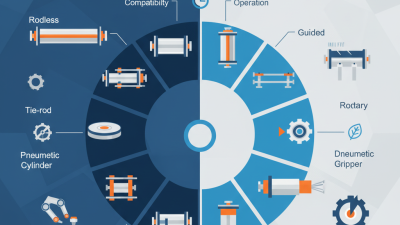
Tie-rod
Profile
Compact
Guided
Rodless
Rotary
|
Dimensional drawings, product datasheets, and a declaration of conformity where applicable. |
Double-acting or single-acting design; through-rod or non-through-rod construction; magnetic piston option. |
Confirm mounting dimensions, port position, rod-end geometry, and interchangeability requirements before ordering. |
| Bore and Stroke Range |
The bore must provide the required force, while the stroke must cover the complete machine movement without mechanical overrun. |
Force calculations are based on piston area and operating pressure; actual output is reduced by friction and seal losses. |
Typical catalog ranges include approximately
Ø12–Ø320 mm for many standard cylinder families and strokes from a few millimetres to several metres, depending on design.
|
Verified technical drawings showing bore tolerance, stroke tolerance, and retracted/extended dimensions. |
Non-standard bore, special stroke, stroke adjustment, integrated cushioning, and extended or shortened rod. |
Use the manufacturer's force table at the actual working pressure instead of relying only on nominal bore size. |
| Operating Pressure |
The cylinder should operate reliably within the machine's regulated pressure range and peak pressure conditions. |
Many industrial pneumatic cylinders are designed for nominal pressures around 0.6 MPa, with exact limits determined by the product series. |
Common working-pressure ranges are approximately 0.1–1.0 MPa; some products have lower or higher limits. |
Pressure rating in the datasheet; pressure-test or inspection records when required for a project. |
Low-pressure seals, high-pressure versions, pressure-resistant construction, and application-specific seal packages. |
Check minimum operating pressure, maximum working pressure, pressure spikes, and the required safety factor. |
| Temperature Capability |
Seal and lubricant selection must correspond to ambient temperature, process heat, washdown, and cold-start conditions. |
Temperature limits are product-specific and depend on seal material, lubricant, rod finish, and environment. |
Standard versions often cover approximately −20°C to +80°C; high-temperature versions may use specialized seals and lubricants. |
Temperature range stated in the technical documentation; material declarations for special seal compounds. |
Fluorocarbon or other high-temperature seal options, low-temperature seals, heat shields, and food-contact-compatible lubricants where applicable. |
Request test conditions and expected service life when the cylinder operates outside ordinary factory temperatures. |
| Materials and Corrosion Protection |
Materials should withstand humidity, cleaning chemicals, salt exposure, dust, and the required washdown frequency. |
Material selection is application-specific; stainless steel and corrosion-resistant coatings are common options for harsh environments. |
Typical components may include aluminium or steel barrels, stainless-steel rods, elastomeric seals, and coated end caps. |
Material certificates, coating specifications, salt-spray results, and chemical-resistance information when relevant. |
Stainless-steel body or rod, nickel-plated rod, hard-anodized surfaces, protective bellows, and special coatings. |
Define chemical exposure, cleaning agents, humidity, and corrosion class instead of requesting “corrosion resistance” generically. |
| Environmental Protection |
The enclosure and construction should match dust, water, outdoor, and washdown exposure. |
IEC 60529 IP ratings may be used for electrical enclosures and certain complete assemblies; the rating must be stated for the specific product. |
Many standard pneumatic cylinders are not automatically assigned a complete IP rating. Protection depends on design, ports, sensors, and installation. |
IP test report or declared IP rating when offered; installation instructions defining the test conditions. |
Scraper seals, stainless hardware, rod boots, sealed sensors, drainage provisions, and washdown-oriented construction. |
Do not infer an IP rating from material alone; verify the complete cylinder and sensor assembly configuration. |
| Seal and Lubrication System |
Seals must be compatible with compressed air quality, temperature, media, and maintenance practices. |
ISO 8573-1 is commonly used to classify compressed-air purity, including particles, water, and oil. |
Common seal materials include polyurethane, NBR, and FKM-type compounds, subject to the manufacturer's design and application limits. |
Seal-material declaration, compatibility chart, lubrication requirements, and recommended air-quality specification. |
Food-grade lubrication, oil-free operation, low-friction seals, chemical-resistant seals, and dry-air-compatible configurations. |
Confirm whether external lubrication is required and whether the cylinder is suitable for dry or oil-free compressed air. |
| Position Sensing |
Machine controls may require end-position confirmation, intermediate-position sensing, or continuous position feedback. |
Reed and solid-state sensors are common; electrical interfaces should match the control system. |
Typical options include magnetic piston sensing, adjustable sensor mounting, and sensor connectors with different cable lengths. |
Sensor datasheet, voltage/current ratings, switching logic, EMC information, and conformity documentation where applicable. |
Reed, electronic, PNP/NPN, normally open/normally closed, M8/M12 connector, and custom cable length. |
Specify supply voltage, output type, connector, switching frequency, and required sensing accuracy. |
| Mounting and Installation |
The cylinder must fit the machine envelope and accommodate alignment, side loads, and service access. |
Mounting interfaces may follow ISO dimensions or manufacturer-specific dimensions depending on the cylinder family. |
Common mounts include front and rear clevises, trunnions, flanges, foot mounts, and spherical rod-end attachments. |
Certified dimensional drawings, 3D CAD files, mounting-load limits, and assembly instructions. |
Custom brackets, special rod ends, adjustable mounts, compact ports, rotated end caps, and modified mounting centres. |
Check allowable side load, bending moment, alignment tolerance, and whether an external guide is required. |
| Control and Cushioning |
Motion speed, impact energy, noise, and cycle stability should be controlled at both ends of travel. |
Adjustable pneumatic cushioning and external flow controls are common methods for deceleration. |
Options may include fixed cushions, adjustable cushions, shock absorbers, needle valves, and end-of-stroke control. |
Performance curves, cushioning limits, recommended flow-control arrangement, and cycle-test data where available. |
Longer cushions, high-speed packages, low-noise configurations, external shock absorbers, and customized damping settings. |
Provide load mass, speed, cycle frequency, supply pressure, and mounting orientation for sizing validation. |
| Quality Management |
Global buyers commonly require documented production control, traceability, inspection, and corrective-action processes. |
ISO 9001 is an internationally recognized quality-management-system standard; it does not by itself certify a specific cylinder model. |
Typical quality documents include incoming inspection, dimensional inspection, pressure testing, leak testing, and batch traceability. |
Valid ISO 9001 certificate issued to the manufacturing site, inspection plan, test report, and traceability statement. |
Customer-specific inspection plans, first-article inspection, serial-number tracking, and statistical process-control reports. |
Verify the certificate scope, issuing body, site address, validity date, and whether the supplied product is covered by the manufacturing site. |
| Market Access and Product Compliance |
Documentation must match the destination market and the complete machine's legal obligations. |
CE marking may apply under relevant European Union legislation; RoHS and REACH obligations depend on product composition and market requirements. |
Compliance status varies by configuration, electrical accessories, intended use, and destination. A pneumatic cylinder is not automatically subject to every CE directive. |
EU Declaration of Conformity where applicable, RoHS/REACH statements, material declarations, and technical file support. |
Alternative materials, restricted-substance control, special labelling, destination-specific documentation, and multilingual manuals. |
Ask for product-specific documents rather than accepting a generic corporate compliance statement. |
| Hazardous-Area Applications |
Use in explosive atmospheres requires assessment of the complete assembly, including sensors, valves, fittings, and installation. |
ATEX requirements may apply in the European Union; IECEx is an international conformity-assessment system for explosive atmospheres. |
A basic pneumatic cylinder may contain no electrical ignition source, but attached sensors and accessories can change the compliance requirements. |
ATEX or IECEx certificates for applicable electrical components, equipment group/category information, and installation instructions. |
Non-electrical configuration, certified sensors, antistatic materials where applicable, and special grounding or installation provisions. |
Define zone, gas or dust group, temperature class, ambient conditions, and the complete equipment configuration. |
| Food, Beverage, and Pharmaceutical Use |
Materials, lubricants, cleanability, and contamination controls must match the hygiene requirements of the process. |
Applicable requirements may include relevant food-contact rules, hygienic-design principles, and customer-specific sanitation standards. |
Common options include stainless-steel components, smooth surfaces, protected rod designs, and lubricants suitable for the intended environment. |
Food-contact or lubricant documentation where relevant, material declarations, cleaning compatibility data, and hygiene-design information. |
Stainless-steel construction, washdown seals, food-grade lubricant, hygienic mounting, and corrosion-resistant hardware. |
Specify cleaning chemicals, temperature, pressure, frequency, product-contact possibility, and required documentation before quotation. |
| Customization and OEM Support |
OEM projects may require repeatable dimensions, controlled engineering changes, packaging standards, and long-term supply support. |
Engineering-change control and documented specifications are important for production consistency; exact procedures are supplier-specific. |
Custom projects may include modified stroke, bore, ports, rod, seals, materials, sensors, mounts, packaging, and labelling. |
Approved drawings, change-notification procedure, sample inspection report, production validation records, and batch traceability. |
Prototype development, private labelling without displaying brand data in the comparison, custom packaging, kits, and application-specific assemblies. |
Request a controlled drawing revision, sample approval process, minimum order quantity, lead time, and spare-parts policy. |
| Testing and Reliability |
Testing should reflect actual load, pressure, speed, temperature, contamination, and cycle frequency. |
Test methods and acceptance criteria should be agreed in the technical specification; no single universal life rating applies to every cylinder design. |
Relevant tests may include leakage, pressure resistance, dimensional inspection, sensor function, cushioning performance, and cycle testing. |
Factory acceptance test report, sampling plan, calibration records, and reliability or endurance test results when required. |
Application-specific endurance testing, accelerated life testing, witness testing, and customized acceptance criteria. |
Require test conditions, sample size, pass/fail criteria, and the relationship between laboratory cycles and expected field service. |
| Logistics and After-Sales Support |
International buyers need predictable lead times, replacement parts, technical communication, and stable product availability. |
Incoterms should be agreed in the quotation; HS classification and import documentation depend on the product and destination. |
Useful supply-chain data includes standard lead time, sample lead time, minimum order quantity, packaging dimensions, and spare-part availability. |
Commercial invoice, packing list, certificate of origin when required, export documentation, warranty terms, and technical support contact. |
Safety-stock programs, scheduled deliveries, service kits, regional packaging, multilingual documents, and emergency replacement plans. |
Evaluate total landed cost, not only unit price: freight, duties, validation, spare parts, downtime risk, and warranty response. |