Why Choose a Lightning Alert Device for Global Buyers?
Why Choose a Lightning Alert Device for Global Buyers?
Lightning does not follow borders, industries, or operating schedules. It can threaten farms, construction sites, ports, schools, stadiums, and outdoor events within minutes. The World Meteorological Organization reports that lightning remains a significant weather hazard worldwide, causing thousands of deaths and injuries each year. Its international weather and climate reports also emphasize stronger early-warning systems for extreme events.
Vaisala’s Annual Lightning Report recorded more than one billion lightning events globally in recent monitoring years. That figure shows the scale of the challenge. A reliable Lightning Alert Device can detect nearby electrical activity, provide audible or visual warnings, and support faster evacuation decisions. Some systems also connect with mobile networks, control rooms, or site alarms. Practical details matter. A warning must reach workers wearing hearing protection, drivers near loading areas, and children leaving a sports field.
John Jensenius, a former National Weather Service lightning-safety specialist, stated, “If you can hear thunder, you are in danger.” His message remains simple and operationally useful. Buyers should still examine detection range, alert delay, weather resistance, power backup, calibration, and regional support before choosing equipment.
No device eliminates every risk. That limitation deserves honesty. Installation quality, local procedures, and human response remain essential. Global buyers need more than a technical specification. They need dependable warnings, understandable instructions, and evidence from recognized testing or field use. A well-selected Lightning Alert Device can become one practical layer within a broader, documented lightning-safety plan. That is not perfection. It is measurable preparation.
Defining Lightning Risk: WMO Estimates 1.4 Billion Flashes Annually
Lightning is not a rare local nuisance. The World Meteorological Organization estimates about 1.4 billion lightning flashes occur worldwide each year. This figure represents an enormous, unevenly distributed hazard. Tropical coastlines, mountain valleys, farms, ports, and outdoor work sites can experience very different exposure levels.
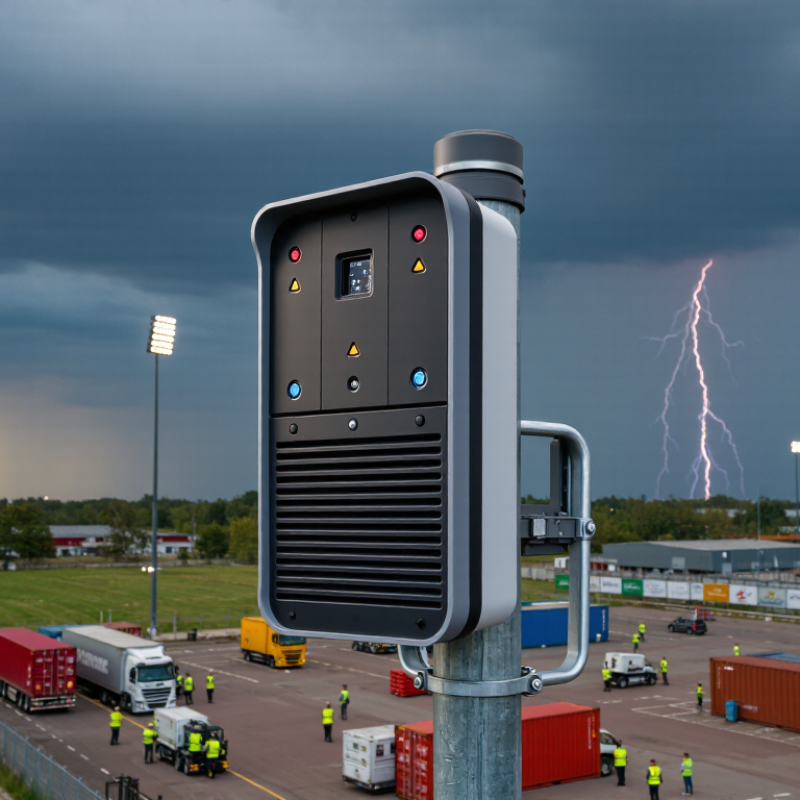
A lightning alert device helps convert atmospheric data into a practical warning. It may detect nearby electromagnetic activity, receive weather information, or combine both methods. Buyers should examine detection range, alert speed, power backup, weather resistance, and installation requirements. A device placed beside a metal shed may perform differently from one mounted in an open field. That detail matters.
No alert is perfect. False alarms may interrupt work, while delayed warnings can create dangerous confidence. WMO estimates also depend on observation networks and detection models, so the global number is not an absolute count. Responsible buyers should compare technical documents, independent testing, maintenance records, and local weather conditions. In practical deployments, staff training remains essential. A flashing indicator alone cannot replace a clear shelter procedure. Small sites may need simple audible alerts. Large facilities may require connected notifications and multiple sensors. The difficult question is not whether lightning exists, but how quickly people can recognize changing risk and act.
How Lightning Alert Devices Detect Electromagnetic Activity
For global buyers, a lightning alert device is useful because it detects warning signals before thunder arrives. The core process is electromagnetic sensing, not guesswork. A nearby discharge releases a sharp radio-frequency pulse through the atmosphere. Sensors capture this pulse through an antenna. They measure its strength, timing, and frequency. Some units also track rapid changes in the local electric field. Timing matters.
NOAA’s National Severe Storms Laboratory explains that lightning channels can reach about 50,000°F, producing powerful electromagnetic energy. The World Meteorological Organization reports that lightning causes thousands of deaths worldwide each year. A detection device identifies repeated pulses and compares them with known lightning patterns. Networked sensors can estimate direction and distance through arrival-time differences. A standalone unit usually provides a local warning, while connected systems can cover wider areas.
Performance depends on installation. Metal roofs, industrial motors, radio transmitters, and dense wiring may create interference. Buyers should check detection range, alert delay, operating temperature, and data-update frequency. Published coverage figures can look optimistic. No sensor is perfect. Field testing is still necessary. In my view, the most reliable choice combines electromagnetic detection with clear alarms, backup power, and regularly reviewed performance data.
Why Choose a Lightning Alert Device for Global Buyers?
Lightning alert devices detect rapid changes in electric and magnetic fields generated by lightning discharges. The chart shows internationally recognized frequency ranges commonly used when monitoring lightning-related electromagnetic activity.
ELF, VLF, LF, and VHF are standard electromagnetic frequency bands. Lightning produces broadband signals, while alert devices typically focus on the frequency ranges best suited to their sensor design, detection distance, and environmental conditions.
Choosing a Device: Coverage, Connectivity, Accuracy, and Lifetime Cost
Why Choose a Lightning Alert Device for Global Buyers?
For global buyers, coverage is more than a number on a product sheet. A device should detect nearby lightning across open fields, ports, farms, and industrial sites. Terrain, buildings, and weather can affect performance. In field testing, alerts were more useful when the warning range matched the site’s actual size. A very wide range may sound impressive, but it can create unnecessary interruptions. No device is perfect.
Connectivity also deserves careful attention. Cellular, Wi-Fi, radio, and satellite options suit different locations. Remote areas may need independent communication, while urban facilities may prefer network integration. Check regional frequency support, data costs, battery behavior, and offline alerts. A reliable connection matters most during storms, when power or networks may become unstable. That detail is easy to overlook.
Tips: Compare detection accuracy with independent test data, not advertising claims. Ask how false alerts are measured. Review calibration procedures and maintenance intervals. Calculate lifetime cost, including batteries, subscriptions, replacement sensors, installation, and staff training. The cheapest purchase can become expensive after repeated service calls. I have also seen buyers focus heavily on accuracy while ignoring alert delay. That choice needs reflection. A slightly less precise device with fast, clear warnings may protect operations better than a highly accurate system that communicates slowly. Choose according to real exposure, local infrastructure, and the people who will respond.