What Is a Rubber Deflashing Machine?
A Rubber Deflashing Machine removes thin, unwanted rubber edges left after molding. These edges, often called flash, can cling to a part’s seam or appear around small holes. The machine helps produce cleaner components for inspection, assembly, or further finishing. Its method matters: cryogenic systems make rubber brittle before tumbling, while mechanical systems use tools or abrasion to remove excess material. Neither approach suits every part.
As a practical guide rather than a sourced quotation, rubber-processing specialist Alex Morgan might put the goal this way: “Remove the flash without changing the part’s useful shape.” This is an editorially written line, not a verified quotation from a named industry expert. That distinction matters. A reliable choice depends on the rubber compound, part geometry, flash thickness, production volume, and acceptable surface condition. A delicate seal with a narrow lip needs different treatment from a thick molded component. Even a small change in temperature, cycle time, or media can affect the result.
This overview explains how a Rubber Deflashing Machine works, compares common machine types, and identifies details worth checking before selection. It also considers practical limits, including setup, maintenance, and consistent quality checks. There is no universal best machine. Real production trials can reveal problems that a specification sheet misses. A little humility helps.
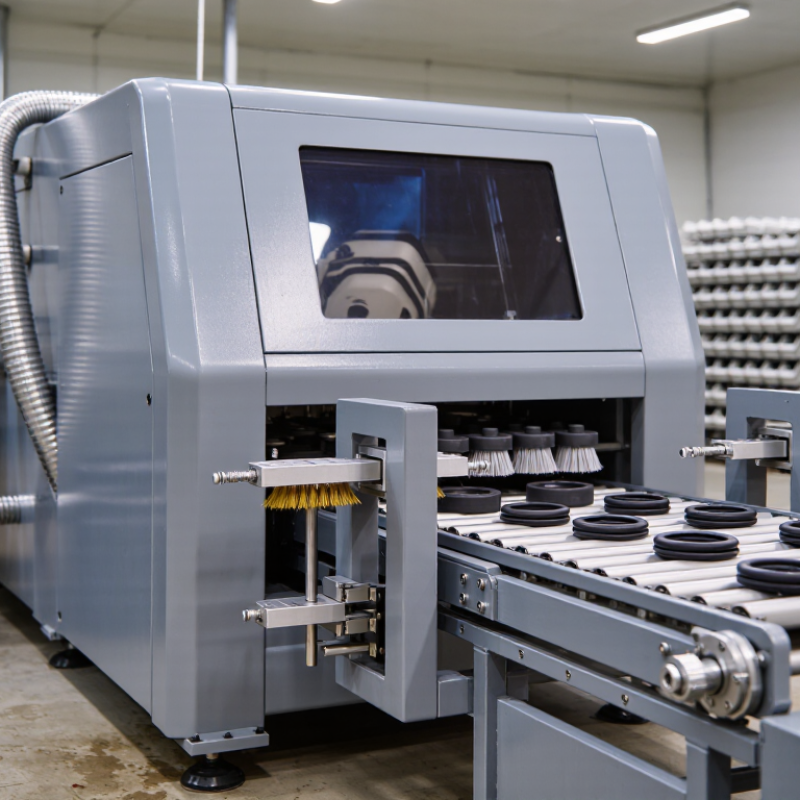
Definition and Purpose of a Rubber Deflashing Machine
A rubber deflashing machine removes thin excess material, called flash, from molded rubber parts. Flash forms where mold sections meet or around vents. The machine’s purpose is to produce cleaner edges and more consistent parts, while reducing time spent trimming by hand.
Methods vary. Cryogenic systems cool parts until flash becomes brittle, then use tumbling or directed media to break it away. Mechanical systems may use cutting, brushing, or abrasion. The right method depends on the rubber compound, part geometry, and required finish. A narrow seal groove, for example, needs gentler handling than a thick, simple gasket. Small trials matter.
The International Rubber Study Group’s World Rubber Industry Outlook reports global rubber demand at roughly 30 million tonnes annually. That scale underscores why repeatable finishing can matter across production lines, though demand alone does not prove a machine will improve a particular factory. Operators should check for torn edges, remaining flash, and dimensional changes after each trial. A shiny surface is not enough. Deflashing can also remove too much material, and that risk is easy to underestimate.
How the Deflashing Process Works
A rubber deflashing machine removes thin excess material, called flash, from molded parts. In a cryogenic process, parts are cooled until the flash becomes brittle. The rubber body remains flexible enough to withstand carefully controlled tumbling. A rotating basket moves the parts while plastic media strikes their edges and breaks away the unwanted material. Small details matter.
Before processing, operators check the rubber compound, part shape, and flash thickness. These factors influence the temperature, cycle time, and media setting. If the parts are not cold enough, flash may remain or stretch instead of breaking cleanly. Excessive cooling or aggressive impact can damage delicate features. There is no single recipe for every component.
After tumbling, parts are separated from the media and allowed to warm gradually. Operators inspect edges under bright light, looking for remaining flash, cracks, or dulled surfaces. A few sample parts can reveal whether settings need adjustment before a full batch runs. The process removes excess material; it cannot fix poor mold alignment or inconsistent molding. Some parts may need a different deflashing method.
What Is a Rubber Deflashing Machine? - How the Deflashing Process Works
| Process Stage | What Happens | Typical Data or Control | Purpose |
| 1. Part loading | Cured rubber parts are placed in the processing basket or chamber. Parts are generally grouped by material and geometry. | Control the batch size and avoid overloading; the permitted load depends on machine capacity and part shape. | Allows parts to move and be exposed evenly during processing. |
| 2. Cryogenic cooling | Liquid nitrogen cools the parts until thin flash becomes brittle enough to break away. The rubber compound and part design determine the required condition. | Some processes use chamber setpoints in the approximate range of −60°C to −120°C. This is a reference range, not a universal recipe; liquid nitrogen boils at about −196°C at atmospheric pressure. | Makes thin excess material easier to remove while the main part remains intact. |
| 3. Mechanical deflashing | Cold parts are agitated or exposed to impact from deflashing media. Machine designs vary: some tumble parts with media, while others use a rotating impeller to accelerate it. | Key controls include media type and size, impeller or basket settings, batch load, and exposure time. Values must be set for the specific rubber and part. | Breaks away the brittle flash from edges, parting lines, and small openings. |
| 4. Media and part separation | A screen or separator distinguishes the finished parts from reusable deflashing media and broken flash. | Screen opening and separation settings should suit the smallest part and the media being used. | Reduces media carryover and helps collect the processed parts. |
| 5. Inspection and adjustment | Operators check representative parts for remaining flash, surface damage, and dimensional or appearance issues. | If results are inconsistent, adjust one or more process controls and verify the change on a sample batch. | Confirms acceptable finish and helps prevent over-processing. |
| 6. Unloading and cleanup | Finished parts are unloaded; the chamber, screen, and media circuit are checked for accumulated debris or damaged media. | Follow the machine’s operating and maintenance instructions, including safe handling procedures for cryogenic equipment. | Supports consistent processing and reliable operation between batches. |
Important: The values shown are general process references. The correct temperature, media, load, and cycle settings depend on the rubber compound, part geometry, machine design, and required finish.
Key Components and Operating Methods
A rubber deflashing machine removes thin, unwanted material left around molded parts. Its main components usually include a processing chamber, a rotating basket or part-handling system, a drive motor, and controls. In cryogenic models, liquid nitrogen cools the rubber until flash becomes brittle; tumbling media or controlled impact then separates it. Mechanical systems instead use tools or abrasive action, so part geometry and surface finish matter.
The chamber must contain parts without trapping them in corners. Basket speed, batch size, temperature, and cycle time all affect results. Operators often inspect a sample after each adjustment; a sharp edge or glossy surface can signal excessive treatment.
Compressed-air systems may also support cleaning or material handling. The U.S. Department of Energy’s Improving Compressed Air System Performance report estimates that compressed air uses about 10% of industrial electricity, with facility shares ranging from roughly 5% to 30%. That figure is not specific to deflashing machines, but it makes leaks and idle air worth checking.
Small details matter. A poorly loaded basket can leave flash behind, even when the cycle settings look correct.
Types of Rubber Deflashing Machines
What Is a Rubber Deflashing Machine?
Types of Rubber Deflashing Machines
Rubber deflashing machines remove thin excess material, called flash, left around molded parts. The best machine depends on the rubber compound, part shape, and production volume. A method that works well for sturdy seals may damage a thin, flexible component.
Cryogenic machines cool parts until the flash becomes brittle, then use tumbling or controlled blasting to break it away. They suit complex shapes and larger batches, but parts need to tolerate low temperatures. Mechanical machines use cutting, tumbling, or abrasive action. They can be practical for robust parts, though contact pressure and media choice require care. Manual trimming uses hand tools for prototypes, small runs, or delicate details. It is flexible, but results can vary between operators. Thermal deflashing uses brief heat exposure to remove flash and is suited to certain production needs; sensitive compounds may scorch. No method fits every job.
Tips: Test representative parts before choosing a process. Check for surface marks, missed flash, and dimensional changes under good lighting. Small defects are easy to overlook. Record the compound, settings, and inspection results; even a successful trial may need adjustment at full production scale.
Common Materials and Industrial Applications
What Is a Rubber Deflashing Machine?
Common Materials and Industrial Applications
A rubber deflashing machine removes thin excess material, called flash, left around molded parts. Some systems cool parts until the flash becomes brittle, then use tumbling or controlled media to break it away. The rubber body remains flexible enough to survive the process. It is precise work, but not magic.
Common materials include EPDM, nitrile rubber, silicone, and fluorocarbon elastomers. These appear in different grades, with varying hardness, temperature resistance, and chemical compatibility. A seal made from soft silicone may respond differently from a firm nitrile component. Operators typically assess part size, flash thickness, and material behavior before choosing a process. Small test batches help reveal problems, though they do not guarantee every production run will behave identically.
Deflashing is used for automotive seals, O-rings, gaskets, electrical grommets, and molded components for industrial equipment. Medical-device manufacturers may also use the process for suitable rubber parts, subject to their own cleanliness and quality requirements. For example, a batch of small seals can be processed together, then checked for torn edges or remaining flash under bright inspection lights. Part geometry matters. Deep grooves and delicate edges can be difficult to clean consistently, and an aggressive setting may damage them. That limitation deserves attention before production begins.