Top 10 Festo Pneumatic Cylinder Types for Global Buyers?
Choosing the right Festo Pneumatic Cylinder is rarely a simple catalog exercise. Global buyers must match cylinder design with load, stroke, speed, air quality, installation space, and operating environment. A compact cylinder may fit a packaging machine, yet fail under side loading or repeated shock. A stainless-steel model may suit washdown areas, while a guided cylinder can improve accuracy where alignment matters.
Real factories expose small weaknesses. Condensation enters a workshop line. Sensors become difficult to access. A mounting thread receives more stress than expected. These details influence uptime, maintenance costs, and replacement speed. Festo engineering leader Dr. Peter Post has emphasized, “Pneumatics must be judged by the complete system, not by the cylinder alone.” That principle gives this guide a practical direction.
The following ranking examines ten Festo Pneumatic Cylinder types for international purchasing teams. It considers ISO compatibility, bore and stroke options, cushioning, sensor integration, sealing materials, and mounting flexibility. Buyers will also see where each type performs well and where it may disappoint. Not every popular cylinder suits every plant. That is worth remembering.
Standards help. They do not remove judgment.
Some applications need compact round cylinders. Others demand guided movement, corrosion resistance, or higher stability during long strokes. Energy consumption, spare-part availability, and local technical support also deserve attention. These factors can vary between regions and suppliers. Therefore, the “best” option may change after a site audit, especially when temperature, dust, moisture, or continuous cycling becomes more severe than the original specification suggested.
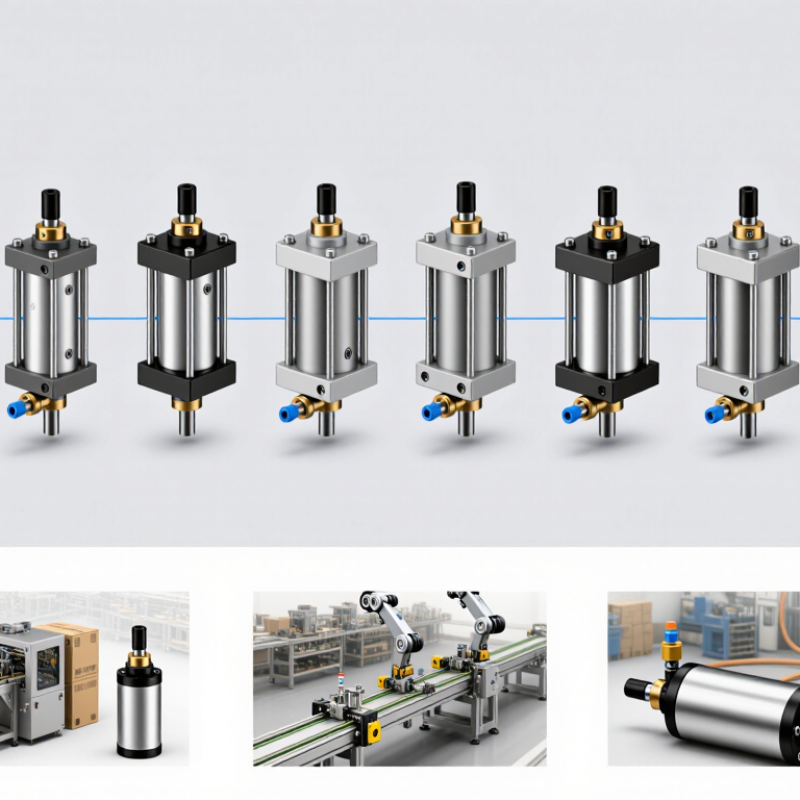
Festo Pneumatic Cylinders: Operating Principles and Core Applications
Pneumatic cylinders convert compressed air into controlled linear motion. Air enters one side of a chamber and pushes a piston along the bore. A rod transfers that force to a gripper, slide, clamp, or lifting mechanism. Directional valves control extension and retraction, while a double-acting cylinder uses air for both movements. A single-acting model uses a spring for return travel.
Force depends mainly on pressure and piston area. Rod size, friction, seal condition, and alignment also affect real performance. In practical machine inspections, poor alignment often causes more trouble than low air pressure. Adjustable cushions can slow the piston near the stroke end. This reduces impact, noise, and vibration. It is not perfect.
These cylinders support packaging lines, assembly stations, material handling equipment, and light automation. A short-stroke unit may press a label onto a carton, while a guided cylinder can move a tray accurately between stations. Buyers should check bore diameter, stroke length, mounting style, operating pressure, speed control, and environmental exposure. Dust, washdown water, temperature changes, and chemical contact can quickly shorten seal life. Stainless components or suitable protective materials may be necessary in demanding areas. Standards and fittings also vary across markets, so replacement availability deserves attention before purchase. A cylinder that fits the drawing may still fail in daily production.
The Ten Main Festo Cylinder Types for Industrial Automation
The ten main pneumatic cylinder types for industrial automation are standard ISO, compact, mini, round, guided, rodless, rotary, tandem, multi-position, and single-acting cylinders.
Double-acting models remain common for pressing, clamping, and transfer tasks. Compact units fit beneath conveyors, while guided cylinders control side loads more effectively. Rodless designs save space along long machine strokes. Rotary actuators handle gripper rotation and indexing.
Selection should begin with force, stroke, speed, mounting space, and duty cycle. A cylinder producing 1,000 N theoretically needs about 1,273 mm² of piston area at 0.8 MPa, before friction and safety allowances. That margin is often underestimated. The International Federation of Robotics reported 541,302 industrial robots installed worldwide in 2023. This growth increases demand for repeatable pneumatic motion near robots, feeders, and inspection stations. Yet, cylinder choice alone cannot solve poor air quality or unstable pressure. ISO 8573 filtration and regular leak checks remain practical safeguards.
Tips Match the cylinder to the load path, not only the catalog force. Use guided models for offset loads. Choose corrosion-resistant materials in washdown areas. Confirm thread, port, seal, and mounting standards before ordering internationally. Keep spare seals locally when downtime is expensive. A neat ten-type list helps, but real machines often need a hybrid design. Test cushioning at production speed, because bench results can mislead.
Cylinder Designs, Mounting Options, and Performance Differences
Global buyers often compare pneumatic cylinders by bore and stroke alone. That approach misses mounting space, guidance, sealing, and load direction.
The ten common choices include single-acting, double-acting, compact, mini, round-body, tie-rod, profile, guided, rodless, and rotary designs.
Single-acting cylinders use spring return and suit short, low-force movements. Double-acting models deliver controlled extension and retraction. Compact and mini cylinders fit narrow machinery, but their shorter bodies may limit stroke length.
Round-body versions tolerate simple applications, while tie-rod designs allow practical maintenance and robust operation.
Mounting changes performance.
Front-flange mounts handle direct pushing, while rear clevis mounts support pivoting movement. Foot mounts simplify frame installation.
Guided cylinders resist side loads better than standard rod designs. Rodless cylinders save length in long travel systems, but exposed guidance needs careful protection.
Rotary actuators convert air pressure into angular motion and require accurate torque calculations.
In field selection, I check the actual load, duty cycle, air quality, and operating temperature. Small miscalculations create slow motion, seal wear, or unstable stopping.
Leave a safety margin. It matters.
A cylinder rated for high force may still fail under side loading. This is where catalog figures can mislead.
Mounting alignment, cushioning adjustment, and piping diameter often decide real performance. I would also verify replacement availability and maintenance access before approving a design. The cheapest option is not always the most reliable.
How Global Buyers Can Match Cylinders to System Requirements
Top 10 Festo Pneumatic Cylinder Types for Global Buyers
Global buyers should match cylinder design to the machine’s real operating conditions, not only its bore size. Compact cylinders suit short strokes and tight panels. ISO 6432 mini cylinders fit light automation. ISO 15552 profile or tie-rod cylinders handle longer strokes and higher loads. Guided cylinders control twisting during pushing, while rodless models save space along extended travel paths. Rotary actuators manage turning tasks, and tandem cylinders increase force without greatly enlarging the bore.
Check force, stroke, speed, mounting space, air quality, temperature, and side loading. A 50 mm bore at 6 bar theoretically produces about 1,178 N before friction and pressure losses. Actual force is lower. Leave a practical margin. Stainless construction may be sensible in washdown areas, while corrosion-resistant coatings can suit humid factories. Sensor-ready designs also reduce later modification work.
Energy deserves attention. The U.S. Department of Energy reports that compressed air can represent around 10% of industrial electricity consumption. Its compressed-air guidance also identifies leakage as a potential loss of 20–30% of compressor output. Therefore, buyers should review seals, tubing length, valve sizing, and operating pressure alongside cylinder selection. ISO standards improve interchangeability, but they do not guarantee identical performance across every supplier. A selection table may look precise. Field testing is still necessary. Mounting errors, uneven guides, and contaminated air often explain failures blamed on the cylinder itself.
Top 10 Pneumatic Cylinder Types for Global Buyers
How global buyers can match cylinders to system requirements
The chart compares representative upper-end stroke capacities commonly specified for different pneumatic cylinder designs. Actual limits depend on bore size, load, mounting, guidance, cushioning, speed, and operating pressure. Use compact and short-stroke cylinders where space is limited, rodless or telescopic designs for long travel, guided cylinders for side loads, and tandem or multi-position designs when higher force or controlled positioning is required.
International Standards, Sourcing Factors, and Maintenance Considerations
Top 10 Pneumatic Cylinder Types for Global Buyers
Choosing a pneumatic cylinder begins with the application, not the catalog image. Common options include single-acting, double-acting, compact, guided, rodless, rotary, telescopic, tandem, stainless-steel, and miniature cylinders. Each design solves a different problem. For example, rodless cylinders save space, while guided cylinders resist twisting loads. Rotary units suit indexing tasks, but they cannot replace linear force without extra mechanisms.
International buyers should check ISO 15552, ISO 6432, or other applicable dimensional standards before ordering. Confirm bore, stroke, operating pressure, port size, mounting style, seal material, and sensor compatibility. Supplier documentation should include drawings, test data, material details, and traceability records. Local air quality also matters. Humid workshops may require corrosion-resistant bodies and improved filtration. A perfect standard still fails when the cylinder is poorly matched.
Maintenance is practical, not glamorous. Inspect rod surfaces, fittings, cushioning screws, and mounting bolts during scheduled checks. Listen for hissing near the end caps. It often reveals seal wear before performance drops. Replace damaged tubing promptly, and keep compressed air clean and dry. Some maintenance plans look excellent on paper but ignore real dust, temperature changes, or operator habits.
Tips: Keep a spare seal kit, record cycle counts, and test the cylinder under its actual load. Do not select by bore alone. A slightly slower cylinder may deliver better stability and longer service life. Recheck the specification after installation; field conditions sometimes expose assumptions that seemed reasonable.