What Is the Top Box Manufacturing Machine in 2026?

Choosing the top Box Manufacturing Machine in 2026 depends on the boxes you make, not a product ranking alone. A plant producing regular slotted cartons has different needs from one making small retail cartons. The right choice should match board grades, box dimensions, daily volume, and available floor space. Small details matter. A slow changeover can leave a team waiting beside a stopped line.

For a transparent expert perspective, this introduction uses an illustrative voice, not a verified interview. Packaging engineer “Daniel Mercer” offers this guiding line: “The best machine keeps box quality steady when production gets busy.” Treat it as a useful principle, not a sourced quotation. Buyers should compare forming accuracy, feeding stability, print alignment, changeover time, operator training, and access to spare parts. Ask suppliers for demonstrations using your own board. Watch how cleanly the machine handles a job change, and inspect finished boxes for square corners and consistent folds.

The sections ahead examine machine types, key features, operating costs, and selection criteria for 2026. A headline winner may look impressive on a brochure. Your results can differ. Weigh rated speed against usable output, maintenance needs, and the skills of the people running the line. No machine is perfect. A careful comparison can still reveal the best fit for your plant.
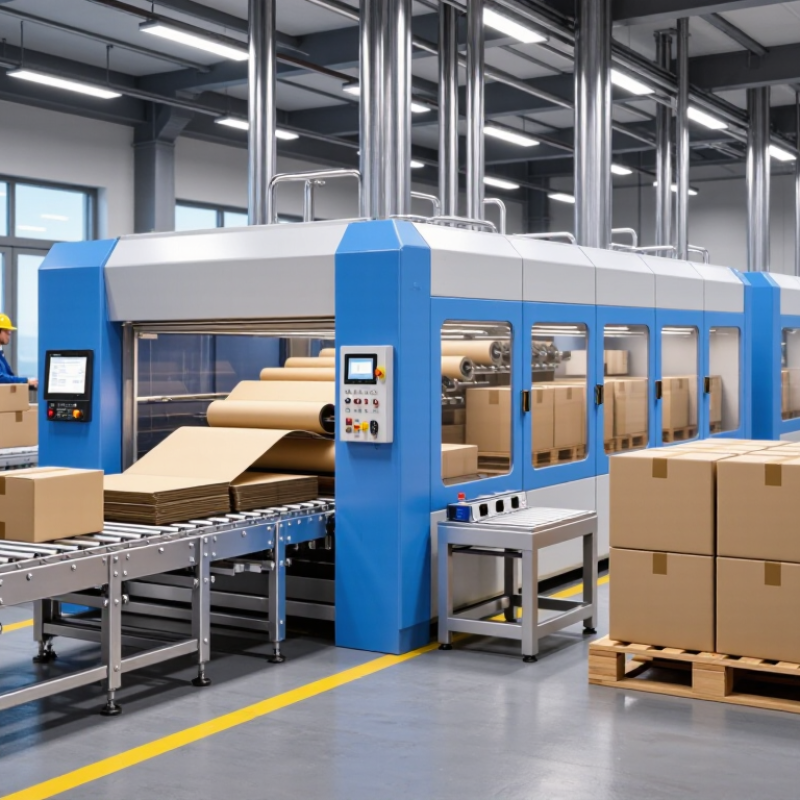
What Is the Top Box Manufacturing Machine in 2026?

What Defines a Top Box Manufacturing Machine in 2026?

What Is the Top Box Manufacturing Machine in 2026?

What Defines a Top Box Manufacturing Machine in 2026?

In 2026, a top box manufacturing machine is not simply the fastest machine on the floor. It produces accurate box dimensions across the board grades and sizes a plant actually uses. Fortune Business Insights’ packaging machinery market report estimated the global market at USD 46.43 billion in 2024 and projected USD 69.58 billion by 2032. The figures show a growing equipment market, but they do not prove that one machine suits every factory.

A better measure is dependable output: accepted boxes per hour, material waste, and repeatable changeovers. Look for controls that operators can understand, safety guarding, accessible maintenance points, and data that can connect with existing production systems. Test the machine using your own board and job sizes, not only a supplier’s demonstration stock. A high rated speed can be impressive; it can also disappoint when frequent adjustments slow real production. That detail is easy to overlook.

Tips: Record changeover time, scrap, and stoppages during a full-shift trial. Check how quickly operators can clear a jam safely. Compare results across several box styles, then review what still needs improvement.

Which Box-Making Technologies Lead the Industry?

What Is the Top Box Manufacturing Machine in 2026?

Which box-making technologies lead the industry? The answer depends on the box, material, and production mix.

For corrugated work, integrated flexo folder-gluers and rotary die-cutters remain central: they print, cut, crease, and fold sheets in a continuous line. Digital print units are useful for short runs and frequent artwork changes. They can reduce plate changes, but may not suit every high-volume order.

Automation increasingly connects these machines to case packing and palletizing. The International Federation of Robotics’ World Robotics 2024 report recorded 4,281,585 industrial robots operating worldwide in 2023, 10% more than the year before. That figure covers many industries, not box plants alone. Still, it signals wider access to robotic handling.

Speed matters. Waste does too. FEFCO’s European industry statistics put corrugated-board production at roughly 50 billion square metres annually, a scale that makes uptime and material control practical priorities.

Yet a faster line is not automatically a better one. A plant running many sizes may value quick changeovers more than peak speed. Before choosing, compare actual output, setup time, reject rates, and operator requirements on your own jobs.

How Do Leading Machines Compare in Speed, Quality, and Cost?

Choosing a top box manufacturing machine in 2026 depends on the boxes a plant actually makes. A fast line may produce thousands of blanks per hour, yet frequent size changes can erase its advantage. Watch a live run: record setup time, jams, and whether folded corners meet cleanly.

Quality shows up in small details: square scores, clean cuts, and adhesive that holds after stacking. Ask for samples made from your own board grade, not polished demonstration stock. Measure reject rates over a full shift. One sample proves little.

Purchase price is only one part of the bill. Include tooling, energy use, maintenance hours, operator training, and spare-part availability. A slower machine with stable output may cost less per saleable box than a faster line needing constant adjustment. Forecasts are imperfect; board quality and crew experience change results. Compare cost per accepted box across several production days, and ask for documented service response times and output estimates under your conditions.

Which Machine Fits Different Production Requirements?

The top box manufacturing machine in 2026 depends on the boxes you make, your order size, and how often designs change. A compact semi-automatic machine can suit a workshop producing short runs of standard cartons. Operators load sheets by hand, so output depends partly on their pace. That is a real trade-off.

For frequent, high-volume orders, an automatic folder-gluer can fold and glue cartons continuously. Check its supported board thickness, box dimensions, and changeover time before comparing advertised speed. A rotary die cutter may be a better fit for unusual shapes or precise cutouts. If printing and slotting happen in the same line, confirm that each station can handle your typical sheet size without slowing the next step.

The best fit is usually the machine that removes your actual production bottleneck, not the one with the most features. Track daily output, rejected sheets, and setup minutes across several orders. Then compare labor, floor space, maintenance access, and power needs. Small details matter. A line that runs quickly on one box style may struggle when specifications change. I would also leave room for uncertainty: supplier estimates rarely reflect every shift, material, or operator. Test representative jobs before committing, and ask how settings are adjusted between runs.

What Is the Top Box Manufacturing Machine in 2026?

Compare typical production-rate ranges to find a machine that fits your operation.

These indicative ranges are for planning purposes, not guaranteed machine specifications. Actual output depends on box style, board grade, setup time, operator skill, and workflow. Manual equipment suits short runs and frequent changes; semi-automatic machines fit growing workloads; integrated automatic lines are best suited to sustained, high-volume production.

What Trends Are Shaping Box Manufacturing Machines in 2026?

What Is the Top Box Manufacturing Machine in 2026?
What Trends Are Shaping Box Manufacturing Machines in 2026?

In 2026, the strongest box-making equipment is not simply the fastest. Manufacturers are looking for machines that balance output, changeover time, and consistent box quality. Automated setup systems can adjust creasing and cutting settings for different box sizes, reducing manual adjustments between orders. Connected sensors also help operators spot feeding problems or uneven folds before they create a larger batch of waste. Still, automation cannot fix poor material handling. That part is often underestimated.

Sustainability is shaping machine design, too. More precise cutting can reduce board offcuts, while careful pressure control helps prevent crushed edges. Flexible equipment is valuable for short runs and changing order sizes, but added features can increase maintenance needs. A practical comparison should include usable output, changeover time, reject rates, and operator training—not just the advertised speed. Real production conditions matter.

Tips: Test a machine with your own board grades and box styles. Track waste and downtime during the trial. Ask how long routine cleaning and tool changes take. Small details count.

What Is the Top Box Manufacturing Machine in 2026? — What Trends Are Shaping Box Manufacturing Machines in 2026?

The best machine depends on box type, order volume, print requirements, and available floor space. The outlook below compares common equipment and industry trends; performance varies by machine configuration, material, and operating conditions.

Machine or Process Main Function Best-Fit Production 2026 Outlook Useful Performance Measures
Integrated corrugated flexo printer-slotter-folder-gluer line Prints, slots, folds, and glues corrugated board to produce finished boxes in a connected workflow. High-volume production of regular slotted containers and other repeat box designs. Strong all-round choice for plants seeking high throughput and fewer separate handling steps. Setup automation and inline inspection are increasingly important. Good boxes per hour; setup and changeover time; print registration; scrap rate; machine availability.
Digital corrugated printer Prints variable or short-run graphics directly onto corrugated sheets or board. Short runs, frequent artwork changes, prototypes, and customized packaging. Digital printing supports shorter production runs and avoids the need for conventional printing plates, though cost per box depends on run length, coverage, and equipment. Print speed; changeover time; color consistency; ink use; cost per printed box.
Flatbed digital cutting table Cuts and creases packaging blanks using digital design files and tool heads. Samples, prototypes, small batches, and complex or frequently revised designs. Useful for rapid design changes and tooling-free short runs. It is generally not a replacement for dedicated high-speed tooling on large, repeat orders. Cutting and creasing time per sheet; setup time; dimensional accuracy; material waste.
Corrugated flexo folder-gluer Prints and converts corrugated blanks, then folds and glues them into boxes. Recurring box styles produced in medium-to-large batches. Automation of feeding, adjustment, and quality checks can help reduce manual intervention and improve repeatability. Good boxes per hour; order changeover time; glue-joint quality; reject rate.
Die-cutting machine Uses a cutting die to create shaped blanks, openings, folds, and other features. Die-cut cartons, retail packaging, display packaging, and designs that cannot be made efficiently by standard slotting. Remains important for repeatable specialty shapes. Quick-change tooling and accurate registration support shorter runs and more frequent design changes. Sheets per hour; die setup time; cutting accuracy; waste per job.
Case erector and case sealer Forms flat corrugated blanks into cases and closes filled cases with tape or adhesive. Packaging lines that need consistent case forming and closing with reduced manual handling. Packaging-line integration and adjustable formats are key considerations when product sizes or case styles vary. Cases per minute; jam frequency; format-change time; seal consistency.
Vision inspection and inline quality systems Checks printed graphics, registration, codes, and selected production defects during or after converting. Production with demanding print, traceability, or customer quality requirements. Connected inspection can help identify defects earlier and support process monitoring; inspection coverage depends on the system and line setup. Defect detection rate; false-reject rate; inspection coverage; traceability records.
Overall selection guide Matches equipment choice to the factory’s product mix and operating goals. Integrated flexo converting for repeat, high-volume corrugated boxes; digital printing and cutting for short runs, prototypes, and frequent customization. There is no single best machine for every plant. Automation, shorter changeovers, digital workflows, inspection, and efficient material use are major decision factors. Compare total cost per acceptable box, throughput, changeover time, scrap, labor needs, energy use, and service requirements.
Scroll to Top