China Top 10 Excavation Equipment Manufacturers
China’s Excavation Equipment industry has become a major force in global construction machinery. Its manufacturers serve mines, highways, ports, farms, and urban redevelopment projects. Excavators now arrive with hybrid drives, telematics, low-emission engines, and increasingly precise hydraulic controls.
Industry reports offer useful, but imperfect, evidence. Off-Highway Research tracks global construction equipment demand, production, and regional sales. The 2024 reports from Grand View Research and Fortune Business Insights also identify infrastructure spending, mining activity, and rental fleets as important growth factors. Their market boundaries differ, however. Some include loaders and attachments, while others focus mainly on excavators. Direct comparisons can therefore mislead.
The manufacturers discussed in this China Top 10 list are assessed through practical signals. These include product range, operating weight, hydraulic performance, export reach, after-sales support, and documented innovation. A clean factory floor matters less than a tracked excavator working reliably beside a muddy road. Parts availability matters even more.
Jim Umpleby, chairman and chief executive of Caterpillar, has said, “We are focused on helping our customers build a better world.” That principle also challenges Chinese manufacturers. Competitive pricing alone cannot secure long-term trust. Buyers increasingly expect measurable fuel savings, safer cabins, transparent specifications, and dependable dealer networks.
The ranking is not absolute. Public data remains uneven. Some companies disclose little export information. Regional performance may also change quickly. Still, the following overview provides a practical starting point for evaluating China’s leading excavation equipment manufacturers.
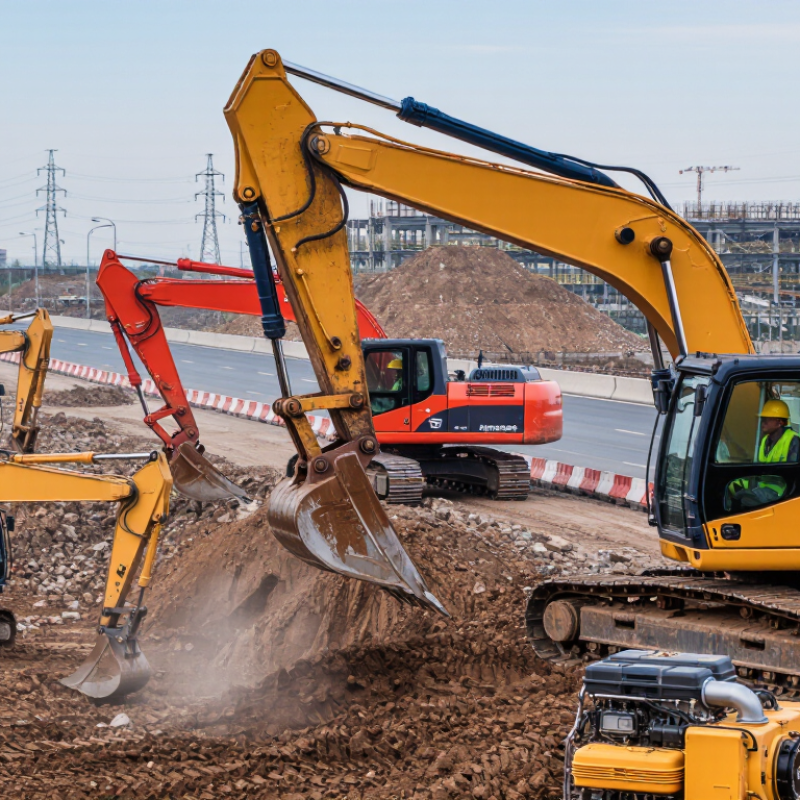
Industry Overview: China’s Excavation Equipment Manufacturing Sector
China’s excavation equipment sector is shifting from rapid volume growth toward stronger engineering capability. The China Construction Machinery Industry Association reported 195,018 excavators sold in 2023. Domestic sales fell 40.8%, while exports reached 105,038 units, increasing 11.5%.
This contrast reveals an industry with expanding international reach but uneven internal demand. Manufacturers are investing in hydraulic efficiency, electronic controls, operator safety, and low-emission power systems. In factory assessments, practical details matter. Weld consistency, cylinder sealing, and service-part availability often influence purchasing decisions more than brochure specifications.
The sector also benefits from a deep industrial supply chain. China’s National Bureau of Statistics reported continued growth in high-tech manufacturing investment during 2023, supporting automation and component development. However, capacity pressure remains visible. Some factories can produce quickly, yet their testing systems still need refinement. That gap deserves attention.
Market data from Off-Highway Research and annual industry statistics indicates continued competition in compact, medium, and large excavator categories. Demand is increasingly linked to infrastructure renewal, mining, energy projects, and overseas construction. Buyers now examine fuel consumption across complete work cycles, not only rated engine power. Digital monitoring is becoming practical, but connectivity standards are still inconsistent. The next stage may depend less on output volume and more on verified reliability in difficult soil, heat, dust, and long-distance service conditions.
China Top 10 Excavation Equipment Manufacturers - Industry Overview: China’s Excavation Equipment Manufacturing Sector
| No. | Equipment Segment | Typical Operating Weight | Typical Engine / Motor Output | Typical Bucket Capacity | Main Applications in China | Market Characteristics | Electrification Trend |
|---|---|---|---|---|---|---|---|
| 1 | Micro Excavators | 0.8–3.5 tonnes | 8–25 kW | 0.02–0.12 m³ | Urban renovation, landscaping, utility repair, indoor demolition | Compact dimensions and low transport cost support rental and urban demand. | High; battery-electric models are suitable for low-noise and indoor work. |
| 2 | Mini Excavators | 3.5–6 tonnes | 20–45 kW | 0.10–0.30 m³ | Municipal construction, farms, drainage, road maintenance | One of the most flexible classes for small contractors and equipment rental fleets. | Growing; electric versions are increasingly used in cities and enclosed sites. |
| 3 | Small Crawler Excavators | 6–13 tonnes | 40–75 kW | 0.20–0.55 m³ | General excavation, foundation work, agricultural infrastructure | Balances maneuverability, productivity, and operating cost across regional projects. | Moderate; hybrid and battery solutions remain project-dependent. |
| 4 | Medium Crawler Excavators | 13–25 tonnes | 75–150 kW | 0.45–1.20 m³ | Housing, highways, railways, water conservancy, quarrying | A core volume segment with broad domestic and export applications. | Early-stage; efficiency improvements and hybrid hydraulic systems are common. |
| 5 | Large Crawler Excavators | 25–45 tonnes | 150–280 kW | 1.00–2.50 m³ | Large earthworks, mining, ports, major transport infrastructure | Demand is closely linked to infrastructure investment and mineral activity. | Limited; diesel efficiency, emissions control, and telematics remain priorities. |
| 6 | Heavy Mining Excavators | 45–100+ tonnes | 280–750+ kW | 2.50–6.00+ m³ | Open-pit mining, overburden removal, large-scale material handling | Low-volume, high-value equipment requiring specialized engineering and service. | Selective; electric drive and trolley-assisted systems are evaluated for mines. |
| 7 | Long-Reach Excavators | 20–45 tonnes | 120–250 kW | 0.30–1.20 m³ | River dredging, slope work, canal cleaning, demolition | Demand is project-based and depends on attachment configuration and reach. | Low to moderate; hydraulic efficiency and remote operation are key themes. |
| 8 | Wheeled Excavators | 10–25 tonnes | 70–160 kW | 0.30–1.00 m³ | Urban roads, utility projects, material handling, municipal services | Road mobility reduces the need for transport vehicles between nearby job sites. | Moderate; urban emissions requirements encourage hybrid and electric development. |
| 9 | Demolition Excavators | 20–60 tonnes | 120–350 kW | 0.40–2.00 m³ | Building dismantling, recycling, industrial-site clearance | Specialized booms, reinforced structures, hydraulic attachments, and safety systems are essential. | Moderate; low-noise operation and energy recovery are increasingly relevant. |
| 10 | Specialty Excavation Platforms | Varies by configuration | 40–500+ kW | Application-specific | Tunnel construction, forestry, underwater work, slope stabilization | Customization, attachments, operator safety, and project engineering determine competitiveness. | Application-dependent; remote control and automation are important development areas. |
Note: The specifications shown are indicative industry ranges for equipment manufactured and used in China. Actual values vary according to operating configuration, attachment, emission standard, duty cycle, and project requirements. The table intentionally excludes company and brand-specific data.