What Are the Top 10 Portable Milk Frothers?
A Portable Milk Frother can turn ordinary milk into a creamy topping for coffee, cocoa, or matcha. The best choice depends on more than foam. Battery life, whisk speed, grip comfort, cleaning, and storage all matter during daily use. A frother that works well at home may feel less convenient in a work bag or hotel room.
This guide explores ten portable options and the details that separate them. It considers how quickly each model froths, what kinds of milk it can handle, and whether its controls feel simple in a small kitchen. A quiet motor can be welcome before sunrise. A detachable whisk can make cleanup easier. Small design choices count.
There is no single winner for every routine. Some users want dense foam for cappuccinos; others need a compact tool for occasional drinks. Product specifications can also change, and performance may vary with milk temperature, fat content, and technique. That is worth keeping in mind. A lower price does not always mean poor value, and a higher price does not guarantee better foam. The comparisons below focus on practical features, stated product details, and common buying considerations. Use them to narrow the field, then check current specifications and care instructions before choosing a model.
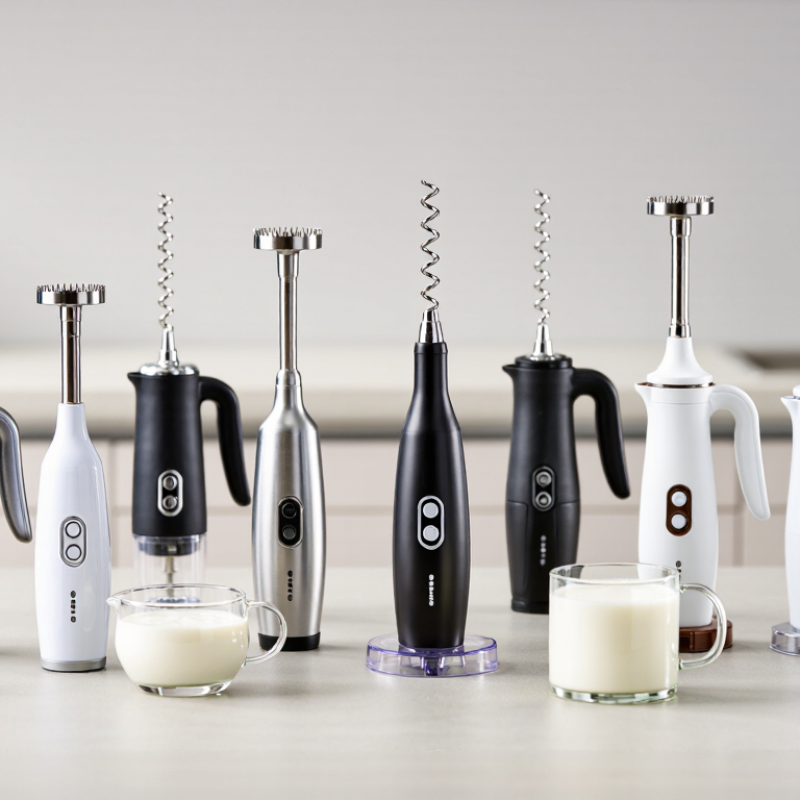
What Portable Milk Frothers Are and How They Work
Portable milk frothers are compact tools for adding foam without a countertop machine. Most have a small handle, a thin shaft, and a whisk-shaped coil at the tip. Battery-powered models are common, while rechargeable versions use a built-in battery. Their light weight makes them easy to store in a drawer or pack for travel.
A small motor spins the coil rapidly. The moving wires pull air into milk, creating bubbles that form a light foam. For best results, use cold milk in a narrow cup and keep the whisk just below the surface at first. Then lower it slightly as the foam grows. It takes seconds. The texture depends on milk type, temperature, and how steadily you move the tool. Foam can be uneven, especially in a wide mug; that is a real limitation, not a user failure. These tools do not heat milk, so warm it separately if desired.
Tips: Fill the cup only partway, since milk expands as air enters. Rinse the whisk promptly, then run it briefly in clean water to clear trapped milk. Keep the handle dry, and check whether batteries or charging are needed before taking it out. A little patience helps. Don’t expect café-level foam every time; that expectation may be too high.
What Are the Top 10 Portable Milk Frothers? - What Portable Milk Frothers Are and How They Work
Comparison of common portable frother designs. Timing and foam results are approximate and vary with milk type, temperature, fill level, and device.
| # | Portable Frother Type | How It Works | Power or Operation | Typical Frothing Time | Portability Notes |
|---|---|---|---|---|---|
| 1 | Battery-powered handheld whisk | A small motor spins a wire whisk to incorporate air into milk. | Replaceable batteries; usually operated with a button. | About 15–30 seconds | Lightweight and compact; requires spare or fresh batteries over time. |
| 2 | USB-rechargeable handheld whisk | An electric motor turns a whisk head; the internal battery is recharged by cable. | Built-in rechargeable battery. | About 15–30 seconds | Convenient for travel when charged; needs periodic access to a charging source. |
| 3 | USB-C rechargeable whisk | Uses the same spinning-whisk method, with a USB-C port for charging. | Built-in rechargeable battery; USB-C charging. | About 15–30 seconds | Easy to charge with a compatible cable; charging speed and battery life vary by device. |
| 4 | Two-speed handheld whisk | Offers different whisk speeds to suit gentle mixing or faster aeration. | Battery-powered or rechargeable, depending on design. | About 15–30 seconds | Still compact; a lower speed can help reduce splashing in a small cup. |
| 5 | Detachable-whisk frother | A removable whisk head spins to aerate milk and can be separated for cleaning. | Usually battery-powered or rechargeable. | About 15–30 seconds | A removable head can make cleaning and compact storage easier; keep small parts together. |
| 6 | Hand-pump frother | Repeatedly moving a plunger and mesh screen through milk mixes in air. | Manual; no batteries or charging required. | About 30–60 seconds of pumping | Self-contained and power-free, but typically larger than a handheld wand. |
| 7 | Compact press-style frother | A plunger drives a screen through milk inside a small container to create foam. | Manual plunger operation. | About 30–60 seconds of pumping | Does not depend on power; the container takes more bag space than a wand. |
| 8 | Shaker-style frothing cup | Shaking milk in a sealed cup agitates it and can produce foam. | Manual shaking; no motor required. | About 30–60 seconds of shaking | Useful where electricity is unavailable; requires a secure, leak-resistant lid. |
| 9 | Frother with storage stand | A handheld electric whisk rests upright in a small stand between uses. | Battery-powered or rechargeable motor. | About 15–30 seconds | The stand helps with countertop storage but adds an item to pack for travel. |
| 10 | Travel mug with integrated frothing mechanism | A built-in whisk or agitator moves milk inside a travel-style vessel. | Typically battery-powered or rechargeable; operation varies by design. | Often about 20–60 seconds | Combines vessel and frother, but is bulkier than a standalone wand. |
A portable milk frother aerates milk; it does not necessarily heat it. For an electric wand, place the whisk just below the milk’s surface and move it gently to limit splashing. Always follow the device’s cleaning and temperature guidance.