What Is a Marine Explosion Proof Light?
A marine explosion proof light is built for places where flammable gases, vapors, or dust may create an ignition risk. On a vessel, that may mean a fuel-handling area, paint locker, or machinery space. The lamp’s enclosure helps prevent internal sparks or heat from igniting the surrounding atmosphere. It also needs to withstand salt spray, vibration, and frequent temperature changes. A tough-looking housing alone is not proof of suitability.
As a marine electrical engineer might put it: “Choose the light for the hazard, not just the location.” That is a practical reminder, not a substitute for a documented assessment. The correct marine explosion proof light depends on the area classification, ambient conditions, mounting position, and power supply. Small details matter. A cable entry that does not match the enclosure can undermine the protection. So can a poorly sealed cover after maintenance.
This guide explains how these lights work, what their ratings mean, and which details deserve close inspection. It also considers a less comfortable point: buyers can focus on the product label and overlook the installation. That is easy to do. Reliable selection depends on verified specifications, clear documentation, and advice from qualified marine electrical professionals. Even then, conditions aboard a vessel can change, so the original choice may need review.
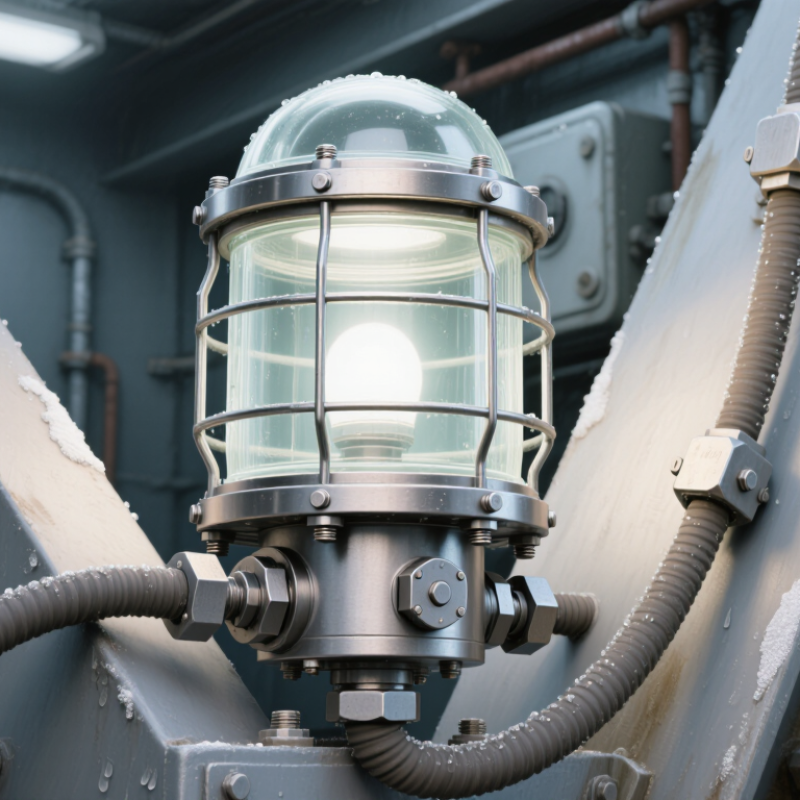
Definition and Purpose of a Marine Explosion-Proof Light
A marine explosion-proof light is a luminaire designed for classified hazardous areas aboard vessels. Its construction limits the risk of igniting flammable gas. Depending on its protection method, it may contain an internal ignition or prevent flames from reaching the surrounding atmosphere. It does not make an explosive atmosphere safe. That distinction matters. The IEC 60079 series specifies requirements for equipment used in explosive atmospheres. Markings identify details such as protection method, gas group, and temperature class.
Onboard, these lights may serve fuel-handling spaces, paint stores, or designated machinery areas where vapors could encounter an electrical fault. Before installation, a qualified technician checks the area classification, ambient-temperature range, cable entries, corrosion resistance, and mounting position. A tight seal is not enough. Salt spray and vibration can weaken glands or loosen fittings, and the light’s surface temperature must suit the identified atmosphere. Explosion protection also does not automatically mean resistance to seawater or vibration. EMSA’s Annual Overview of Marine Casualties and Incidents 2024 recorded 2,676 marine casualties and incidents in 2023; the figure includes many event types, not explosions alone. It shows why lighting selection belongs within broader vessel-risk controls. Field conditions are messier than drawings.
What Is a Marine Explosion-Proof Light? — Definition and Purpose
| Dimension | Description | Marine Relevance |
|---|---|---|
| Definition | A marine explosion-proof light is a luminaire designed and certified for use in specified hazardous areas where flammable gases, vapors, mists, or combustible dust may be present. | It provides illumination in designated locations aboard vessels and offshore installations where an ignition hazard may exist. |
| How “explosion-proof” works | In a flameproof design, the enclosure is built to withstand an internal ignition and prevent flames from igniting the surrounding hazardous atmosphere. Other protection concepts may use different methods and require their own suitable certification. | The term describes a defined protection method, not a claim that a light can withstand every explosion or hazard. |
| Primary purpose | To provide task, general, or emergency lighting while reducing the risk that the equipment could ignite a hazardous atmosphere under its specified conditions of use. | Suitable lighting supports safe operations in areas such as fuel-handling spaces, cargo areas, and certain process locations, when the area classification calls for it. |
| Typical components | Depending on the design, a unit may include a protected light source, a robust enclosure, a sealed cable entry, a mounting system, and impact-resistant optical components. | Materials and construction are selected to meet the product’s stated environmental and hazardous-area ratings. |
| Marine environmental demands | Marine luminaires may be specified for resistance to corrosion, vibration, impact, moisture, and temperature changes. These properties vary by product and must be checked in its documentation. | Salt spray, wet locations, vessel movement, and outdoor exposure can affect equipment selection and service life. |
| Area classification | Hazardous areas are classified according to the likelihood and duration of an explosive atmosphere. Zone systems commonly use Zones 0, 1, and 2 for gases or vapors, and Zones 20, 21, and 22 for combustible dust. | The light’s certification and protection level must be appropriate for the specific classified area and the material present. |
| Temperature limits | Equipment is assigned a temperature classification or maximum surface temperature so it can be assessed against the ignition temperature of the relevant substance. | Selection must consider the hazardous material, ambient temperature range, and the equipment’s marked temperature rating. |
| Standards and certification | Hazardous-area equipment may be assessed under applicable national or international schemes, such as IECEx or ATEX, depending on the market and installation. | Check the actual nameplate, certificate, permitted zones, gas or dust group, temperature rating, and installation requirements; approval requirements vary by jurisdiction. |
| What it does not mean | “Explosion-proof” does not automatically mean waterproof, corrosion-proof, suitable for every hazardous area, or compliant with every marine approval requirement. | Ingress protection, corrosion resistance, marine type approval, and hazardous-area certification are separate characteristics that should be verified individually. |
| Selection and maintenance | Selection should follow the hazardous-area classification, electrical design, installation instructions, and applicable regulations. Inspection and maintenance should be performed by qualified personnel. | Damaged seals, incorrect cable glands, unauthorized modifications, or unsuitable replacement parts can compromise the certified protection. |
Important: The correct luminaire depends on the area classification, hazardous substance, environmental conditions, and applicable regulations. Confirm requirements with the vessel’s engineering or safety team and the equipment certification documents.