What Are Hotel DND Signs and How Do They Work?
What Are Hotel Dnd Signs and How Do They Work?
Hotel DND Signs, meaning “Do Not Disturb” signs, give guests a simple way to request privacy. Most signs hang from the exterior door handle. One side may read “Do Not Disturb,” while the other requests housekeeping service. Some modern hotels use digital room panels, mobile applications, or touch-screen controls instead.
The process looks simple. A guest places the sign outside the door before sleeping, working, or taking a private call. Housekeeping staff then notice the message during their service rounds. They usually skip the room and record the missed service for later follow-up. Policies can differ between properties, especially for extended DND periods.
Small details matter. A sign can prevent a knock, a ringing bell, or an unexpected interruption. However, it cannot guarantee complete privacy. Hotel staff may still need to respond to safety concerns, maintenance problems, or emergency procedures. Guests should check the property’s written policy rather than assume every hotel works identically.
Horst Schulze, a former Ritz-Carlton executive and respected hospitality expert, expressed the service principle clearly: “The customer is not an interruption of our work; he is the purpose of it.” Hotel DND Signs support that principle by making guest preferences visible. Yet, they are not flawless. A missing sign, unclear wording, or inattentive staff member can create confusion. That weakness deserves attention. Good hotel operations combine visible signs, trained employees, respectful communication, and sensible follow-up procedures.
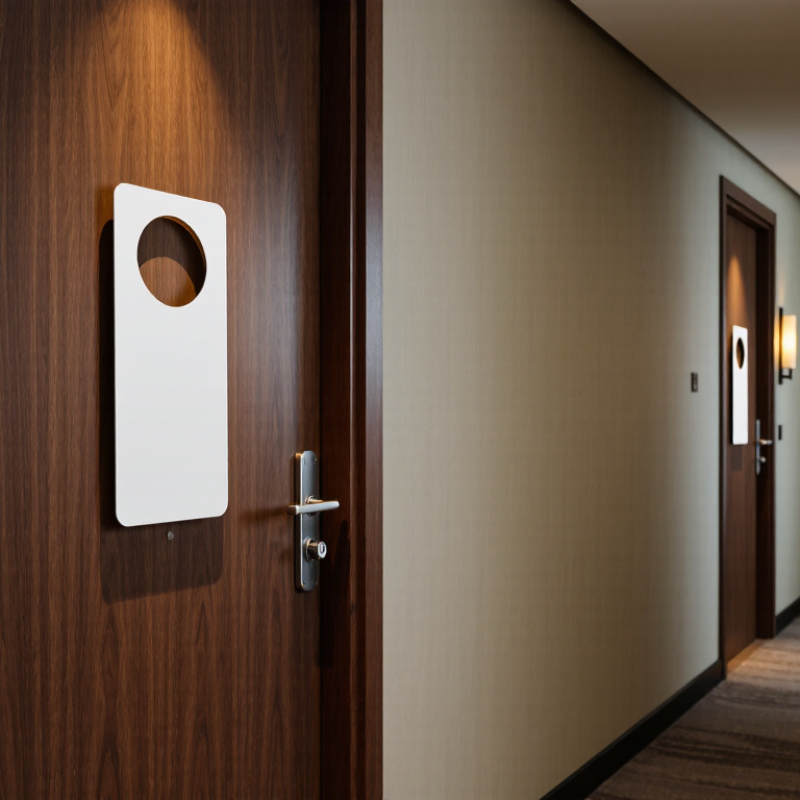
What a Hotel DND Sign Means: Privacy Requests and Staff Boundaries
A hotel DND sign is a request for privacy, not merely a decoration on the door handle. “Do Not Disturb” tells housekeeping and other staff to pause routine visits. A small card. In practice, a housekeeper may see it while pushing a cart down the corridor and skip that room during the current round.
The sign also sets a boundary for guests. Staff should respect the request, avoid knocking for ordinary service, and follow the hotel’s procedures before attempting contact another way. Guests who need fresh towels or room cleaning can remove the sign or contact the front desk. A quick call is often clearer than leaving the request uncertain.
DND does not always mean that staff will never approach the room. A hotel may have safety procedures for unusual situations, and practices can vary by property. If a sign remains up for a long time, staff may follow their established check-in process rather than assume everything is fine. That can feel intrusive, even when the intention is care. The system is not perfect. Guests can ask at check-in how privacy requests are handled, especially if they need uninterrupted rest or have a specific concern.
What Are Hotel DND Signs and How Do They Work? — What a Hotel DND Sign Means: Privacy Requests and Staff Boundaries
| Situation or Sign | What It Usually Means | Typical Staff Response | Guest Consideration |
|---|---|---|---|
| “Do Not Disturb” (DND) displayed | The guest is asking to avoid routine room visits, calls, or interruptions. | Housekeeping and other staff generally postpone non-urgent entry or service and follow the property’s procedures. | Remove the sign or contact the front desk when service is wanted. |
| “Please Make Up Room” displayed | The guest is requesting housekeeping service, subject to staffing and service hours. | FAQS What does a hotel DND sign mean? It asks staff to pause routine visits and respect your privacy. A small card sets a clear boundary. Will housekeeping enter while the sign is displayed? Staff should avoid entering for ordinary service and follow the property’s procedures. If you need towels, call the front desk or remove the sign. Does DND guarantee that nobody will approach my room? No. Extended requests or safety concerns may lead to an approved check-in. That can feel intrusive, even when staff intend to help. What might staff do if a DND sign stays up for a long time? They may note when they saw it, alert a supervisor, and make discreet contact through an approved channel. A quiet hallway proves little. Can staff enter during an emergency? Trained staff or responders may need to check a room during an urgent threat. A sign does not override emergency procedures. How can I get fresh towels without an unexpected visit? Call the front desk with a clear request. A quick call is often better than leaving the sign’s status uncertain. How should hotel staff handle prolonged DND requests? Follow written procedures, coordinate with a supervisor, and record actions factually. Shift changes can still cause mistakes, so teams should review near misses. What should I ask about privacy at check-in? Ask how prolonged DND requests and emergency access are handled. Local requirements and property procedures can differ. ConclusionHotel Dnd Signs let guests request privacy and help set clear boundaries for housekeeping and other staff. They may be displayed as door hangers or magnetic cards, or sent through a hotel’s digital system. Whatever the format, the sign communicates a preference rather than an absolute promise that staff will never approach the room. Hotels may record extended requests and follow their own procedures for checking on guest welfare. |