Choosing among China’s top Fuse Clamp manufacturers requires more than comparing unit prices. A clamp may look identical in a product photograph, yet differ in contact resistance, spring force, plating thickness, and heat performance. Those differences affect fuse stability inside vehicles, control cabinets, solar combiner boxes, and industrial equipment.
Recent reports from MarketsandMarkets and Grand View Research identify automotive electrification, renewable-energy installations, and industrial automation as major drivers of global fuse demand. Their findings also point toward tighter requirements for compact protection components, higher current capacity, and improved thermal reliability. However, market growth does not prove that every supplier can meet these expectations. A catalogue is not evidence.
Electrical-contact specialist Dr. Paul G. Slade offers a useful principle: “Reliable current transfer begins with stable contact pressure, not appearance.” This idea matters when evaluating a Fuse Clamp factory in China. Ask for copper-alloy specifications, plating details, temperature-rise data, cycle-testing results, and traceable inspection records. Request samples before approving mass production. Check whether the supplier follows relevant IEC or UL requirements for the intended application. Verify them independently.
Experience also reveals a common weakness. Some buyers compare only FOB prices and overlook tooling ownership, packaging damage, and inconsistent crimp dimensions. That decision can become expensive later. A dependable manufacturer should explain its stamping process, mold controls, incoming-material inspection, and corrective-action procedure clearly.
The best choice is not always the cheapest factory. It is the supplier that can repeat performance, document quality, and respond when something goes wrong. This guide examines those practical signals and the questions buyers should ask before selecting a Chinese Fuse Clamp manufacturer.
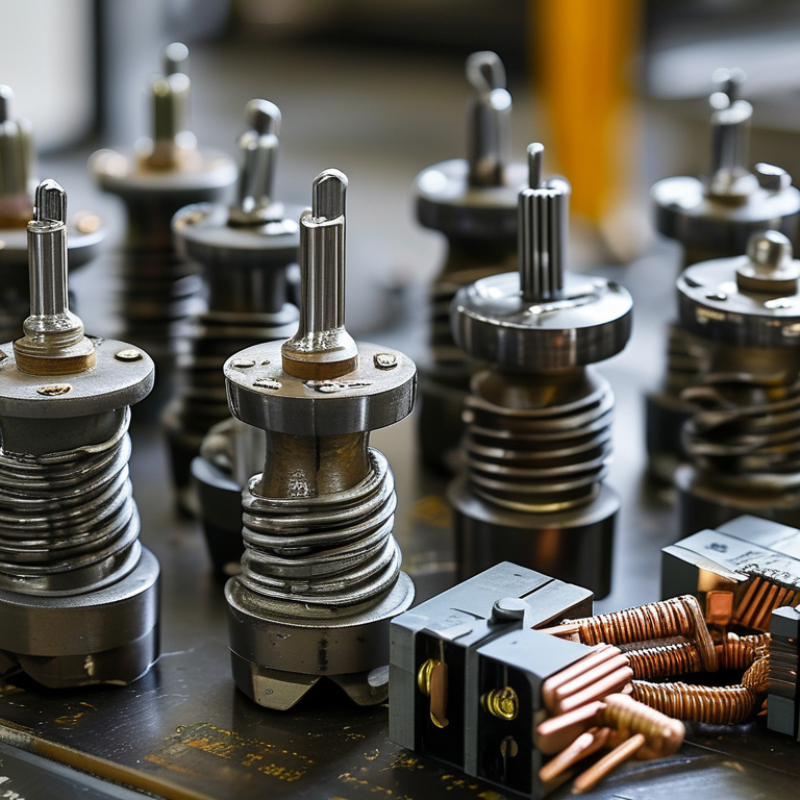
A fuse clamp is a small component that holds a fuse firmly inside an electrical circuit. It creates a stable path for current and allows safer fuse replacement. In practical inspections, a loose clamp often shows heat marks, discoloration, or softened insulation. These details matter more than a polished catalog photograph.
Manufacturer choice matters because clamp quality affects contact resistance, temperature rise, and service life. Reliable suppliers should provide rated current, voltage, material, and operating-temperature data. Ask for dimensional drawings and test records. Copper alloy contacts with suitable plating usually resist corrosion better. The housing should also withstand heat and mechanical stress. A sample test can reveal weak spring pressure or poor alignment. It is a simple check.
Production consistency deserves close attention. A capable factory controls stamping, plating, molding, and final assembly through documented procedures. Traceability helps identify problems by batch, not guesswork. Check whether the manufacturer can adjust the clamp for wire size, fuse shape, and installation space. Communication is part of technical quality. Slow or unclear answers may create larger failures later. Not every low-priced option is unsafe, but price alone proves very little.
A practical buyer should inspect samples under vibration, repeated insertion, and elevated temperature. Ask for corrective action when results are unclear. Some specifications are overlooked. Even experienced teams can miss them. Reliable cooperation comes from evidence, not confident promises.

China Top Fuse Clamp Manufacturers How to Choose?
Which Technical Standards Should Top Fuse Clamp Manufacturers Meet?
A reliable fuse clamp manufacturer should begin with the correct fuse category and application voltage. IEC 60269 is relevant for many low-voltage fuse systems, while IEC 60127 covers miniature fuse applications. The complete fuse-holder assembly may also require IEC 60127-6 or UL 4248 evaluation, depending on the target market. Ask for current ratings, voltage ratings, temperature-rise data, and short-circuit test reports. Do not accept a certificate without checking its scope. The document may cover a similar product, not the exact clamp design.
Material control matters as much as electrical testing. The clamp should use stable conductive metal with consistent spring force. Insulating parts need suitable flammability performance and resistance to heat, tracking, and aging. Check creepage and clearance distances inside the finished assembly. A small dimensional change can create a serious weakness. Samples should undergo insertion-force testing, vibration testing, thermal cycling, and repeated fuse replacement. In real projects, a polished sample can still hide loose terminals or uneven plating. That issue is easy to miss.
Tips: Request batch inspection records, not only a laboratory report. Confirm whether testing used your actual fuse size and wire configuration. Review ISO 9001 controls, but do not treat certification as proof of every technical claim. Factory audits, traceability, and incoming-material checks provide stronger evidence. Some specifications may need revision after testing. That is normal, and honest manufacturers should explain why.
China Top Fuse Clamp Manufacturers: How to Choose?
How to Compare Fuse Clamp Materials, Designs, and Performance
When comparing fuse clamps from China, start with the material, not the catalog photo. Copper and brass provide stable conductivity, while plating helps resist oxidation and humidity. Tin plating suits many general applications. Nickel plating may perform better near higher temperatures. The insulating body also matters. Heat-resistant thermoplastics can reduce deformation around warm fuse holders. Ceramic bodies offer stronger thermal stability, but they may increase cost and brittleness.
Design affects installation and long-term reliability. Check the clamp’s spring force, terminal shape, wire-entry space, and fuse retention. A loose contact can create heat at normal current levels. Tight contact can damage the fuse during replacement. Look for clean crimp areas and consistent dimensions. Small differences matter. For vibrating equipment, inspect locking features and pull-out strength. For compact boards, compare creepage distance and clearance carefully.
Performance should be verified through samples and test records. Measure contact resistance before and after temperature cycling. Test current-carrying capacity under realistic airflow conditions. Ask manufacturers for material certificates, production traceability, and inspection data. I once focused too heavily on rated current and overlooked terminal heating. That was a poor assumption. A clamp may pass a short bench test yet weaken after repeated heating. Repeat the test. Compare several batches, not only one attractive sample.
Comparison of common fuse clamp material options using normalized engineering scores from 1 to 10. The evaluation considers conductivity, corrosion resistance, spring retention, and manufacturability rather than any specific supplier or brand.
How to read the chart: Tin-plated copper combines high conductivity with improved corrosion resistance, while phosphor bronze is typically preferred when spring retention and repeated contact reliability are important. Brass offers good manufacturability and balanced performance, whereas bare copper provides excellent conductivity but lower surface corrosion protection.
Reliable fuse clamp manufacturers reveal their discipline through measurable controls, not polished catalogs. ASQ’s Global State of Quality research found that 85% of surveyed organizations viewed quality as a competitive differentiator. That evidence matters when comparing suppliers.
Ask for material certificates, incoming inspection records, and lot-level traceability. Each batch should identify the alloy, plating thickness, production date, and inspector. Incoming checks should verify dimensions, spring tension, burrs, and contact resistance. Do not accept vague “100% inspected” claims without sampling records. ANSI/ASQ Z1.4 sampling plans can support consistent acceptance decisions, while gauge repeatability and reproducibility studies test measurement reliability.
During production, inspect crimp height and insertion force at defined intervals. Thermal cycling should expose loose connections before shipment. IEC 60269 requirements provide a useful reference for fuse-related performance and safety testing. Plating deserves attention too. Poor coating control can create oxidation, uneven conductivity, or premature heating. A capable factory should show process capability data, preferably with Cpk targets near 1.33 for critical dimensions. Yet capability numbers can be misunderstood. A stable process may still produce the wrong design.
One practical test is a witnessed audit. Check calibrated tools, labeled quarantine areas, and retained samples. Factories sometimes pass document reviews while operators improvise on the line. An audit should compare records with physical parts. Ask for corrective-action reports, not only certificates. That uncomfortable detail often separates dependable quality control from attractive paperwork.
Choosing a top fuse clamp manufacturer requires more than comparing unit prices.
Request a detailed quotation covering materials, tooling, testing, packaging, and shipping. A low price may exclude mold charges or inspection fees. Check whether the clamp uses stable conductive materials and consistent plating. Ask for sample reports, dimensional drawings, and production photos. These details reveal practical manufacturing control better than sales claims.
Customization should be measured carefully. Confirm terminal size, spring pressure, heat resistance, surface treatment, and installation method. A capable supplier can suggest design improvements, but changes should be recorded in approved drawings. Delivery promises also need evidence. Request a production schedule with sample approval, manufacturing, inspection, and dispatch dates. One missed approval can delay a shipment by weeks. I would not trust a perfect schedule without buffer time.
Tips: Compare total cost, not only price. Ask who handles defective parts, replacement shipping, and technical questions after delivery. A reliable after-sales process includes response times, traceable batch records, and a clear corrective-action procedure. Test communication before ordering; slow replies during sampling may become slower after payment. Some evaluations still rely too much on polished samples. That is a weakness worth reconsidering.
Get in Touch
570 Alden Road Unit #10, Markham Ontario Canada, L3R 8N5
Quick Links
Featured Products
Industries