How to Choose Gas Testers in 2026?
Choosing Gas Testers in 2026 requires more than comparing sensors, screen sizes, or advertised battery life. The decision begins with the atmosphere being measured. Oxygen deficiency, toxic gases, combustible vapors, and changing site conditions demand different capabilities. A refinery technician may need a rugged multi-gas monitor, while a wastewater worker may prioritize hydrogen sulfide response and remote alarms. The right device must match the hazard, not merely the purchase budget.
The International Labour Organization estimated nearly three million work-related deaths annually in its 2023 safety report. That figure gives gas detection a human context. OSHA’s confined-space guidance also stresses atmospheric testing before entry and continued monitoring when conditions can change. These recommendations support a practical selection process. Check sensor ranges, detection limits, calibration requirements, alarm visibility, ingress protection, data logging, and service availability. Confirm whether the instrument follows relevant standards, such as IEC 60079-29-1 for flammable gas detectors. Manufacturer claims still require careful verification.
Real workplaces are untidy. Dust covers filters. Cold weather reduces battery performance. Gloves make small buttons difficult. A perfectly specified tester can fail operationally if workers dislike wearing it. That point is easy to underestimate. Review independent test evidence, maintenance records, training needs, and total ownership costs. Consider bump testing and calibration routines before purchase. Portable instruments also need clear alarm behavior in noisy areas. Connected systems may improve visibility, but wireless coverage is not guaranteed everywhere. This guide examines those trade-offs for 2026. It does not assume one universal winner. A better choice is measurable, maintainable, and credible under actual working conditions.
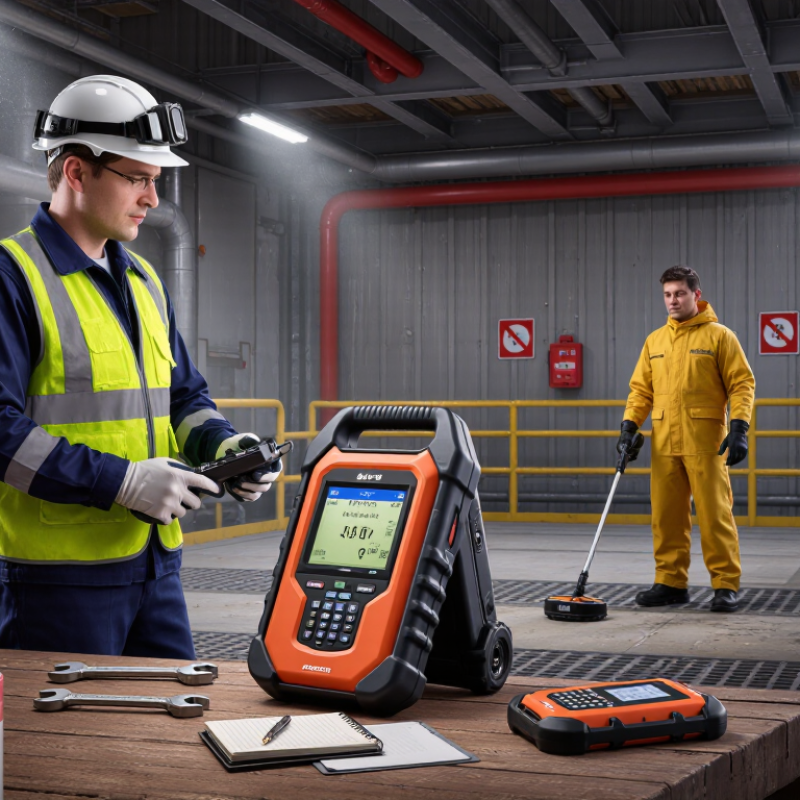
What Gas Testers Measure and Why They Matter
Gas testers are safety instruments, not simple digital thermometers. They sample air and display the concentration of specific gases. Common measurements include oxygen, combustible gases, carbon monoxide, hydrogen sulfide, and selected volatile compounds. Each reading answers a practical question:
Can people breathe safely?
Could ignition occur?
Is a toxic leak developing nearby?
The right tester depends on the working environment. A confined-space inspection may require oxygen, flammable-gas, and toxic-gas sensors together. A maintenance team may need fast response times, clear alarms, strong casing, and readable screens in poor lighting. Check the measuring range, sensor accuracy, battery life, operating temperature, and data-recording function. Calibration support matters too. A sophisticated device becomes unreliable when routine testing is ignored.
In field checks, alarms must be heard over machinery. They must also be felt or seen in darkness. No tester is perfect. Even a recently calibrated unit can give poor results after contamination, impact, or blocked filters. I once treated a stable reading as reassuring, then noticed the sampling line was pinched. That small detail changed the inspection. Choose equipment that supports bump tests, status checks, and simple user training. A clear record of readings can also help supervisors identify repeated changes before they become emergencies.
How to Identify the Right Gas Hazards for Your Workplace
Choosing a gas tester in 2026 should begin with the hazard, not the device. Identify every material, process, and enclosed area where gas can accumulate. Oxygen deficiency is below 19.5%, while oxygen enrichment begins above 23.5%, according to OSHA confined-space guidance. Low oxygen can occur in tanks, pits, and storage rooms. It may not produce any warning smell.
Combustible gases require a sensor measured against the lower explosive limit, or LEL. Methane may appear near drains or waste systems. Hydrogen can collect above batteries and charging equipment.
Carbon monoxide is more likely around engines, furnaces, and welding work. Hydrogen sulfide deserves special attention near wastewater, manure, and some industrial processes. NIOSH lists hydrogen sulfide as immediately dangerous to life or health at 100 ppm.
Do not rely on odor. Smell fatigue can develop quickly.
Toxic gases need different sensing methods. Solvent cleaning, coatings, and fuel handling may require VOC detection through a photoionization sensor, not only a standard four-gas instrument. Review the NIOSH Pocket Guide and current safety data sheets before selecting sensors.
The ILO estimated 2.93 million work-related deaths globally in 2019, with hazardous exposures contributing significantly to preventable harm. That figure makes weak hazard mapping difficult to justify. A four-gas tester is not automatically enough. Recheck assumptions after seasonal changes, ventilation repairs, or new chemicals. Real workplaces evolve faster than written procedures.
Which Gas Tester Features and Sensors Should You Choose
How to Choose Gas Testers in 2026?
Sensor selection should follow the atmosphere, not the product brochure. The International Labour Organization estimated 2.93 million work-related deaths globally in 2019, with hazardous exposures remaining a major concern. A tester for a sewer, battery room, or refinery needs different priorities.
For confined spaces, a four-gas configuration commonly measures oxygen, combustible gases, hydrogen sulfide, and carbon monoxide. NIOSH lists 100 ppm as the immediately dangerous concentration for hydrogen sulfide, while carbon monoxide reaches that level at 1,200 ppm. These figures show why alarm speed, audible output, vibration, and clear screen readings matter.
Choose sensors with suitable ranges, response times, and documented calibration procedures. Oxygen deficiency is not always dramatic. A quiet display can hide a serious problem.
Catalytic combustible sensors can be affected by poisons such as silicones or sulfur compounds. Infrared sensors may perform better in oxygen-deficient atmospheres, but they do not detect every combustible gas. Photoionization sensors help identify many volatile organic compounds, yet humidity and compound type can influence readings.
IEC 60079-29-1 provides performance guidance for flammable-gas detectors, while OSHA guidance emphasizes testing before entry and continuous monitoring when conditions may change. Do not treat “maintenance-free” as risk-free. Field experience suggests batteries, filters, sampling tubes, and calibration records deserve equal attention. I would also question any tester that lacks event logging; memory is unreliable after a long shift.
How to Compare Accuracy, Safety Ratings, and Calibration Needs
How to Choose Gas Testers in 2026?
Accuracy should be judged beyond the number printed on the product sheet. Check the measurement range, resolution, response time, and cross-sensitivity data. A tester may detect methane well but respond differently to solvents or cleaning vapors. Ask for independent test records and traceable calibration certificates. Field conditions matter too. Dust, humidity, vibration, and cold storage can change readings.
Safety ratings need careful comparison. Look for certification suitable for the working area, not merely a general safety label. Check ingress protection for dust and water exposure. Confirm the permitted temperature range and alarm volume near engines or compressors. A bright display helps in darkness, while tactile buttons help workers wearing gloves. Small details matter. I once underestimated glove control during a winter inspection, and the reading took longer to confirm.
Calibration needs should fit the work schedule. Review the manufacturer’s recommended interval, sensor life, calibration gas requirements, and maintenance records. A bump test before each shift can confirm alarm function, but it does not replace full calibration. Record the gas concentration, date, operator, and result. Use certified test gas within its stated expiry period. Some workplaces need monthly checks; others may need shorter intervals after heavy exposure. The right choice depends on risk, usage, and local requirements. No tester stays accurate forever. A cheaper unit can become expensive when sensors, gases, and downtime are overlooked.
How to Choose Gas Testers in 2026?
Comparing accuracy, safety ratings, and calibration needs across common gas-tester types
Values represent typical specifications found in current portable gas-detection equipment. Accuracy is shown as ±% of full scale, where a lower value is better; IP ratings indicate resistance to dust and water; calibration intervals are shown in months. Always confirm the exact sensor range, certification, and calibration requirements before purchase.