How to Choose a 316 Stainless Steel Plate Supplier

Choosing the right 316 Stainless Steel Plate Supplier can determine whether a project performs reliably or creates expensive delays. The decision involves more than comparing prices. Buyers must examine grade accuracy, plate thickness, surface finish, certification, delivery control, and technical support. A supplier may claim “316 stainless,” yet provide limited evidence about molybdenum content, heat treatment, or production origin.

J. R. Davis, editor of ASM Specialty Handbook: Stainless Steels, offers a practical reminder: “Material selection must begin with service conditions, not price.” That principle matters when plates face saltwater, chemical exposure, heat, or frequent cleaning. Ask for mill test certificates, heat numbers, chemical analysis, mechanical results, and applicable ASTM or EN standards. Confirm that documents match the actual plates, not a generic sample.

Small details reveal experience. A dependable supplier can explain whether 316 or 316L is more suitable, how plates are protected during transport, and how surface defects are handled. Inspect the packaging. Check the marking. Review the supplier’s response time.

No supplier is perfect. That is worth admitting. Even experienced companies may face production delays or documentation gaps. The stronger partner responds clearly and corrects problems quickly. This guide explains how to compare a 316 Stainless Steel Plate Supplier through evidence, practical questions, and careful technical judgment. Price still matters. It should not lead the decision.
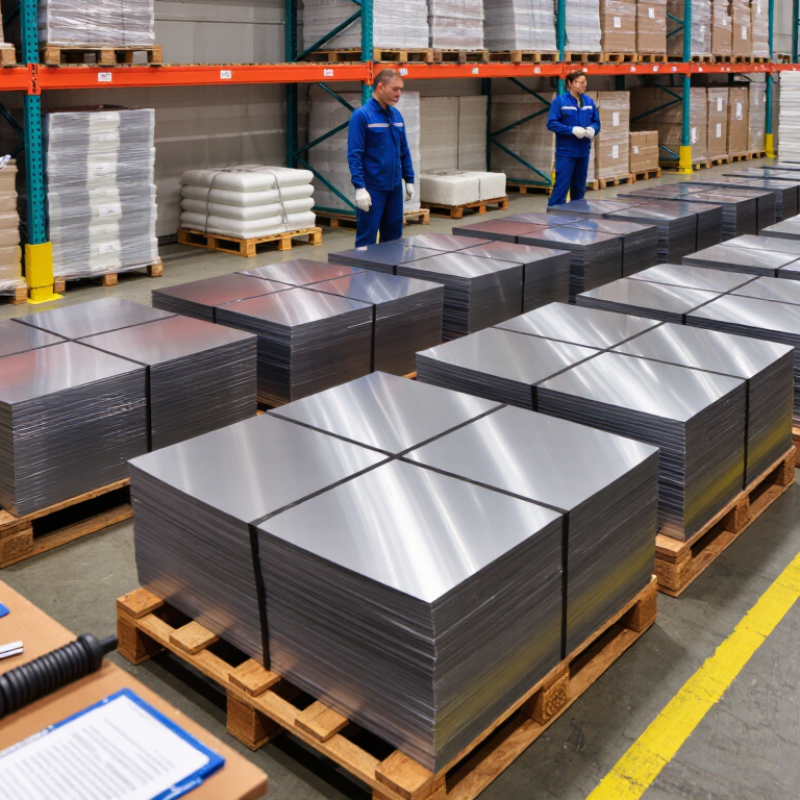
How to Choose a 316 Stainless Steel Plate Supplier

Define Your 316 Stainless Steel Plate Requirements

How to Choose a 316 Stainless Steel Plate Supplier

Define Your 316 Stainless Steel Plate Requirements

Begin with the service environment, not the supplier’s price. Specify exposure to chlorides, acids, moisture, temperature, and cleaning chemicals. A coastal structure needs different protection from an indoor food-processing table. The 316 grade contains molybdenum, which improves resistance to pitting in chloride environments. However, it is not immune to corrosion.

Write down the required thickness, width, length, surface finish, edge condition, flatness, and quantity. State whether the plate will be cut, welded, formed, or machined. ASTM A240/A240M defines requirements for chromium and chromium-nickel stainless plate, while EN 10088-2 covers European product conditions. Ask for heat numbers, chemical analysis, mechanical test results, and inspection certificates. Traceability matters.

Small details become expensive later.

According to the World Stainless Association’s 2023 production statistics, global stainless crude steel output reached about 60.8 million tonnes. That scale supports broad availability, but it does not guarantee consistent quality. Ask how the supplier controls thickness tolerances and surface protection during transport. Confirm whether the requested finish is 2B, No. 1, brushed, or polished, because appearance and processing performance differ. A 2B surface may suit fabrication, while polished material can require stricter handling.

I would not rely on the label “316” alone. Compare the certificate with the purchase specification. If the operating conditions are uncertain, involve a corrosion engineer before ordering. That step may feel excessive. It is often cheaper than replacing corroded plate.

How to Choose a 316 Stainless Steel Plate Supplier: Define Your Requirements

Before comparing suppliers, confirm that the offered plate meets the standard chemical composition requirements for Type 316 stainless steel under ASTM A240. The chart shows the specified composition ranges or maximum limits by weight percentage.

Use these requirements when reviewing supplier inspection certificates, material test reports, and purchase specifications. Chromium, nickel, and molybdenum are shown as required ranges; the remaining elements are shown from zero to their ASTM maximum limits.

Verify Supplier Quality Standards and Material Certification

How to Choose a 316 Stainless Steel Plate Supplier

A reliable supplier should prove quality before discussing price. The International Stainless Steel Forum reported global stainless steel production of about 58.4 million tonnes in 2023. That scale makes traceability essential, especially for 316 plate used near saltwater, chemicals, and heat. Ask for a material test certificate linked to each plate or heat number. The certificate should show chemical composition, mechanical properties, thickness, dimensions, and inspection results. ASTM A240/A240M and EN 10204 provide useful references for plate requirements and certification levels. A vague certificate is not enough.

Tips: Request an EN 10204 Type 3.1 certificate, not only a supplier declaration. Match the heat number on the certificate with the plate marking. Check molybdenum content, which helps 316 resist chloride corrosion. Ask whether testing was performed by an independent laboratory. Verify the laboratory’s accreditation under ISO/IEC 17025. Small details matter.

During supplier audits, compare certificates with purchase orders and packing records. Confirm that the stated grade is 316 or 316L, not an unexplained substitute. Corrosion performance depends on surface condition, welding history, and service exposure, not chemistry alone. The World Stainless Association notes that stainless steel performance varies with environment and maintenance. A certificate can look complete yet miss surface inspection data. That is a weakness worth questioning. I would also request sample photographs, recent inspection reports, and a clear nonconformance procedure before approving the supplier.

Compare Plate Specifications, Availability, and Custom Services

How to Choose a 316 Stainless Steel Plate Supplier

Compare Plate Specifications, Availability, and Custom Services

Choosing a 316 stainless steel plate supplier starts with exact specification checks. Confirm the grade, thickness, width, length, surface finish, and required tolerances. For corrosive environments, 316L may offer better welding performance because of its lower carbon content. Ask for the applicable standard, heat number, and material test certificate. A professional supplier should explain these documents clearly, not simply attach a file.

Availability affects both schedule and cost. Request a written stock confirmation showing plate dimensions, quantity, and actual delivery timing. A plate listed as “available” may still require inspection, cutting, or transfer from another warehouse. Ask about packaging, transport protection, and replacement procedures for damaged edges. Small details matter. A dented corner can create extra machining work.

Custom services should match your drawings and production process. Useful options include waterjet cutting, plasma cutting, drilling, beveling, polishing, and rounded-edge preparation. Confirm cutting tolerances before placing the order. Also check whether the supplier can provide sample pieces or inspection photographs. The cheapest quotation is not always the most reliable choice. Freight and rework may be excluded. I have seen specifications overlooked when buyers focused only on price, so a short checklist can prevent costly corrections. No supplier is perfect; clear communication and documented checks still reduce risk.

Assess Pricing, Lead Times, Packaging, and Delivery Reliability

How to Choose a 316 Stainless Steel Plate Supplier

Price is only the starting point when buying 316 stainless steel plate. Request a detailed quotation covering material, cutting, testing, packaging, freight, and duties. Compare the delivered cost, not the mill price alone. The World Bank’s 2023 Logistics Performance Index evaluates customs, infrastructure, tracking, and timeliness. Ask suppliers to provide evidence for each area. A low quote with vague delivery terms may become expensive later. Confirm whether the price is fixed, and ask how long it remains valid. Nickel and molybdenum markets can move quickly.

Lead time should be measured from order confirmation to receipt. Request a production schedule with inspection dates and dispatch milestones. For critical projects, require a material test report and positive material identification before shipment. Packaging deserves equal attention. Plates should have dry separators, protected edges, stable stacking, and weather-resistant wrapping. Photographs before loading are useful. Small details matter.

Tips: Ask for the supplier’s last six-month on-time delivery rate. Define “on time” in writing. Check claims against delivery records, not promises. UNCTAD reports that maritime shipping carries over 80% of global merchandise trade by volume, so port congestion can affect even reliable suppliers. Include a backup routing plan and realistic buffer days. I have seen accurate specifications fail because packaging was weak. That possibility deserves more attention. Reliability is not a slogan; it is documented performance.

Review Supplier Experience, Support, and Long-Term Value

Choosing a 316 stainless steel plate supplier requires more than comparing prices. Review their experience with chemical, marine, food-processing, or high-temperature applications. Ask how long they have handled 316 plate and which thicknesses they regularly stock. An experienced supplier should explain heat numbers, mill certificates, surface finishes, and dimensional tolerances without hesitation. Ask for recent inspection records, not broad promises. Details matter here.

Support becomes visible when a drawing changes or a shipment arrives with unclear markings. Test the supplier with practical questions about cutting, edge preparation, packaging, and delivery timing. Notice response speed and technical accuracy. A capable team can identify whether 316L is more suitable for welding than standard 316. They should also explain corrosion limits instead of presenting stainless steel as maintenance-free. I once accepted a confident answer without checking the certificate. That created avoidable rework.

Long-term value depends on consistency. Compare traceability, replacement procedures, stock reliability, and communication across several orders. A low initial quote can lose value through warped plates, missing documents, or repeated delays. Request a small trial order when the application is critical. Inspect flatness, finish, markings, and packaging on arrival. Keep written records of defects and corrective actions. Suppliers may make mistakes. Their response reveals more than the mistake itself. Reliable partners accept evidence, investigate causes, and improve their process.

How to Choose a 316 Stainless Steel Plate Supplier - Review Supplier Experience, Support, and Long-Term Value

Evaluation Dimension What to Review Reliable Evidence or Benchmark Why It Matters Suggested Weight
Product Experience Years supplying stainless steel plate and experience with 316 or 316L grades. Documented order history, technical case studies, and references for comparable industries or applications. Relevant experience reduces the risk of incorrect grade selection, processing problems, and documentation gaps. 15%
Grade Verification Chemical composition and mechanical properties for 316 or 316L plate. Heat-specific mill test certificate showing compliance with ASTM A240/A240M or EN 10088-2, as specified in the purchase order. Confirms that the supplied material matches the required corrosion resistance and mechanical performance. 15%
Traceability Link between each plate, heat number, inspection record, and certificate. Permanent or controlled marking, packing-list traceability, and EN 10204 Type 3.1 inspection documentation when required. Supports quality audits, replacement orders, and investigation of nonconforming material. 12%
Dimensional Control Thickness, width, length, flatness, edge condition, and surface finish. Inspection reports referencing the agreed standard, tolerance class, finish designation, and measuring method. Accurate dimensions reduce cutting loss, fabrication delays, and rejection at receiving inspection. 10%
Quality Management Consistency of inspection, corrective action, and document control. Current ISO 9001 certification, internal inspection procedures, and records of corrective actions. Certification should be verified with the issuing body. A documented quality system helps make performance repeatable, although certification alone does not guarantee product quality. 10%
Technical Support Ability to advise on grade, thickness, finish, cutting, welding, and corrosion conditions. Named technical contact, written recommendations, welding-related documentation when applicable, and prompt responses to technical questions. Good technical support helps prevent material misuse and improves fabrication efficiency. 10%
Stock and Lead Time Availability of standard and nonstandard sizes, production schedule, and delivery reliability. Written lead-time commitment, inventory confirmation, production status updates, and historical on-time delivery records. Predictable supply reduces project delays and the need for costly emergency purchases. 10%
Packaging and Logistics Protection against moisture, impact, contamination, and movement during transport. Defined packaging specification, corrosion-prevention measures, loading photographs, and shipment inspection records. Proper handling protects the surface and reduces damage claims and rework. 6%
After-Sales Support Handling of claims, replacements, shortages, surface defects, and document corrections. Written claim procedure, response-time commitment, inspection protocol, and clearly defined replacement or credit terms. Fast, documented resolution limits downtime when supplied material does not meet requirements. 5%
Total Cost of Ownership Purchase price plus testing, processing, freight, scrap, delays, and quality-related costs. Comparable landed-cost quotation with clear inclusions, payment terms, testing charges, packaging, and delivery conditions. The lowest unit price may not provide the lowest overall cost if quality or delivery risks are high. 7%
Recommended Selection Method: Request the same specification and documentation package from each shortlisted supplier, score every category using verified evidence, and approve a sample order before committing to long-term volume.
Scroll to Top