What is an Air Cylinder and How Does it Work?
Air cylinders are essential components in various industries. They play a key role in automation and machinery. According to a recent market report, the global pneumatic cylinder market is projected to reach $8 billion by 2025. This demonstrates the growing reliance on air cylinders in manufacturing and production processes.
How does an air cylinder work? Simply put, it converts compressed air into mechanical energy. This process facilitates movement and force generation. In many applications, air cylinders outperform electric actuators. Their durability and efficiency make them invaluable in tasks requiring precise control and speed.
However, the air cylinder's effectiveness can be affected by several factors. Poor maintenance can lead to leaks or reduced performance. Also, selecting the wrong size or type for an application may result in inefficiencies. Such issues underscore the importance of proper knowledge and care in utilizing air cylinders optimally.
Definition and Basic Functionality of an Air Cylinder
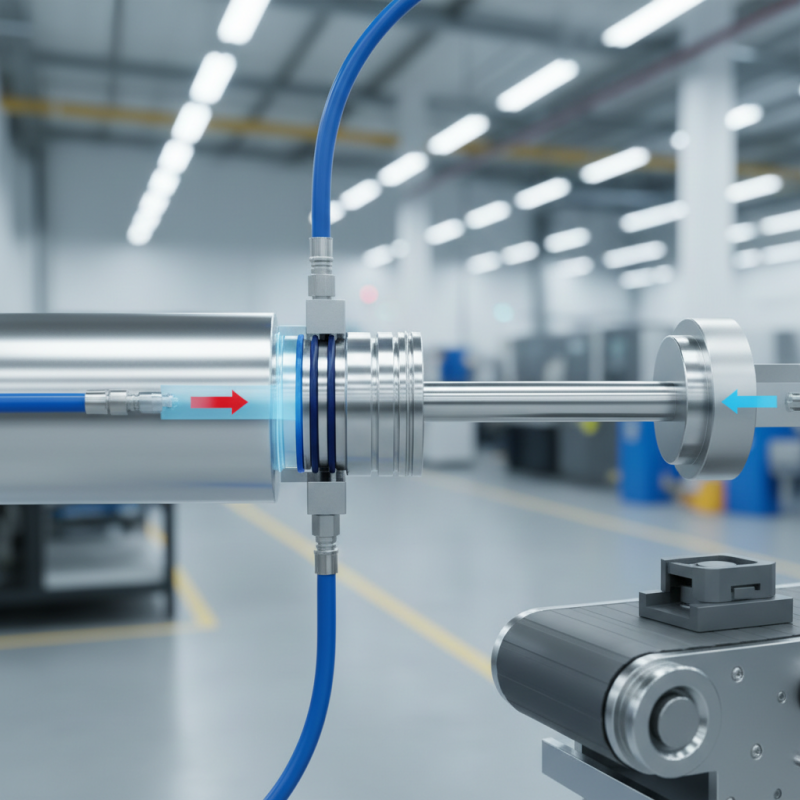
An air cylinder is a mechanical device that converts compressed air into linear motion. These cylinders are crucial in various industries, functioning as actuators in machines and automation processes. Typically, they consist of a cylindrical tube, a piston, and end caps. When compressed air enters the cylinder, it pushes the piston, which creates motion. This mechanism is not only efficient but also offers precise control.
According to industry reports, about 25% of companies rely on pneumatic systems, including air cylinders, for automation needs. This reliance points to the role of air cylinders in enhancing operational efficiency. They are particularly favored for their quick response times and durability. Different types of air cylinders exist, including single-acting and double-acting models, each serving unique functions.
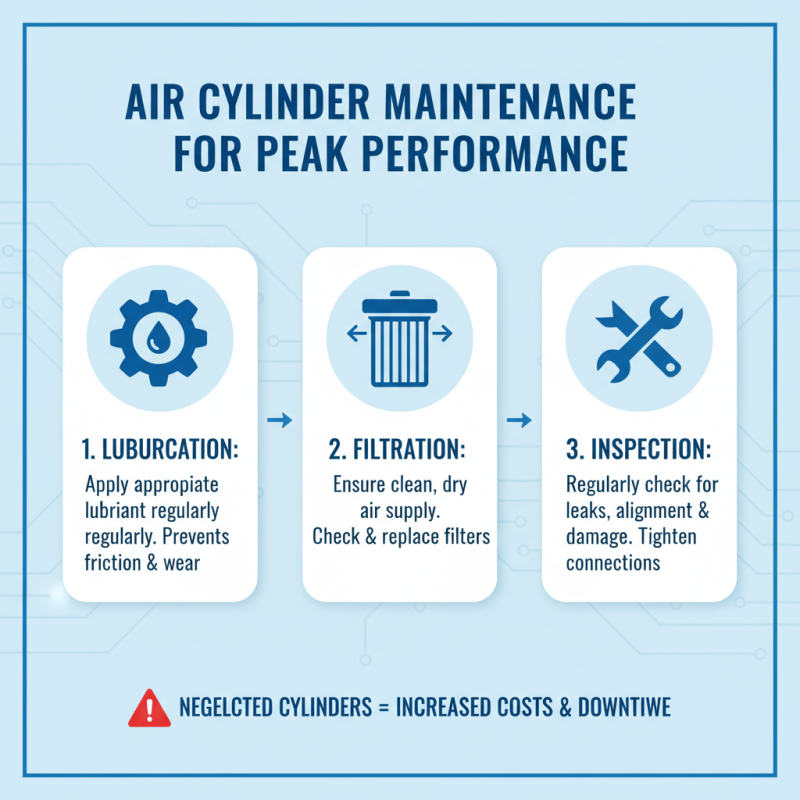
Tips: Regular maintenance of air cylinders can prevent unexpected failures. Check for air leaks frequently. A small leak can lead to significant energy loss. Additionally, ensure that the air supply is clean and dry; moisture can cause corrosion and reduce lifespan. Investing in quality cylinders can yield better performance over time, maximizing efficiency.
Components of an Air Cylinder: Key Parts Explained
Air cylinders are essential components in various automation systems. Understanding their parts is crucial for efficient operation. Key components include the cylinder body, piston, and end caps. The cylinder body houses the piston and creates a sealed environment. This ensures that the compressed air can perform its work effectively.
The piston, often made of lightweight materials, translates the compressed air's energy into mechanical motion. It slides within the cylinder and might have seals to prevent air leakage. End caps secure the piston and cylinder body, providing structural integrity. These components must be made from durable materials to withstand pressure and avoid failure.
Tip: Regularly inspect seals and piston rings to prevent leaks. Minor wear can lead to significant energy loss.
Another critical part is the air inlet. This is where compressed air enters the cylinder. Proper placement can minimize pressure drops. It’s essential to ensure that the inlet is clean and unobstructed. Even a small blockage can reduce efficiency.
Tip: Use air filters to keep contaminants away from the air inlet. This prolongs the lifespan of the cylinder.
Air Cylinder Components Breakdown
How Air Pressure Powers the Movement of Air Cylinders
Air cylinders are fascinating devices that convert compressed air into mechanical energy. They rely on air pressure to create movement. When air enters the cylinder, it pushes against a piston. This piston transforms the air pressure into linear force. Air cylinders are commonly used in various industries for automation and material handling.
Understanding how air pressure powers movement is essential. As air fills the cylinder, pressure builds up. This pressure drives the piston forward or backward, depending on the design. The control of air flow is crucial for precise movement. If there's too much pressure, the system may fail. If there’s too little, it won’t operate effectively. Balancing these factors is a constant challenge for engineers.
Maintenance and proper adjustments are important. Regular checks can identify leaks that reduce efficiency. Some people overlook these small issues, leading to bigger problems. Inadequate understanding of the system can result in misalignment. It’s vital to reflect on these aspects for optimal performance. Air cylinders are powerful, but they require careful handling to function properly.
Applications of Air Cylinders in Various Industries
Air cylinders play a crucial role in various industries. They serve as the backbone of automation. In manufacturing, they drive assembly lines and operate robotic arms. These devices convert compressed air into linear motion. It allows machines to perform tasks efficiently. However, the effects of air pressure must be carefully monitored. Over-pressurizing can lead to failures.
In the automotive sector, air cylinders assist in the production of vehicles. They help with tasks like lifting and moving parts. Their reliability is significant but not always guaranteed. Maintenance is key to ensuring they function correctly. In packaging, air cylinders manage movement and sealing processes. If not maintained, disruptions can lead to delays.
Despite their usefulness, air cylinders have limitations. For example, they may not be ideal for all applications. Companies sometimes struggle to choose the right type. Educating staff about these tools can help. It’s important to reflect on their efficiency regularly. Doing so allows businesses to improve and adapt their operations.
What is an Air Cylinder and How Does it Work? - Applications of Air Cylinders in Various Industries
| Industry |
Application |
Air Cylinder Type |
Functionality |
| Manufacturing |
Assembly line automation |
Double-acting cylinder |
Moves parts in both directions |
| Automotive |
Clamping and positioning |
Single-acting cylinder |
Utilizes spring return mechanism |
| Food Processing |
Packaging automation |
Cushioned cylinder |
Provides a smooth start and stop |
| Construction |
Heavy equipment operation |
Telescopic cylinder |
Allows for extended reach |
| Pharmaceutical |
Labeling machines |
Miniature cylinder |
Compact design for tight spaces |