2026 Top Pneumatic Actuator Types for Global Buyers
The 2026 pneumatic actuator market is becoming more demanding, not simply larger. Global buyers now compare response time, torque, corrosion resistance, air consumption, maintenance access, and verified operating life. A compact quarter-turn actuator may fit a stainless-steel valve in a food-processing line, while a heavy-duty rack-and-pinion design may better serve a dusty cement plant. The correct choice depends on the application, not the catalogue photograph.
Dr. Herbert E. Merritt, a respected fluid-power engineer and author, emphasized the importance of matching control equipment to actual operating conditions: “The successful application of fluid power requires a thorough understanding of the system and its components.” That principle remains highly relevant when selecting a pneumatic actuator for 2026 projects. Buyers must examine pressure ranges, cycling frequency, temperature, sealing materials, mounting standards, and available service support. Small oversights can create large costs.
This guide compares the leading pneumatic actuator types available to international buyers, including double-acting, spring-return, vane, scotch-yoke, and heavy-duty designs. It also considers supplier documentation, testing practices, energy efficiency, and regional availability. Some classifications overlap. That is worth admitting. Product names are not always used consistently across markets, and performance claims may depend on laboratory conditions. Careful buyers should request torque curves, duty-cycle data, certification details, and installation guidance before approving a purchase. Reliable selection begins with evidence.
Pneumatic Actuator Basics and Their Role in Industrial Automation
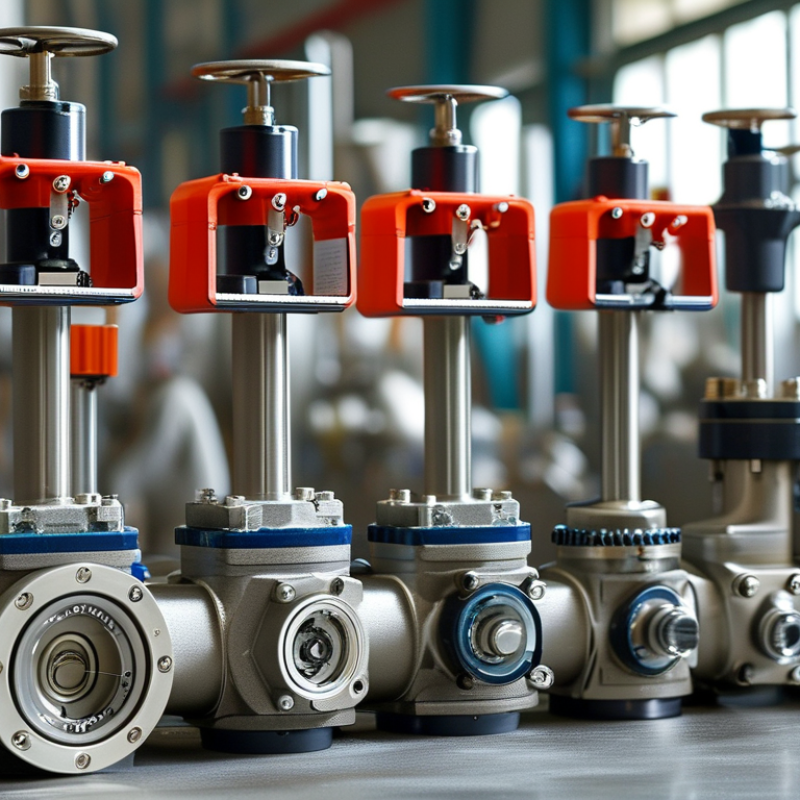
Pneumatic actuators convert compressed-air energy into controlled mechanical movement. In industrial automation, they open valves, move grippers, position gates, and clamp workpieces. Their appeal is practical: clean operation, quick response, and reliable performance in repetitive cycles. A single-acting actuator uses air in one direction and a spring for return. A double-acting design uses air for both strokes. Rotary and linear versions suit different machine layouts.
In real installations, actuator selection starts with force, stroke, speed, duty cycle, and available air pressure. Engineers also check load alignment, cushioning, mounting space, and the environment around the equipment. Moisture in an airline can damage seals and create unstable motion. A filter, regulator, and lubricator may help, although not every modern system needs added oil. Noise control matters near operators. Sensors can confirm end positions, but they cannot correct poor mechanical alignment.
I have seen fast actuators perform poorly because a valve was undersized or exhaust flow was restricted. The lesson is simple: response time depends on the whole circuit, not the cylinder alone. In dusty plants, rod protection and seal material deserve close attention. In washdown areas, corrosion resistance becomes more important than maximum speed. Sizing calculations are useful, yet field testing still exposes surprises. I once trusted a catalog force value without allowing friction and pressure loss. That choice needed correction. Good automation leaves room for adjustment, inspection, and honest review.
2026 Top Pneumatic Actuator Types for Global Buyers - Pneumatic Actuator Basics and Their Role in Industrial Automation
| Actuator Type | Operating Principle | Typical Motion | Typical Operating Range | Main Advantages | Common Limitations | Typical Industrial Applications |
|---|---|---|---|---|---|---|
| Single-Acting Linear Cylinder | Compressed air moves the piston in one direction; a spring returns it when air is released. | Reciprocating linear motion | Usually 1.5–8 bar; stroke lengths commonly range from approximately 10–100 mm, depending on design. | Simple control, lower air consumption in some applications, and a defined fail-return position. | Limited stroke length, reduced available force during the return stroke, and spring fatigue over time. | Clamping, ejecting, indexing, light pressing, sorting, and safety shut-off mechanisms. |
| Double-Acting Linear Cylinder | Compressed air is supplied alternately to both sides of the piston to extend and retract the rod. | Controlled linear motion in two directions | Usually 1.5–10 bar; bore sizes and strokes are available across a broad industrial range. | Good control in both directions, repeatable movement, and suitability for high-cycle automation. | Requires air for both strokes and may move abruptly without flow-control devices or cushioning. | Assembly machines, packaging lines, material handling, machine tools, and robotic tooling. |
| Compact Cylinder | A short-body piston cylinder provides linear motion where installation space is restricted. | Short-stroke linear motion | Commonly 1.5–8 bar; typical strokes are often below 100 mm. | Space-efficient, lightweight, and suitable for dense machine layouts. | Generally lower load capacity and shorter service life under heavy side loads. | Small clamping units, electronic assembly, inspection equipment, and compact packaging machinery. |
| Guided Cylinder | A pneumatic piston is combined with guide rods or an integrated guide mechanism to resist rotation and side loads. | Guided linear motion | Usually 1.5–8 bar; available with short, medium, and long strokes. | Improved stability, better resistance to rotation, and more accurate handling of off-center loads. | Larger footprint, higher cost, and possible guide wear if alignment is poor. | Pick-and-place systems, transfer units, loading stations, and workpiece positioning. |
| Rodless Cylinder | A piston moves inside a tube and transfers force to an external carriage through a magnetic or mechanical coupling. | Long linear travel | Often 1.5–8 bar; strokes can extend to several meters in suitable configurations. | Long travel in a compact envelope, reduced bending risk, and no projecting piston rod. | Potential leakage or seal wear, sensitivity to side loads, and lower suitability for unsupported heavy loads. | Conveyors, material transfer, door systems, positioning tables, and long-stroke automation. |
| Rotary Vane Actuator | Compressed air acts on a vane inside a chamber to create limited-angle rotary movement. | Partial rotary motion | Commonly 1.5–8 bar; rotation angles are often 90°, 180°, or adjustable within a specified range. | Compact construction, quick response, and relatively simple quarter-turn operation. | Limited torque range and possible torque reduction caused by friction or seal wear. | Valve operation, component turning, part flipping, and light indexing mechanisms. |
| Rack-and-Pinion Rotary Actuator | Two opposed pistons drive a rack, which converts linear piston movement into rotary shaft torque. | Quarter-turn or partial rotary motion | Usually 2–8 bar; common rotation angles include 90° and 180°. | Reliable torque transmission, adjustable end positions, and broad suitability for industrial valves. | Requires lubrication and accurate alignment; torque varies across the rotation cycle. | Butterfly and ball valve automation, dampers, material handling, and process control. |
| Scotch-Yoke Rotary Actuator | Linear piston force is converted into rotary torque through a yoke mechanism. | High-torque partial rotary motion | Often 2–8 bar; commonly used for 90° valve operation and other heavy-duty rotary tasks. | High breakaway torque, strong end-position torque characteristics, and robust construction. | More mechanical components, greater size and weight, and potentially higher maintenance requirements. | Large process valves, pipeline isolation, water treatment, chemical processing, and energy systems. |
| Air Motor | Compressed air drives vanes, gears, pistons, or turbines to produce continuous rotary motion. | Continuous rotary motion | Commonly 4–7 bar; speed and torque depend on air pressure, flow, and motor design. | Safe in wet or explosive-prone environments, resistant to overload, and capable of variable speed. | Lower energy efficiency than electric motors, high exhaust noise, and significant compressed-air consumption. | Drilling, mixing, tightening, grinding, winding, and equipment used in hazardous areas. |
| Bellows Actuator | Air pressure expands a flexible bellows element to generate short linear movement or force. | Short linear movement | Frequently used at low-to-moderate pressures; exact limits depend strongly on bellows material and construction. | Sealed design, low friction, no sliding piston seal, and suitability for sensitive environments. | Short stroke, limited speed, lower resistance to lateral loads, and material-life constraints. | Vibration isolation, lifting, clamping, clean handling, and specialized positioning systems. |
| Pneumatic Gripper | One or more pneumatic pistons move fingers to grip, hold, or release a workpiece. | Parallel or angular gripping motion | Usually 1.5–8 bar; gripping force depends on pressure, jaw geometry, and gripping radius. | Fast cycle times, simple integration, and reliable handling of repetitive pick-and-place tasks. | Grip force changes with air pressure; poor sizing can damage parts or cause workpiece slippage. | Robotic assembly, packaging, machine tending, inspection, and component transfer. |
| Pneumatic Diaphragm Actuator | Air pressure flexes a diaphragm against a spring or opposing force to move a valve stem. | Linear valve-stem movement | Typical control-air ranges vary by valve design; many systems operate within approximately 1.4–6 bar. | Low friction, reliable throttling, simple construction, and good fail-safe options. | Limited stroke and force compared with larger piston actuators; diaphragm aging can affect performance. | Control valves, steam systems, water treatment, HVAC, and process automation. |
Note: Operating pressure, force, torque, speed, stroke, and service life vary with actuator size, seal material, load conditions, air quality, duty cycle, temperature, and control-valve configuration. The ranges above are general industrial reference values for preliminary selection rather than guaranteed product specifications.
Related Posts
-
Best Pneumatic Actuators for Optimal Performance and Efficiency?
-

Top Pneumatic Actuator Suppliers for Global Buyers Seeking Quality?
-
2026 How to Choose the Right Pneumatic Actuator for Your Needs?
-
2026 Top High Pressure Pneumatic Valve Buying Guide?
-
Top 7 Best Pneumatic Control Valves for Enhanced Industrial Performance
-
Essential Tips for Choosing a Pneumatic Actuator Solenoid Valve?