2026 Top Machine Vision System Types for Global Buyers?
Choosing a machine vision system in 2026 is no longer a simple camera purchase. Global buyers compare performance, integration effort, maintenance, and long-term reliability. A fast factory may need a 2D area-scan system for labels and surface defects. Another facility may require 3D vision for height, volume, or robotic guidance. Line-scan cameras remain valuable for continuous materials, while smart cameras can reduce hardware complexity at the production line.
The right choice depends on the scene, not the brochure. Lighting, lens selection, object speed, contrast, vibration, and inspection distance can change results dramatically. A supplier should explain detection limits, sample testing methods, data handling, and replacement support. Buyers should request real product trials using their own materials. Glossy metal can defeat a promising setup. Transparent packaging can expose weak algorithms. Small details matter.
Edge AI is expanding, but it is not a universal answer. Some applications still perform better with a PC-based architecture and carefully tuned rules. Integration with PLCs, robots, industrial networks, and factory software also affects total cost. Buyers should examine image storage, cybersecurity practices, calibration routines, and operator training. These factors are often underestimated.
No guide is perfect. That assumption can fail.
This overview compares the top machine vision system types for global buyers in 2026. It focuses on practical selection, measurable performance, and dependable deployment. The goal is not to promote one technology. It is to help engineering and purchasing teams ask better questions before committing capital.
What a Machine Vision System Is and How It Works
What a Machine Vision System Is and How It Works
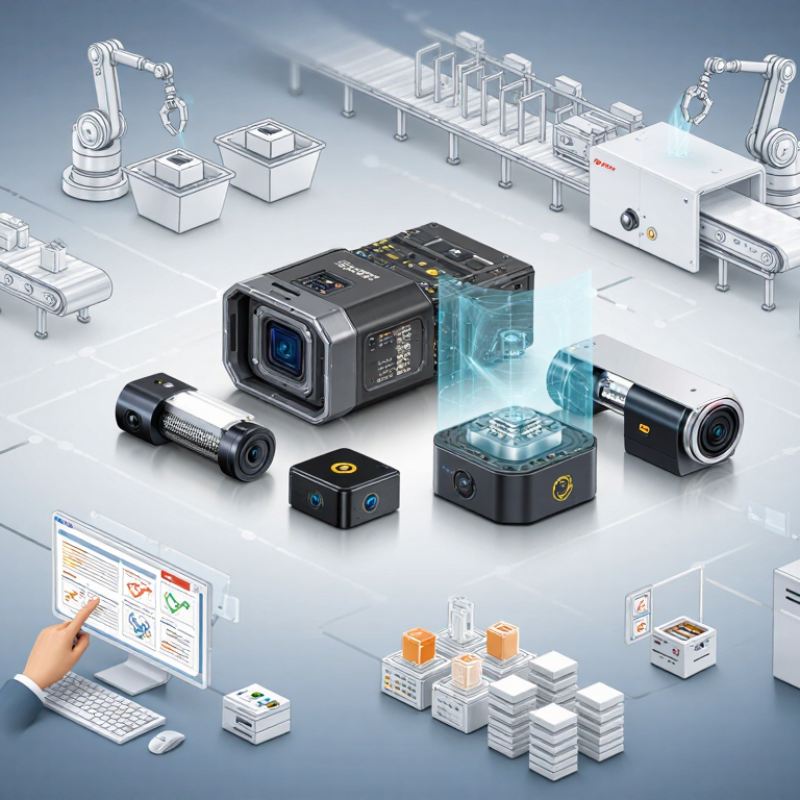
A machine vision system lets equipment inspect, measure, and guide production using cameras, optics, lighting, and software. The camera captures a surface, while algorithms convert pixels into useful decisions. A controller may then accept a part, reject it, or adjust a robot’s position. According to MarketsandMarkets, the global machine vision market was projected to grow from about USD 13.2 billion in 2023 to USD 20.9 billion by 2028. That growth reflects wider use in inspection, logistics, electronics, and automotive manufacturing.
The process starts with controlled lighting. A ring light can reveal scratches, while backlighting exposes a missing hole as a clear silhouette. Two-dimensional systems analyze height and surface patterns. Three-dimensional systems estimate depth using stereo vision, laser triangulation, or structured light. Line-scan systems inspect continuous materials, such as film or metal sheets, one narrow line at a time. Smart cameras combine imaging and processing in one housing, reducing cabinet space. Industrial computers offer more flexibility for complex models.
Accuracy depends on the whole setup, not only the camera. Dust, vibration, glare, and poor lens selection can create false defects. This is often underestimated. The International Federation of Robotics reported 541,302 industrial robots installed globally in 2023, showing why reliable visual guidance matters. Yet machine vision is not automatically intelligent. Engineers must define tolerances, collect representative images, and validate results under real production changes. A clean laboratory test may still fail beside a vibrating conveyor.
Core Machine Vision System Types Available in 2026
Machine vision system types are becoming more specialized in 2026. The core choices include 2D area-scan, line-scan, 3D, hyperspectral, smart-camera, and PC-based systems. MarketsandMarkets projects the machine vision market to exceed USD 20 billion by 2029, showing strong demand across manufacturing, logistics, and inspection.
2D area-scan systems remain practical for labels, surface defects, dimensions, and assembly checks. They suit stable products under controlled lighting. Line-scan systems inspect continuous materials, such as film, metal coils, and textiles. They capture narrow image lines while products move quickly. Speed matters. For uneven surfaces, 3D systems measure height, volume, and position. They help detect missing parts, bent edges, and incorrect assembly.
Smart-camera systems simplify installation because imaging and processing share one compact unit. PC-based systems provide greater computing capacity for multiple cameras, advanced algorithms, and changing inspection rules. Hyperspectral systems can separate materials with similar visible colors, although they often require higher budgets and careful calibration. IFR’s World Robotics 2024 reported 541,302 industrial robot installations worldwide in 2023. This growth increases demand for reliable vision guidance and inspection.
In practice, buyers sometimes choose the most powerful system too early. That can create unnecessary integration work. A better evaluation uses sample parts, real production speed, lighting variation, and defect size. One overlooked issue is maintenance: dust, vibration, lens contamination, and software drift can reduce accuracy. Report figures support market growth, but factory performance still depends on disciplined testing and operator feedback.
Key Technologies Used Across Vision System Categories
Machine vision systems differ by inspection task, product shape, and production speed. Two-dimensional vision uses area-scan cameras to inspect labels, edges, colors, and surface defects. Line-scan cameras build images one row at a time. They suit continuous materials, such as film, paper, and metal sheets.
Lighting often determines inspection quality more than camera resolution. Ring lights reveal printed marks, while backlights create clear silhouettes for dimensional checks. Telecentric lenses reduce shape distortion during measurement. In practical installations, engineers also adjust exposure, lens distance, and conveyor speed together. Small changes matter.
Three-dimensional systems measure height, volume, and surface geometry. They commonly use laser triangulation, structured light, or time-of-flight sensing. A height map can expose missing components that a flat image might overlook. Depth data also supports bin picking and robotic guidance. However, reflective surfaces can produce unstable readings.
Artificial intelligence helps classify irregular defects, especially when their shapes vary. Traditional rule-based tools remain useful for repeatable edges, gaps, and dimensions. Many systems now process images near the machine, reducing response delays and network traffic. Calibration must be checked after vibration, temperature changes, or lens replacement. It is easy to trust a stable result too quickly. No setup is perfect.
Multispectral and hyperspectral sensing add material information beyond visible color. They can distinguish coatings, moisture differences, or contamination patterns. These systems require careful lighting control and reliable training samples. Poor samples can teach the wrong lesson. Human review still has value during early deployment and unusual production changes.
How Global Buyers Can Compare Machine Vision Systems
Global buyers should compare machine vision systems by production risk, not by camera resolution alone.
The 2024 MarketsandMarkets report estimates the machine vision market will grow from about USD 10.7 billion in 2024 to USD 14.5 billion by 2029. That expansion reflects wider use in inspection, robotics, logistics, and process control.
Start with the task. A 2D system suits label checks, surface defects, and dimensional measurements on stable planes. A 3D system adds height data for bin picking, weld inspection, and uneven parts.
Smart cameras simplify installation, while PC-based systems offer stronger algorithms and easier customization. Line-scan systems remain practical for continuous webs, sheets, and fast-moving materials.
Compare accuracy under real lighting, not showroom lighting. Request sample testing with dust, vibration, reflections, and product variation.
Total ownership matters. Include lenses, lighting, software licenses, calibration, integration, training, and replacement time.
The International Federation of Robotics reported 541,302 industrial robots installed worldwide in 2023, showing why reliable vision integration is becoming more important.
Check communication standards, data security, operating temperature, and local technical support. A low purchase price can become expensive after repeated false rejects.
That mistake happens.
A useful scorecard can weight detection accuracy, cycle time, uptime, service response, and five-year cost. Require measurable acceptance criteria.
Do not trust vague claims such as “AI-powered” without validation data.
The comparison may still be imperfect because factory conditions change seasonally. That is why buyers should repeat trials before approval.
Selection Factors for Different Industrial Applications
2026 Top Machine Vision System Types for Global Buyers
Selection Factors for Different Industrial Applications
Selecting a machine vision system starts with the production problem, not the camera specification. A 2D area-scan system suits labels, surface defects, and part presence on stable conveyors. Line-scan vision performs better when materials move continuously, such as paper, film, textiles, or steel coils. Speed changes everything. A small lighting error can become a repeated rejection.
Three-dimensional vision helps measure height, volume, and shape. It is useful for bin picking, weld inspection, and uneven products. However, reflective surfaces can create unstable readings. I have seen polished components pass during morning trials and fail after lighting changed. That assumption fails. Test samples should include scratches, dust, color variation, and normal production damage.
Smart cameras reduce installation complexity for compact inspection points. Multi-camera systems offer broader coverage for large assemblies, but synchronization and maintenance require more skill. Buyers should examine cycle time, working distance, image resolution, lighting control, software integration, and operator training.
Dust matters. So does vibration. A system that works in a laboratory may struggle beside a stamping press. For food, pharmaceutical, or outdoor applications, enclosure protection and cleaning routines deserve careful review. Local service capability also affects reliability, especially when production operates across time zones.
The cheapest system may cost more after repeated false rejects, difficult calibration, or limited data access. A short pilot run with real products often reveals weaknesses that a polished demonstration hides.