Choosing a reliable Investment Casting Foundry is rarely simple for global buyers. Price matters, but it should not lead the decision. Process control, alloy knowledge, inspection discipline, and communication often determine the real cost.
This guide, “2026 Top Investment Casting Foundries for Global Buyers,” examines suppliers through practical purchasing criteria. These include wax pattern quality, ceramic shell consistency, casting tolerances, heat treatment, machining support, and material traceability. It also considers production scale, export experience, quality certifications, and the ability to manage engineering changes. A capable foundry should provide clear inspection records, stable delivery planning, and useful technical feedback before mass production begins.
Details matter.
A buyer may inspect a sample part under bright light and find surface imperfections that drawings do not show. Another may discover that a low quotation excludes tooling maintenance, testing, or secondary machining. These situations can change the final supplier ranking. No ranking is perfect, because capacity, lead times, and certification status can change during the year. Some public information may also be incomplete or difficult to compare fairly.
For that reason, this overview should support due diligence rather than replace it. Buyers should request recent production samples, process flow documents, material certificates, and customer references. Factory audits remain valuable, especially for aerospace, energy, medical, and industrial components. The strongest suppliers combine repeatable craftsmanship with measurable systems. They also admit process limits when necessary. That honesty can prevent expensive surprises.
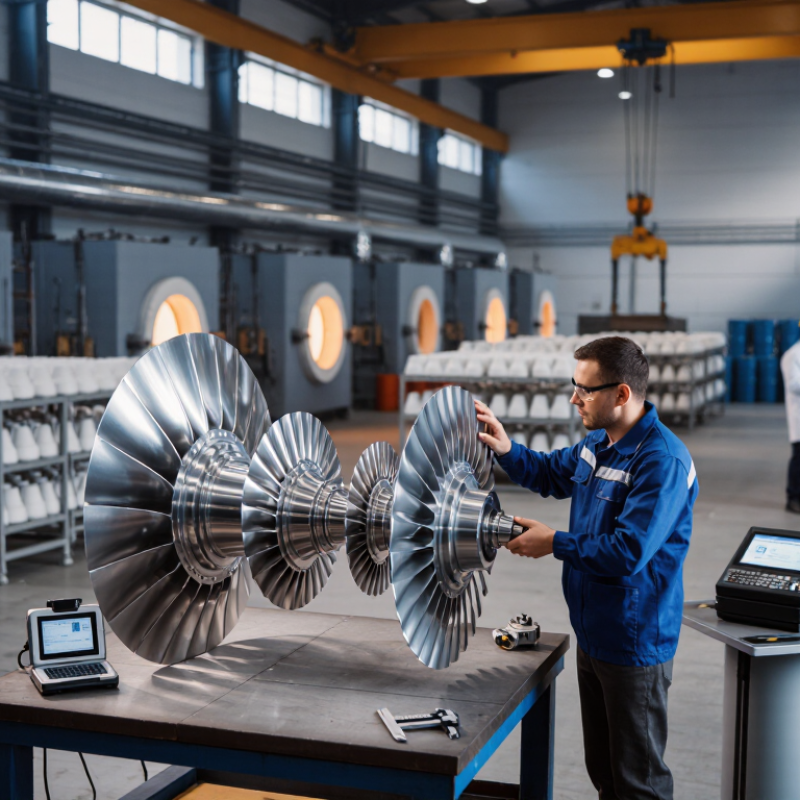
What Defines a Leading Investment Casting Foundry in 2026
A leading investment casting foundry combines process control with practical shop-floor experience. Engineers should understand wax behavior, ceramic shell strength, alloy chemistry, and shrinkage compensation. These details affect every edge, hole, and sealing surface. Small errors become expensive after machining.
Reliable foundries document each production stage. They track wax temperature, slurry viscosity, shell drying time, furnace cycles, and heat-treatment results. Material certificates should match the ordered alloy and remain traceable to each batch. Dimensional reports from calibrated CMM equipment add useful evidence. So does a clear first-article inspection process.
Communication matters just as much. Experienced teams review drawings before quoting and identify weak tolerances or unclear datum points. They discuss tooling life, minimum wall thickness, surface finish, and realistic delivery dates. No foundry gets every detail right. That is worth admitting. A strong supplier records nonconformities, investigates root causes, and improves the process instead of hiding mistakes. Buyers should also examine sample reports, audit records, quality certifications, and corrective-action responses. Photos are helpful, but controlled data is more convincing. In 2026, leadership means producing consistent parts while remaining transparent when conditions change.

Global investment casting manufacturers now combine precision wax injection, ceramic shell control, vacuum melting, and digital process simulation. These technologies support complex parts with thin walls and reduced machining allowances. A 2024 Grand View Research assessment valued the global investment casting market at more than USD 16 billion. It also forecasts continued growth through 2030, driven by aerospace, energy, medical, and industrial applications.
Process Stability Process stability begins with wax temperature and injection pressure. Sensors record each cycle, while simulation software predicts shrinkage, porosity, and metal flow before tooling begins. Ceramic shells may use multilayer stucco systems, controlled drying rooms, and robotic dipping. Vacuum or inert-gas melting helps limit oxidation in reactive alloys. Computed tomography can then inspect internal passages without cutting the part.
Useful evidence, not visual confidence.
Energy and Digital Manufacturing Energy remains a difficult issue. A U.S. Department of Energy metal-casting efficiency report identifies melting as a major energy consumer in foundry operations. Modern facilities therefore monitor furnace load, heat recovery, shell drying, and scrap returns. Some plants use additive manufacturing for wax patterns or ceramic cores, shortening development cycles. The AMPOWER Report 2024 also shows expanding industrial metal additive manufacturing adoption, although its economics vary by geometry and batch size.
That limitation matters. Digital tools do not repair poor gating design, unstable alloy chemistry, or weak operator training. Buyers should request process capability data, inspection records, alloy certificates, and traceability from pattern to shipment.
For global buyers, foundry quality starts with evidence, not polished brochures. Grand View Research valued the global investment casting market at approximately USD 16.8 billion in 2023. It projects a 5.8% compound annual growth rate through 2030. This growth increases supplier pressure, but larger capacity does not always mean better control.
Ask for recent first-pass yield, scrap causes, dimensional Cpk data, and non-destructive testing records. Review porosity results from computed tomography or radiography. Check whether inspection equipment receives regular calibration. A capable foundry should trace each casting to its wax batch, ceramic shell, furnace cycle, alloy heat, and inspector. Request sample material certificates. Then compare them with purchase specifications.
Capacity requires practical verification. Confirm furnace charge weight, monthly available hours, shell-room throughput, and machining bottlenecks. Rated capacity can look impressive. Available capacity matters more. The International Organization for Standardization reported over 1.5 million ISO 9001 certificates worldwide in its 2023 survey, yet certification alone cannot prove process stability. Check the certificate scope, expiration date, audit findings, and production site. Aerospace work may require AS9100 and special-process accreditation. Automotive programs often require IATF 16949.
In practice, buyer assumptions create costly surprises. A supplier may promise six weeks, then discover limited inspection capacity. I would request a pilot order, capability study, and corrective-action example. No foundry is flawless. The response to defects reveals more than a perfect presentation.
Regional strengths often shape the right investment casting choice. North American foundries typically support aerospace, defense, medical, and energy programs. Buyers may find strong traceability, documented process controls, and close engineering communication. These advantages matter when every heat number and inspection record must remain clear.
European foundries often excel in precision components for industrial machinery, transportation, and medical equipment. Their strengths include disciplined quality systems, complex alloy experience, and reliable dimensional control. Shorter regional supply chains can simplify audits and technical meetings. However, capacity may tighten during high-demand periods.
Asian foundries provide broad production capacity, competitive tooling costs, and experience with stainless steel, superalloys, and heat-resistant alloys. Several manufacturing centers combine wax pattern production, shell building, machining, and inspection under one roof. This integration can reduce handling risks and improve scheduling. Yet, a low quotation does not prove lower total cost. Buyers should compare tooling life, reject rates, inspection depth, packaging, and freight conditions.
Experienced purchasers usually request sample reports, process flow charts, and realistic production timelines. They also verify whether the foundry can manage design changes without losing traceability. Regional advantages are useful, but they are not absolute. A technically capable supplier may still struggle with communication or peak-season capacity. That detail is easy to underestimate.
Selecting an investment casting foundry for international sourcing requires more than comparing unit prices. Review its experience with your alloy, part geometry, and required production volume. A foundry that casts stainless steel daily may still struggle with thin walls or deep internal passages.
Request sample castings, inspection reports, and process records before approving production. Examine wax patterns for consistency, ceramic shells for cracks, and finished parts for flash or shrinkage. Ask how the team controls furnace temperature, metal chemistry, and dimensional variation. These details reveal technical discipline.
Documentation matters. Confirm material certificates, calibration records, traceability methods, and export packing procedures. Reliable foundries explain nonconformities instead of hiding them. Communication should include clear drawings, revision control, response times, and realistic lead times. Time zones can expose weak systems.
Visit the facility when possible. Observe cleanliness, worker training, testing equipment, and how rejected parts are handled. A polished website proves little. A dated inspection bench may prove more.
International sourcing also requires practical risk checks. Discuss tooling ownership, payment milestones, shipping terms, backup capacity, and corrective-action procedures. A small pilot order can test cooperation before a large commitment. It may feel slower, but it protects the project.
No foundry performs perfectly. Even experienced teams can miss a tolerance or underestimate tooling changes. The stronger partner admits this quickly and documents the remedy. That honesty often matters more than a low quotation.
| Anonymous Foundry Profile | Primary Regional Fit | Typical Part Weight | Typical Part Size | Common Alloy Groups | Dimensional Capability | Prototype Lead Time | Production Lead Time | Quality Certifications | Best-Match Buyer Need |
|---|---|---|---|---|---|---|---|---|---|
| Profile A — Precision Aerospace Specialist | North America / Europe | 0.02–25 kg | Up to 500 mm | Nickel alloys, cobalt alloys, stainless steels, titanium | Typically CT4–CT6; tighter tolerances subject to drawing review | 4–8 weeks | 8–16 weeks | Commonly ISO 9001 and AS9100; verify current scope | Flight hardware, turbine components, high-integrity engineering parts |
| Profile B — High-Volume Stainless Steel Producer | Asia-Pacific / Global export | 0.01–20 kg | Up to 400 mm | 304/316 stainless steel, precipitation-hardening steel, carbon steel | Typically CT5–CT7 for production parts | 3–6 weeks | 6–12 weeks | Commonly ISO 9001; some facilities also hold IATF 16949 | Pumps, valves, food-processing equipment, industrial hardware |
| Profile C — Automotive and Mobility Supplier | Europe / North America | 0.05–15 kg | Up to 350 mm | Stainless steel, alloy steel, aluminum and nickel-based alloys | Typically CT5–CT7; process capability validated by PPAP data | 4–7 weeks | 8–14 weeks | Commonly IATF 16949 and ISO 9001; PPAP support available | Powertrain, thermal-management, braking and chassis components |
| Profile D — Medical and Surgical Components Foundry | North America / Europe | 0.005–8 kg | Up to 250 mm | Cobalt-chromium, titanium, stainless steel | Typically CT4–CT6 for controlled geometries | 5–10 weeks | 10–20 weeks | Commonly ISO 13485 and ISO 9001; regulatory documentation varies | Orthopedic instruments, implants, surgical and dental components |
| Profile E — Complex Nickel-Alloy Turbomachinery Supplier | Europe / North America / Asia-Pacific | 0.1–35 kg | Up to 600 mm | Nickel-based superalloys, cobalt alloys, heat-resistant steels | Typically CT5–CT7; complex internal features require validation | 6–12 weeks | 12–24 weeks | Commonly ISO 9001 and AS9100; special-process approvals may apply | Industrial turbines, energy equipment and high-temperature assemblies |
| Profile F — Small-Part Precision Production Partner | Asia-Pacific / Global export | 0.002–3 kg | Up to 150 mm | Stainless steel, tool steel, cobalt alloys, titanium | Typically CT4–CT6 for small, stable geometries | 2–5 weeks | 5–10 weeks | Commonly ISO 9001; additional sector certifications depend on facility | Connectors, fittings, instrumentation and compact mechanical parts |
| Profile G — Large Industrial Investment Casting Facility | Europe / Asia-Pacific | 1–75 kg | Up to 900 mm | Carbon steel, stainless steel, duplex steel, nickel alloys | Typically CT6–CT8 for larger castings | 6–10 weeks | 10–18 weeks | Commonly ISO 9001; welding, NDT and sector approvals vary | Industrial pumps, valves, energy, construction and process equipment |
| Profile H — Prototype-to-Production Integrated Supplier | Global sourcing programs | 0.005–20 kg | Up to 400 mm | Aluminum, stainless steel, alloy steel, titanium and nickel alloys | Typically CT5–CT7; dependent on material and geometry | 2–4 weeks using rapid tooling or printed patterns | 6–12 weeks | Commonly ISO 9001; project-specific quality plans available | New product introduction, engineering validation and low-to-medium volumes |
Get in Touch
570 Alden Road Unit #10, Markham Ontario Canada, L3R 8N5
Quick Links
Featured Products
Industries