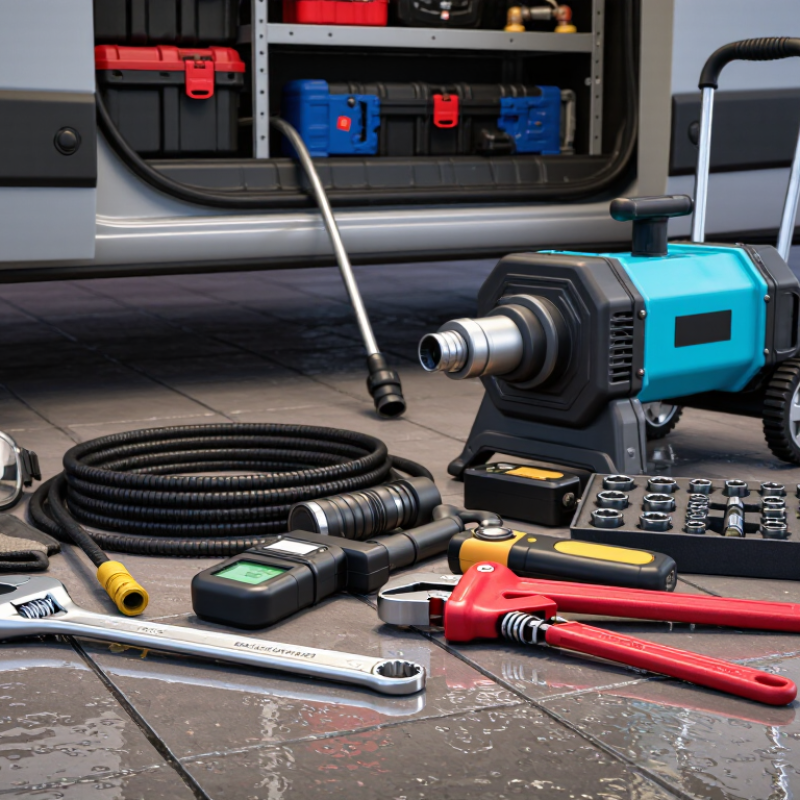
| Pipe Wrench | Adjustable heavy-duty pipe wrench | Turning threaded steel, galvanized, and iron pipe during installation or removal | 250–600 mm overall length; jaw capacity commonly 30–75 mm | Forged steel body with hardened serrated jaws | High gripping force and strong leverage for seized threaded joints | Can damage finished surfaces and is unsuitable for thin-wall or plastic pipe | Choose jaw capacity, handle length, weight, and replaceable jaw availability | Use the correct size; keep hands clear of pinch points and avoid cheater bars unless permitted by the manufacturer |
| Adjustable Wrench | Wide-jaw adjustable spanner | Working on compression fittings, supply valves, hex nuts, and exposed fasteners | 150–300 mm length; jaw opening commonly 20–35 mm | Heat-treated alloy steel with a precision-adjusting worm gear | Versatile, compact, and less likely to mark plated fittings than serrated tools | Excessive force can spread the jaw or round a fastener | Select a smooth jaw, low-backlash adjustment, comfortable handle, and adequate opening | Seat the wrench fully on the fastener and pull toward the fixed jaw whenever possible |
| Basin Wrench | Telescoping or fixed basin wrench | Installing and removing faucet mounting nuts in confined spaces beneath sinks | Typically designed for nuts around 10–32 mm | Steel head with a pivoting spring-loaded jaw and extended handle | Reaches behind basins where standard wrenches cannot fit | Limited leverage and visibility; difficult on severely corroded nuts | Choose a narrow head, strong pivot, non-slip grip, and sufficient handle reach | Support the fitting from above when possible to prevent twisting the faucet or supply line |
| Tongue-and-Groove Pliers | Adjustable slip-joint water-pump pliers | Holding traps, fittings, large nuts, and irregularly shaped plumbing components | 200–300 mm length; multiple jaw positions | Forged alloy steel with induction-hardened teeth | Fast adjustment and broad capacity for general service work | Teeth may mark chrome, plastic, or soft brass surfaces | Choose a secure groove system, smooth adjustment, insulated grips, and suitable jaw width | Use protective padding on finished surfaces and keep fingers away from the joint area |
| Tubing Cutter | Compact rotary tubing cutter | Making clean cuts on copper, brass, aluminum, and selected plastic tubing | Small models often cover 3–22 mm; larger models may cover up to approximately 42 mm | Metal frame with hardened cutting wheel and guide rollers | Produces square cuts with limited material deformation | Requires several rotations and may leave an internal ridge that needs removal | Match the cutter range to the tubing diameter and choose a replaceable wheel | Deburr the inside and outside of the tube before assembly or soldering |
| Plastic Pipe Cutter | Ratchet-style plastic pipe cutter | Cutting PVC, CPVC, PEX, and similar plastic tubing where the tool rating permits | Common capacity ranges from 3–42 mm, depending on design | Hardened stainless or high-carbon steel blade with aluminum or reinforced polymer body | Fast, square cuts with minimal setup and low operating effort | A dull blade can crush or deform pipe; not intended for metal tubing | Verify compatibility with the pipe material and diameter; prioritize blade replacement access | Keep the blade locked when stored and wear eye protection when cutting brittle pipe |
| PEX Crimping or Clamping Tool | Manual PEX connection tool | Installing PEX connections with compatible crimp rings or clamp rings | Common systems use 3/8, 1/2, 3/4, and 1 inch tubing sizes | Hardened steel jaws with calibrated or adjustable compression mechanism | Creates fast mechanical connections without soldering or open flame | Tool and ring type must match; incorrect calibration can cause leaks | Confirm compatibility with the connection system, jaw size, calibration method, and inspection gauge | Check the ring position and use a go/no-go gauge when required by the connection system |
| Press-Fitting Tool | Battery-powered or manual press tool | Joining compatible copper, stainless steel, or multilayer press fittings | Typical professional systems cover approximately 12–108 mm, depending on the tool and jaws | High-strength drive mechanism with interchangeable pressing jaws | Fast, flame-free installation with consistent pressing when correctly maintained | Higher purchase cost and strict dependence on approved jaws and fitting systems | Evaluate pipe-size range, jaw availability, battery runtime, pressing cycle, and service support | Inspect the fitting and jaw alignment; follow the specified pressing cycle and maintenance schedule |
| Drain Snake | Manual drum auger or sectional drain machine | Clearing localized blockages in sinks, tubs, branch drains, and small waste lines | Manual cables often range from 6–15 mm diameter; cable length commonly 7.5–30 m | Flexible high-carbon steel cable with corrosion-resistant drum or sectional sections | Removes many soft blockages without chemicals and provides direct mechanical action | May not clear extensive root intrusion or hardened mineral deposits | Choose cable diameter, length, drum design, cutter compatibility, and transport weight | Wear gloves and eye protection; operate rotating equipment only with guards and proper training |
| Inspection Camera | Flexible drain inspection camera | Locating blockages, cracks, offsets, corrosion, and pipe obstructions before excavation | Probe diameters commonly range from 8–25 mm; push-rod lengths often range from 10–60 m | Water-resistant camera head with flexible push rod and LED lighting | Improves diagnosis and reduces unnecessary dismantling or excavation | Image quality can decrease in muddy water, large voids, or highly reflective pipes | Check camera diameter, water-resistance rating, recording function, sonde compatibility, and screen visibility | Clean and disinfect the probe after use and follow the electrical safety rating for wet environments |
| Leak Detection Equipment | Electronic acoustic leak detector | Finding concealed pressurized-water leaks behind walls, under floors, or below paving | Performance depends on sensor type, frequency range, pipe material, and background noise | Sensitive contact microphone or ground sensor with electronic signal processing | Can identify leak locations without opening large areas of finished construction | Results may be affected by insulation, flowing water, traffic, pumps, and other noise | Choose sensor sensitivity, filtering controls, headphones, data display, and calibration options | Confirm suspected leaks with pressure testing or visual inspection before making repairs |
| Pressure Test Pump | Hand-operated or electric hydrostatic test pump | Testing water-supply piping, heating circuits, and newly installed sections for leakage | Common test ranges extend to approximately 30–60 bar, depending on equipment and application | Corrosion-resistant pump body, reinforced hose, pressure gauge, and isolation valve | Provides controlled pressure testing without relying on compressed air | Must not exceed the rated pressure of the piping system or connected components | Check pressure range, gauge accuracy, tank volume, hose length, and compatible test medium | Use hydrostatic testing where specified, isolate vulnerable components, and release pressure safely |
| Manifold Gauge Set | Refrigeration or hydronic pressure gauge manifold | Checking pressure, charging, evacuation, or diagnosing compatible mechanical systems | Gauge ranges vary by refrigerant or system; always use a set rated for the intended service | Brass or aluminum manifold body with reinforced hoses and calibrated gauges | Allows simultaneous monitoring and controlled connection of service lines | Incorrect gauge or hose selection can create safety, environmental, or equipment risks | Verify pressure rating, hose compatibility, accuracy, valve layout, and connection type | Use only with trained personnel, approved procedures, and the correct protective equipment |
| Threading Tool | Manual or powered pipe threader | Creating external threads on compatible steel or other approved metal pipe | Typical portable systems cover approximately 6–50 mm; larger machines cover wider ranges | Hardened threading dies with rigid die head and cutting-oil delivery system | Produces standardized threads for threaded fittings and valves | Heavy, noisy, and dependent on correct die selection, alignment, and cutting fluid | Assess pipe-size range, portability, die durability, motor capacity, and oil management | Secure the pipe firmly, use eye protection, and keep loose clothing away from rotating parts |
| Soldering Equipment | Propane or fuel-gas torch with soldering accessories | Joining compatible copper tubing and fittings using soft solder where permitted | Suitable for common copper tube sizes from small domestic lines to larger service sizes, subject to heat output | Brass torch body, replaceable burner tip, heat-resistant handle, and approved gas hose | Reliable permanent joints with relatively low equipment cost | Open flame creates fire risk and requires thorough cleaning, flux control, and heat management | Choose flame control, ignition method, heat output, hose length, and fuel compatibility | Use a heat shield, fire-resistant work area, suitable extinguisher, and post-work fire watch |
| Deburring and Reaming Tool | Combination tube reamer and external deburring tool | Removing sharp edges and internal restrictions after cutting metal or plastic pipe | Common designs support several small and medium tube diameters | Hardened cutting blades or replaceable reaming inserts | Improves flow, protects seals, and helps fittings seat correctly | Over-reaming can thin the pipe wall or create excessive clearance | Choose blade durability, handle comfort, reversible cutting edges, and material compatibility | Wear cut-resistant gloves and remove all loose shavings before joining the pipe |
| Pipe Freezing Kit | Mechanical or refrigerant-based pipe-freezing equipment | Isolating a localized water section when a full system shutdown is impractical | Capacity depends on pipe material, diameter, wall thickness, ambient temperature, and freeze medium | Insulated freezing heads, reinforced hoses, temperature controls, or mechanical clamps | Can create a temporary isolation point without draining an entire system | Requires careful monitoring and is unsuitable for every pipe material or condition | Check compatible pipe sizes, freeze time, temperature monitoring, insulation, and operating procedure | Confirm the pipe can withstand freezing and thawing; protect nearby components from condensation |