2026 Best TFT LCD Display Types for Global Buyers
Choosing the right TFT LCD Display in 2026 requires more than comparing screen size and price. Global buyers must examine brightness, viewing angle, touch performance, power use, and long-term supply stability. A display used in a medical monitor faces different demands from one installed in a warehouse scanner or electric vehicle dashboard.
Small details matter. A 4.3-inch panel may fit a handheld device, while a 10.1-inch screen offers better map visibility. Outdoor equipment may need 1,000 nits or higher, but indoor control panels often need far less. Buyers should also review operating temperature, interface options, bonding methods, and expected lifetime. These specifications affect installation cost and field reliability.
No ranking is perfect.
This guide compares leading TFT LCD Display types for international purchasing teams, OEMs, and product engineers. It considers practical use cases, not only laboratory figures. Sunlight readability, glove operation, optical clarity, and replacement availability can change the final decision. Some low-cost panels look attractive during sampling, yet fail when production volumes increase or regional certification requirements appear. That risk deserves attention.
Manufacturers should provide clear datasheets, inspection records, sample support, and realistic delivery information. Buyers should request testing under actual conditions, including heat, vibration, dust, and continuous operation. A panel that performs well on a showroom desk may behave differently inside a sealed cabinet.
The strongest choice depends on the application.
This introduction will help global buyers understand common TFT LCD technologies, compare their strengths, and avoid assumptions that seem reasonable but may prove costly.
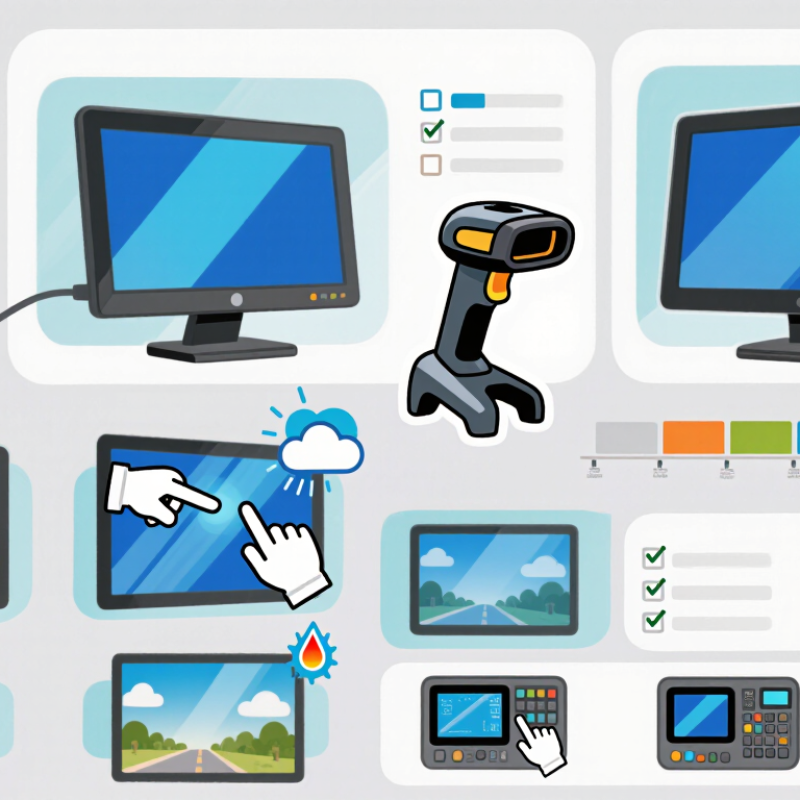
TFT LCD Technology and Its Role in Modern Display Applications
TFT LCD technology remains a practical foundation for modern display applications. It uses thin-film transistors to control individual pixels with accurate timing. This structure supports clear images, stable refresh rates, and efficient mass production. Global buyers can choose TN, IPS, VA, or transflective designs. Each type serves a different operating environment.
IPS panels provide wide viewing angles and consistent colors for medical interfaces, control rooms, and design equipment. TN panels respond quickly and often reduce system cost.
VA panels deliver stronger contrast for dashboards and entertainment devices. Transflective displays can remain readable under changing light conditions. They are useful in outdoor instruments and portable equipment.
Specifications need real testing. A high brightness rating does not guarantee sunlight readability. Surface reflections, viewing angle, thermal conditions, and cover glass can change results. Engineers should check the display inside the finished enclosure, not only on a laboratory bench. Touch performance may also decline when users wear gloves or when moisture reaches the surface. This detail is easy to overlook.
A reliable purchasing process reviews operating temperature, backlight life, interface compatibility, and future availability. Mechanical drawings matter too. A display that fits electrically may still fail during installation. Buyers should request samples and compare measured results with published data. Some early assumptions will be wrong. That is normal, but undocumented assumptions create expensive delays.
Key TFT LCD Panel Types and Their Distinguishing Features
Global buyers should compare TFT LCD panels by viewing behavior, power needs, and operating conditions.
Twisted nematic panels respond quickly and cost less, but their colors and viewing angles remain limited. In-plane switching panels provide stable colors from wider angles. They suit medical interfaces, control rooms, and professional monitors. Vertical alignment panels deliver deeper contrast, especially in dark scenes, although motion can appear less consistent.
Panel structure also affects efficiency.
Amorphous-silicon TFT LCDs remain common for large, cost-sensitive screens. Low-temperature polysilicon can support finer pixels and slimmer designs, but manufacturing costs are usually higher.
Omdia’s 2024 Display Long-term Demand Forecast continues to identify LCD as the dominant volume platform across large-area applications. That matters for buyers seeking supply continuity, not just peak specifications.
The cheapest panel may create higher costs later.
Practical testing should include brightness uniformity, color shift, touch performance, and operation between the stated temperature limits.
The Society for Information Display notes that contrast, luminance, and viewing angle should be assessed under defined measurement conditions. A reported contrast ratio alone can mislead.
One weakness remains overlooked: factory samples rarely represent every production batch. Buyers should request multiple samples, inspect dark-screen leakage, and verify aging results before approving a design.
Small text, sunlight, gloves, and reflective glass can expose differences that a specification sheet misses.
How to Compare Resolution, Brightness, Size, and Viewing Angles
2026 Best TFT LCD Display Types for Global Buyers
When comparing TFT LCD displays, resolution should match viewing distance and image detail. A compact control panel may perform well at 800 × 480 pixels. A larger medical or industrial screen often needs Full HD or higher. More pixels do not automatically create a better user experience. Small text can remain difficult if the interface is poorly designed.
Brightness matters under real lighting, not only in a datasheet. Indoor equipment may need 300 to 500 nits, while outdoor panels often require 800 nits or more. Check whether the brightness is measured before or after touch panels and protective glass. These layers can reduce visible output. I have seen bright displays become unreadable beside direct sunlight. That result is easy to miss during indoor sampling.
Size affects installation, power use, and handling. Measure the active area, bezel, mounting depth, and cable position together. Viewing angles also deserve practical testing. A listed 178-degree angle may show an image, but colors can still shift from the side. View the screen from above, below, and both sides. Compare black levels, skin tones, and small icons. No display wins every test. A wider angle can also reduce contrast, which some buyers overlook. Temperature, response time, and long-term stability should be checked during extended operation, because a short demonstration rarely reveals every weakness.
2026 Best TFT LCD Display Types for Global Buyers - How to Compare Resolution, Brightness, Size, and Viewing Angles
| TFT LCD Type | Typical Resolution Range | Typical Size Range | Typical Brightness | Typical Viewing Angle | Typical Contrast Ratio | Typical Response Time | Main Strengths | Best-Fit Applications |
TN
Twisted Nematic | 800 × 480 to 1920 × 1080 | 3.5–27 in | 250–500 cd/m² | Typically 90°–160° horizontal; narrower vertical angle | 700:1–1,200:1 | 1–5 ms typical | Low cost, fast switching, low power consumption | Entry-level monitors, industrial instruments, gaming displays, embedded control panels |
IPS
In-Plane Switching | 1024 × 600 to 3840 × 2160 | 4.3–32 in | 300–1,000 cd/m²; higher values available for outdoor designs | Typically 178° horizontal and 178° vertical | 800:1–1,500:1 | 4–14 ms typical | Consistent color, wide viewing angles, strong image stability | Medical interfaces, professional monitors, HMI panels, retail displays, design workstations |
VA
Vertical Alignment | 1280 × 720 to 3840 × 2160 | 5–55 in | 300–600 cd/m² | Typically 170°–178° horizontal and vertical | 2,000:1–5,000:1 | 4–16 ms typical | High native contrast, deep blacks, good performance for dark images | Televisions, signage, entertainment monitors, control rooms, office displays |
ADS / Advanced IPS-Type
Wide-View Panel | 1280 × 800 to 3840 × 2160 | 7–32 in | 350–1,500 cd/m² | Typically 178° horizontal and 178° vertical | 900:1–1,500:1 | 5–15 ms typical | Wide viewing angle, uniform image quality, flexible industrial configurations | Automotive displays, industrial HMIs, transportation systems, commercial equipment |
Transflective TFT LCD
Reflective + Backlit | 320 × 240 to 1920 × 1080 | 2.4–10.1 in | 400–1,500 cd/m² with backlight; sunlight readability depends on ambient light | Typically 120°–178°, depending on panel mode | 400:1–1,500:1 | 15–35 ms typical | Improved outdoor readability, reduced backlight power in bright environments | Handheld meters, marine instruments, outdoor terminals, portable industrial devices |
Comparison note: The figures above are representative specification ranges for commercially available TFT LCD designs. Actual performance varies with panel size, backlight configuration, operating temperature, interface, optical bonding, cover glass, and manufacturer-specific engineering. Brightness is measured in cd/m², also known as nits.
Selecting TFT LCD Displays for Different Global Market Requirements
Selecting TFT LCD displays for global markets requires more than comparing screen sizes. Regional climate, viewing habits, interface standards, and certification needs can change the correct choice. Omdia’s 2024 Display Long-Term Demand Forecast identifies automotive and information technology panels as major demand areas. This supports a practical trend: buyers need application-specific displays, not one universal model.
Industrial equipment often benefits from high-brightness TFT LCDs, wide temperature ratings, and optical bonding. Outdoor systems may require 1,000 nits or more, while indoor control panels can use lower brightness to reduce heat and power consumption. Automotive projects need strong sunlight readability, stable operation, and reliable touch performance. Counterpoint Research reported approximately 10% year-on-year growth in automotive display shipments during 2023. However, shipment growth does not prove every panel suits every vehicle. Mechanical testing still matters.
Tips: Request samples from at least two production lots. Check color consistency, dead pixels, glare, connector placement, and touch response with gloves. For humid regions, ask for sealing data and temperature-cycle results. For cold markets, test startup performance below 0°C. Buyers should also verify regional electromagnetic compatibility requirements before final approval.
This step is often delayed, and that delay can be expensive. I have seen technically strong displays fail because the cable length, viewing angle, or local service plan was overlooked. A simple comparison table helps expose those gaps.