2026 Best Printed Circuit Board Assembly Manufacturers?
Choosing among the 2026 best printed circuit board assembly manufacturers requires more than comparing factory photos or quoted prices. Reliable selection begins with evidence: process capability, inspection depth, engineering support, delivery records, and transparent quality data. A modern supplier should demonstrate automated optical inspection, X-ray inspection, traceable materials, controlled reflow profiles, and documented corrective actions. Those details matter when a circuit board must survive vibration, heat, moisture, and years of field use.
Michael Ford, a recognized electronics manufacturing technology expert, has stated, “The future of electronics manufacturing depends on connecting people, machines, and data.” This perspective remains highly relevant. The strongest printed circuit board assembly partners use production data to identify solder defects, placement drift, and recurring design weaknesses before they become expensive failures. They also communicate clearly when a component becomes obsolete or a design needs adjustment.
Price still matters. It should not lead the decision.
The lowest quotation may exclude programming, testing, tooling, or failure analysis. That creates an attractive number and a disappointing project. In this guide, manufacturers will be assessed through practical criteria, including certifications, prototype flexibility, supply-chain resilience, production volume, testing capability, and customer support. Some rankings may remain imperfect because supplier performance changes by region, product type, and order size. That limitation deserves attention.
A dependable manufacturer does not simply assemble boards. It helps reduce risk from the first bill of materials review to final shipment.
What Is Printed Circuit Board Assembly?
What Is Printed Circuit Board Assembly?
Printed circuit board assembly, or PCBA, is the process of attaching electronic components to a bare circuit board. The board provides electrical pathways and mechanical support. Components may include resistors, capacitors, processors, connectors, and sensors. Surface-mount technology places tiny parts directly on the board surface. Through-hole technology uses leads inserted through drilled holes. Many products use both methods.
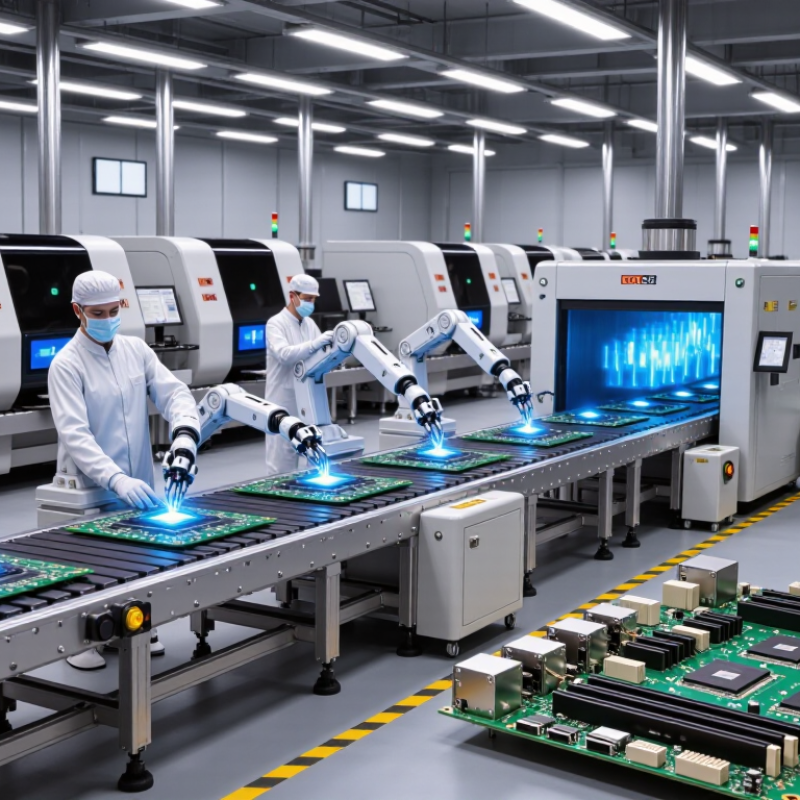
A reliable assembly process starts with approved design files, component lists, and clear production instructions. Solder paste is applied before automated placement equipment positions components. The board then passes through a reflow oven, where heat melts the solder. Technicians may inspect joints with optical systems or X-ray equipment. Electrical testing can reveal hidden faults. A clean-looking board can still fail. That lesson is easy to underestimate.
Tips: Ask manufacturers how they control component traceability, solder quality, and testing. Request sample inspection records when possible. Confirm their ability to manage moisture-sensitive parts and fine-pitch components. Good documentation reduces confusion during production. It also supports faster troubleshooting when something goes wrong. No process is flawless, so honest reporting matters.
2026 Best Printed Circuit Board Assembly Manufacturers? — What Is Printed Circuit Board Assembly?
Printed circuit board assembly (PCBA) is the process of mounting electronic components onto a bare printed circuit board through solder paste printing, component placement, soldering, inspection, and testing. Package pitch is an important technical factor when evaluating an assembly partner because smaller pitches require more precise placement and inspection capabilities.
Typical component pitch: Pitch is the center-to-center distance between adjacent component leads, balls, or terminals. Lower values indicate more densely packaged components and generally require tighter process control.
How PCB Assembly Manufacturers Are Evaluated in 2026
In 2026, PCB assembly manufacturers are evaluated through evidence, not attractive promises. Experienced buyers examine process control, engineering support, and consistent delivery. A clean showroom proves little. The real test appears inside production records, inspection images, and customer feedback. Strong manufacturers can explain how they manage component substitutions, solder paste storage, and changing assembly requirements.
Auditors often review traceability from incoming materials to final shipment. They check lot codes, temperature logs, calibration records, and rework history. Automated optical inspection and X-ray inspection can reveal hidden defects. However, equipment alone does not guarantee quality. Skilled technicians must interpret results and correct recurring problems. Certifications support credibility, but practical process discipline matters more.
Evaluation also includes communication during prototypes and design changes. A reliable partner reviews layouts, identifies thermal risks, and suggests manufacturable improvements before production begins. Delivery performance should be measured across several orders, not one successful shipment. My own evaluation sheets have sometimes favored technical capacity over response speed. That was a mistake. A capable factory can still create delays when updates are unclear. Flexible capacity, transparent reporting, secure data handling, and realistic quotations now deserve equal attention. No scorecard is perfect. Human judgment still matters.
Key Services Offered by Leading PCB Assembly Companies
In 2026, leading printed circuit board assembly manufacturers offer more than board population. They support the entire production path, from prototype preparation to repeatable volume manufacturing. Their engineers review Gerber files, bills of materials, and assembly drawings before production begins. This design-for-manufacturing review can identify narrow solder masks, missing test points, or unsuitable component spacing. Small corrections here often prevent expensive rework later.
Core assembly services usually include surface-mount technology, through-hole assembly, and mixed-technology production. Automated placement machines position tiny components, while controlled reflow ovens create consistent solder joints. Selective soldering supports larger connectors and through-hole parts.
Quality teams may use automated optical inspection, X-ray inspection, flying-probe testing, and functional testing. These checks help detect hidden voids, misplaced parts, and weak connections. Traceability records can link each board to materials, operators, inspection results, and production dates.
Strong partners also provide component sourcing, prototype assembly, new product introduction support, cable integration, and box-build services. They can manage approved substitutions when shortages affect the original design. However, substitution is not risk-free. A compatible footprint may still have different thermal behavior or lifecycle data.
I have seen rushed reviews create avoidable delays. Clear engineering communication remains essential. Reliable manufacturers document changes, protect revision control, and share measurable quality data. Their value appears in disciplined processes, not attractive promises.